Tangerine Dream began as Edgar Froese’s answer to a world that felt too small for the ideas he carried. Born in 1944 in Tilsit and shaped by the upheavals of post war He treated music as a material that could be shaped, layered, and illuminated, and when he founded Tangerine Dream in 1967, he created not just a band but a workshop for exploring the architecture of imagination.
The early years were defined by long sessions in rehearsal rooms filled with analog synthesizers, oscillators, and tape machines. These instruments demanded patience and rewarded curiosity. Froese and his collaborators would spend hours adjusting filters, coaxing tones from unpredictable circuitry, and listening for the moment when a pattern began to breathe.
Instead of writing in the traditional sense, they allowed the music to unfold through attentive exploration, and the process often carried them into a state of flow where concentration, intuition, and emotion moved together with remarkable coherence. Albums such as Phaedra and Rubycon emerged from this approach, and their enduring influence reflects the depth of engagement that shaped them.
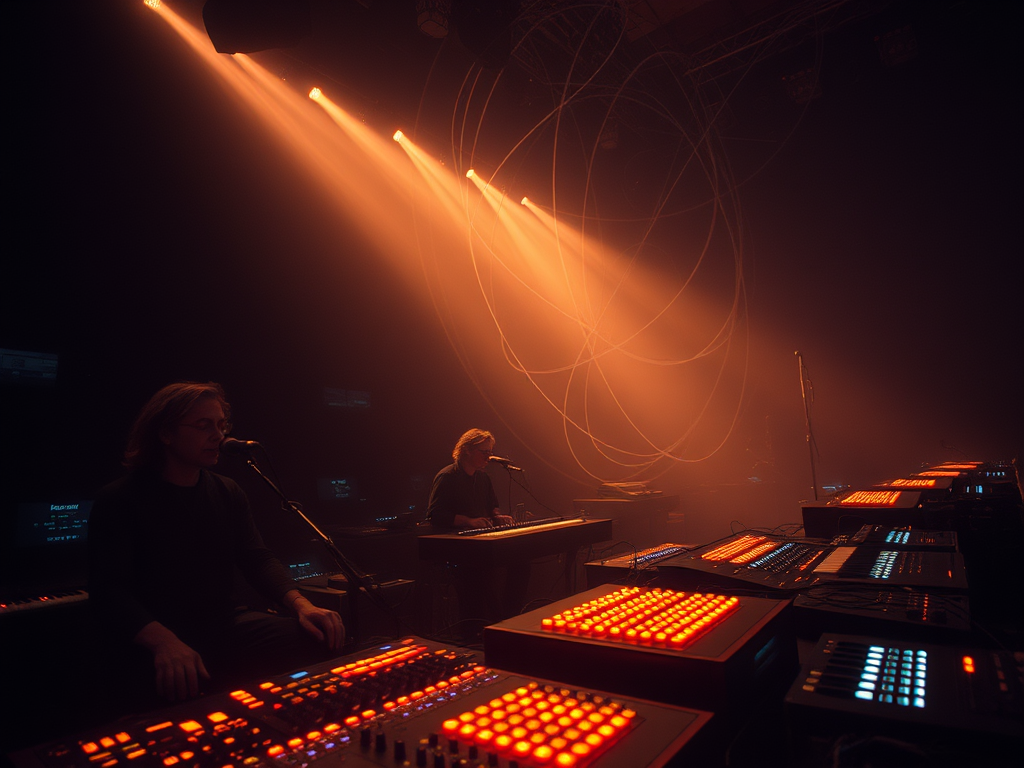
Tangerine Dream’s concerts extended this atmosphere into a shared experience. The stage was often arranged like a landscape of glowing equipment, and the musicians performed in near darkness, allowing the audience to focus entirely on the evolving sound. Much of the music was improvised, guided by sequencer patterns that acted like a pulse around which the performers wove shifting textures and melodic lines.
Listeners often described a sense of being drawn into the music’s movement, as if the gradual transitions and expanding harmonies created a space where attention could settle and deepen. The concerts became environments where flow was not only created by the musicians but also experienced by the audience.
The reception of Tangerine Dream’s work reflects the effect it has on listeners. Many describe their recordings as immersive and expansive, capable of drawing the mind into a state where thoughts move with greater clarity and continuity. The long form structures, gradual developments, and evolving textures encourage a form of listening that aligns naturally with flow. The music does not demand interpretation; it invites presence. It creates an environment where the listener can follow the unfolding patterns with a sense of calm engagement, and this quality has contributed to the group’s lasting influence across genres.
Tangerine Dream’s legacy rests not only on their innovations in electronic music but also on the way their creative process embodied a sustained commitment to exploration. Froese’s life and work demonstrate how a focused, immersive approach to art can shape both the creator’s experience and the listener’s response. Through their evolving soundscapes, the group offered a model of artistic engagement that resonates with the principles of flow, showing how music can become a space where attention, imagination, and emotion move together with clarity and purpose.




Leave a Reply