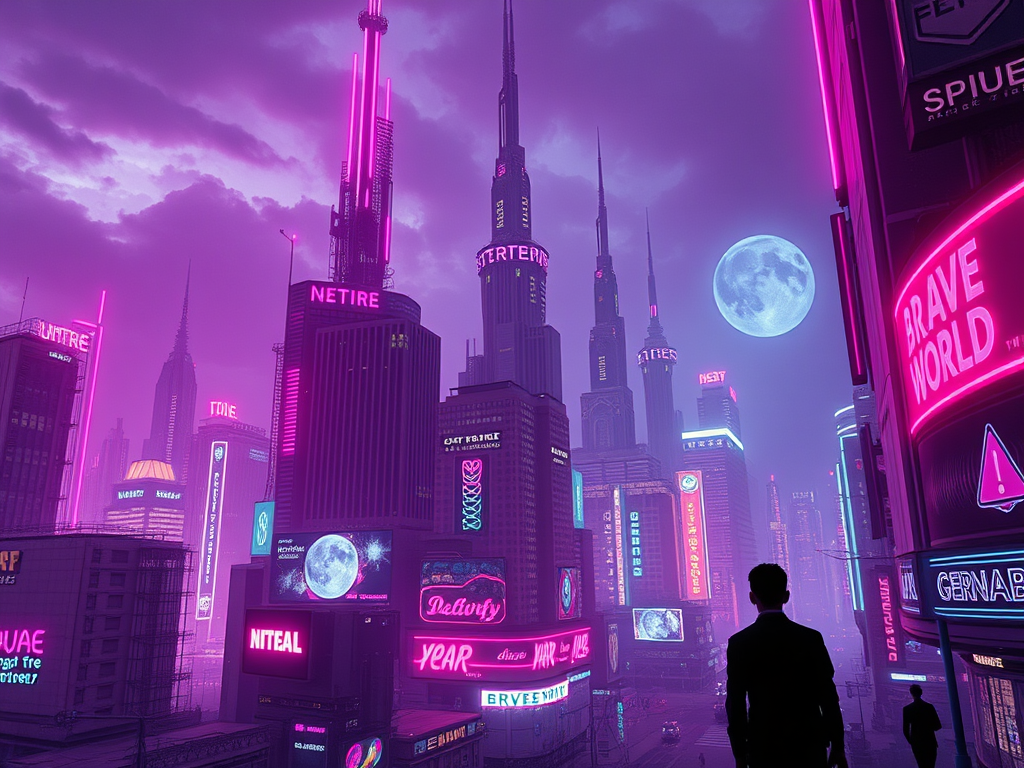
Aldous Huxley’s Brave New World offers a profound exploration of a dystopian society shaped by technological dominance, consumerism, and the suppression of individuality. Written in 1932, the novel remains shockingly relevant, drawing unsettling parallels with our modern world. Huxley envisions a future where scientific advancements reshape humanity, challenging readers to consider how far we have already ventured toward a reality he once deemed fictional.
A chillingly organized world
Huxley depicts a meticulously controlled society where genetic engineering, social conditioning, and a rigid caste system dictate every aspect of life. People prioritize stability and predictability over passion, individuality, or conflict. At the center of this manufactured contentment lies soma, a government-supplied drug that eliminates discomfort, melancholy, or existential doubt. Citizens pop soma tablets whenever emotions threaten to disrupt the system, mirroring the rising dependence in our world on pharmaceuticals and technologies that promise to alleviate anxiety and depression.
The individual versus the collective
Through characters like Bernard Marx, Lenina Crowne, and the tragic figure of John the Savage, Huxley explores the tension between individuality and conformity. Bernard wrestles with the emptiness of societal norms, while Lenina clings to superficial pleasures as a form of stability.
John, raised outside the structured society, struggles to understand a world where purpose and meaning come second to pleasure. This portrayal finds resonance in a modern world shaped by social media and virtual escapism, where collective identities often stifle authentic individuality.
A timeless critique of modernity
Ultimately this masterpiece criticises humanity’s obsession with comfort, instant gratification, and uncritical acceptance of technological innovation. The world Huxley envisions severs connections to nature, art, and spirituality in favor of efficiency and convenience.
Today, algorithms curate experiences and consumerism saturates daily life in ways that eerily reflect Huxley’s vision. The novel raises pressing ethical questions about the impact of surrendering depth and complexity for shallow, transient pleasures.
Why this novel deserves your attention
Huxley crafts more than a cautionary tale; he offers a lens through which to view our modern condition. His warnings about the erosion of individuality and critical thinking speak to present realities, where overreliance on technology and pharmaceuticals echoes soma’s seductive promise of effortless happiness.
Brave New World compels us to question whether comfort is worth sacrificing humanity’s soul, making it an essential read for understanding our rapidly evolving world.




Leave a Reply