
Do you believe you are truly free, navigating life’s choices independently and making decisions based on your own desires and values? The reality might be far more nuanced than you perceive. Society and culture, often operating as silent architects, subtly mold your thoughts, behaviors, and choices, leaving you to believe you are the captain of your own ship. But, are you really?
Consider the pervasive influence of culture. From the moment you were born, you were immersed in a world shaped by traditions, norms, and collective values. Your language, beliefs, and even your preferences are products of this cultural immersion. But have you ever paused to question whether these ingrained aspects truly represent your authentic self or if they’re merely echoes of societal expectations?
It’s crucial to recognize that culture infiltrates your mind so seamlessly that distinguishing between personal preferences and societal conditioning becomes a challenging endeavor. Your very identity is entwined with the fabric of your culture, making it difficult to extricate yourself from the values instilled in you from an early age.
Democracy, touted as the epitome of freedom, can be a deceiving concept. Your choices, while seemingly expansive, are confined to the set parameters of your local culture. The illusion of choice masks the underlying influence of a system that subtly channels your decisions, limiting the scope of possibilities to those deemed acceptable by the prevailing culture.
Media, a powerful force shaping public opinion, plays a pivotal role in influencing your perceptions. But can you trust everything you hear or read? The media landscape is rife with agendas, biases, and selective reporting. To believe everything presented without critical evaluation suggests a lack of discernment, a willingness to be led rather than to lead your thoughts independently.
Politicians, the supposed architects of democracy, vie for your allegiance during elections. They promise freedom, a better future, and a voice for the people. However, do they genuinely have your best interests at heart, or are they merely seeking your vote as a means to their own ends? Once the ballots are counted and the victory is secured, how often do these politicians truly remember and address the concerns of the electorate?
Ironically, the abundance of choices in the modern world may contribute to the erosion of genuine freedom. The illusion of freedom emerges when the choices available are, in fact, carefully presented options that align with specific agendas. When the menu of choices is curated, and alternatives are suppressed or overshadowed, the semblance of autonomy dissolves, leaving you adjusting to a social landscape of predetermined options.
You may argue that you exercise free will in your everyday choices, from the clothes you wear to the food you eat. However, consider how these choices align with societal expectations and cultural norms. Are you truly making these decisions autonomously, or are they a product of subconscious conformity to the expectations ingrained in you from childhood?
As you navigate social and economic mobility, it becomes clear that equal opportunities are not universally accessible. Systemic inequalities act as formidable barriers, limiting choices based on socioeconomic status. Consider the freedom to express yourself—seemingly a universal right, yet intricately tied to economic disparities. While societies flaunt growth, the reality is an uneven distribution of opportunities, dictated by systemic inequalities. Is your path to self-expression truly unhindered, or are you constrained by the socioeconomic circumstances surrounding you?
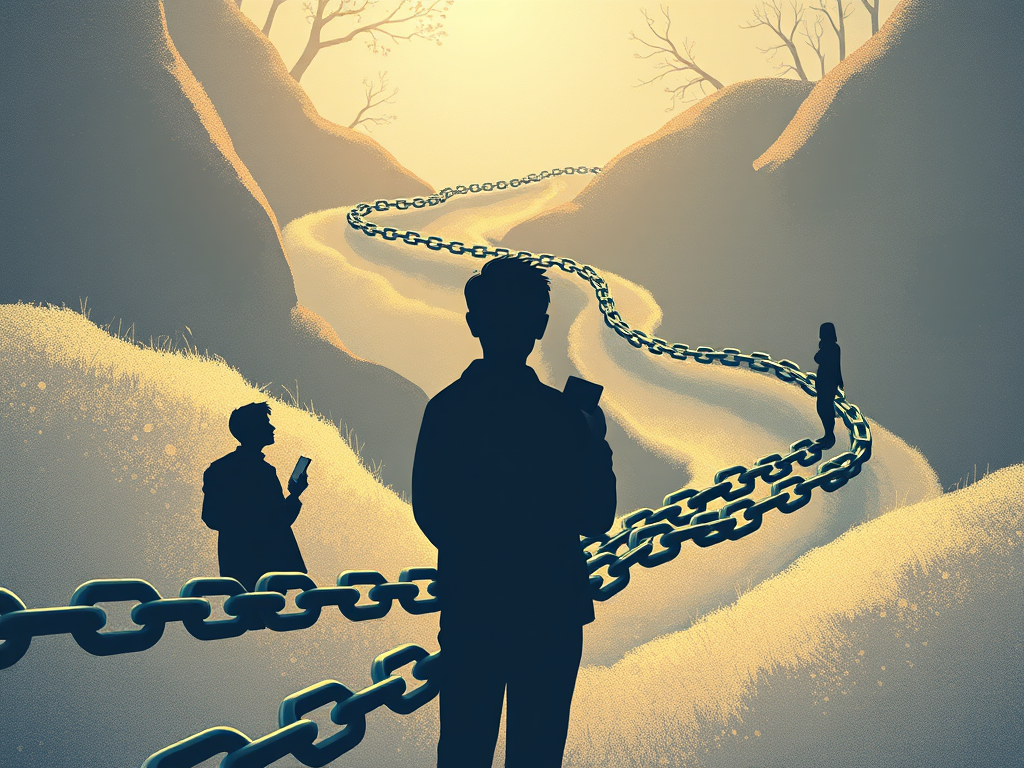
In this era of technological advancement, the quest for authentic freedom demands scrutiny of societal, economic, and digital influences. Technology, while offering connectivity and information, brings its own intricacies. Are your choices truly your own, or are they subtly guided by invisible hands behind the screens?
Recognizing the extent to which society and culture influence your choices is the first step toward reclaiming a more authentic sense of freedom. Questioning norms, challenging assumptions, and cultivating discernment in the face of media narratives are essential to breaking free from the invisible chains that bind you.
Challenge yourself to scrutinize the narratives that surround you, fostering awareness, critical thinking, and a commitment to unveiling the truth. Only through this introspective journey can you discern the authenticity of your freedom and reclaim the autonomy that lies within.
Taking control necessitates a journey of self-discovery, a process of peeling back the layers of societal conditioning to reveal your authentic self. Without this process of deconditioning, you may find yourself navigating life on autopilot, dictated by societal expectations rather than your own desires and aspirations.






Leave a Reply