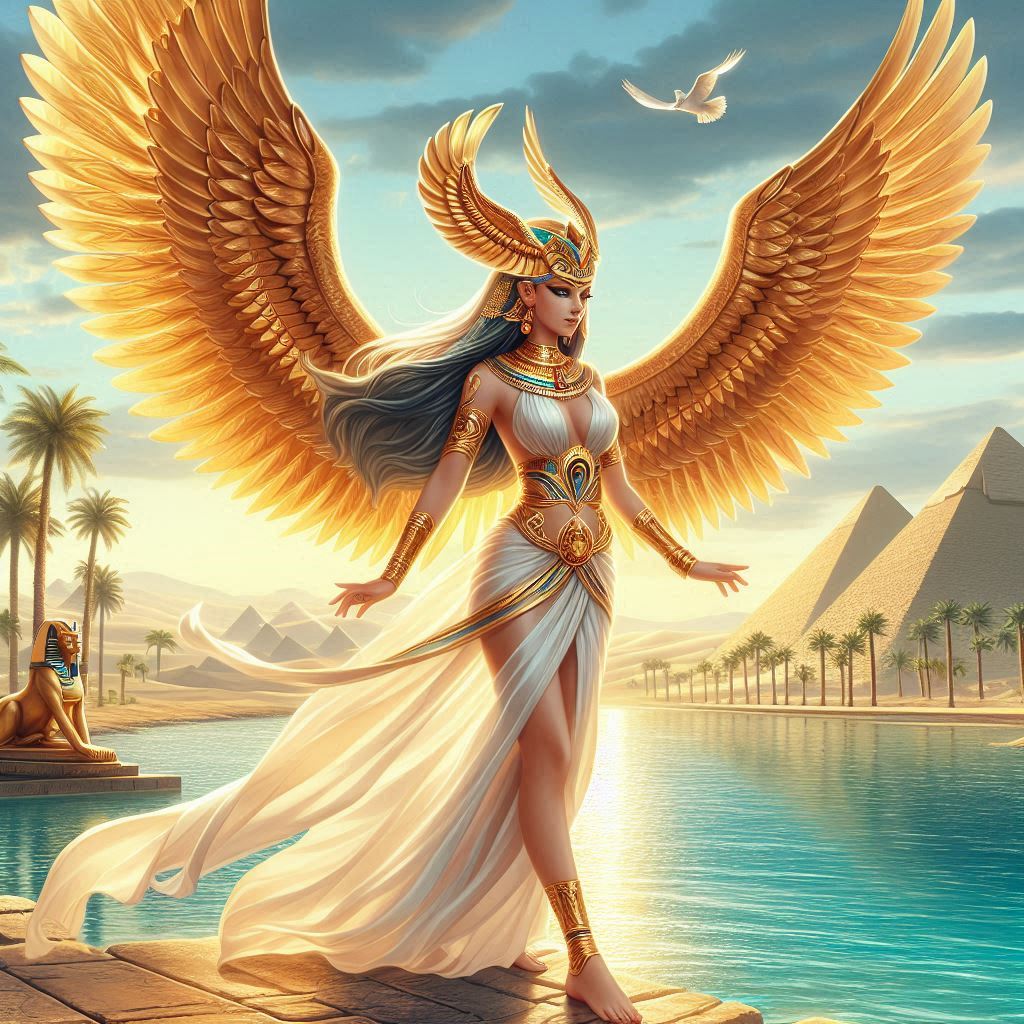
Sexuality in Ancient Egypt was a multifaceted aspect of daily life, deeply linked to the religious beliefs, social norms, and artistic expressions. Far from being a taboo subject, sexuality was viewed as a natural and essential part of existence, linked to both divine creation and human fertility. The ancient Egyptians held a broad and inclusive view of sexual practices, where the sacred and the sensual were often seamlessly blended.
The role of sexual energy
The Egyptians believed that sexual energy was a powerful force, central to both life and the afterlife. The gods themselves were often depicted engaging in sexual activities, reinforcing the notion that sex was a divine act. For instance, the creation myth of the god Atum, who was said to have created the world through an act of self-stimulation, highlighted the concept of sex as a creative force. Similarly, the fertility god Min was often represented with an erect phallus, symbolizing potency and the life-giving power of sex.
Celebration of sexuality
Human sexuality was similarly celebrated. Sexual imagery was common in art and literature, where scenes of lovemaking and sexual encounters were depicted with a degree of openness that might seem surprising today. These depictions were not merely for titillation but were often symbolic, representing ideas of fertility, rebirth, and the continuity of life. The fertility of the land, for example, was frequently associated with the sexual union of deities, which was believed to ensure the Nile’s annual flood and the subsequent agricultural abundance.
Marriage
Marriage and reproduction were central to Egyptian society, with a strong emphasis on producing children, particularly sons, to ensure the continuation of the family line and the proper maintenance of one’s tomb and funerary cult. However, sexual relationships were not confined to marriage alone. Evidence suggests that premarital sex was not frowned upon, and there is little indication of a concept of virginity as a virtue. Instead, the focus was on the practical aspects of relationships, such as fertility and the production of offspring.
Homosexuality
Homosexuality was also a recognized aspect of ancient Egyptian sexuality, though it was viewed through a complex lens. While there are few explicit references to same-sex relationships, some scholars believe that certain mythological stories and historical records suggest an acceptance of homosexual acts, particularly among men. The story of Horus and Set, two gods who engaged in a power struggle that included sexual elements, has been interpreted by some as reflecting the existence of homosexual practices. However, the precise social attitudes toward homosexuality in ancient Egypt remain a subject of debate, with interpretations ranging from acceptance to neutrality.
Adultery
Adultery, on the other hand, was generally condemned, particularly for women, as it threatened the social order and the legitimacy of offspring. Punishments for adultery could be severe, especially for women, who could face disfigurement or even death. Men, while also subject to penalties, were often treated more leniently unless their actions disrupted familial stability.
Sexuality in afterlife
The afterlife in ancient Egyptian belief was also infused with sexual symbolism. Tomb inscriptions and texts often included references to sexual vitality, with the deceased hoping to regain their sexual potency in the afterlife as part of their overall resurrection. The imagery of the goddess Hathor, who was associated with love and beauty, often appears in funerary contexts, symbolizing the hope for a fertile and pleasurable afterlife.
Concluding reflections
Sexuality in Ancient Egypt was a complex part of life, reflecting the Egyptians’ deep connection to the cycles of nature, their gods, and the continuity of their society. This natural act was neither hidden nor shamed but was instead an accepted and celebrated aspect of both mortal existence and divine creation.
Through their art, mythology, and societal practices, the ancient Egyptians demonstrated a sophisticated understanding of sexuality as a force that was both powerful and essential, shaping not only their earthly lives but also their visions of eternity.





Leave a Reply