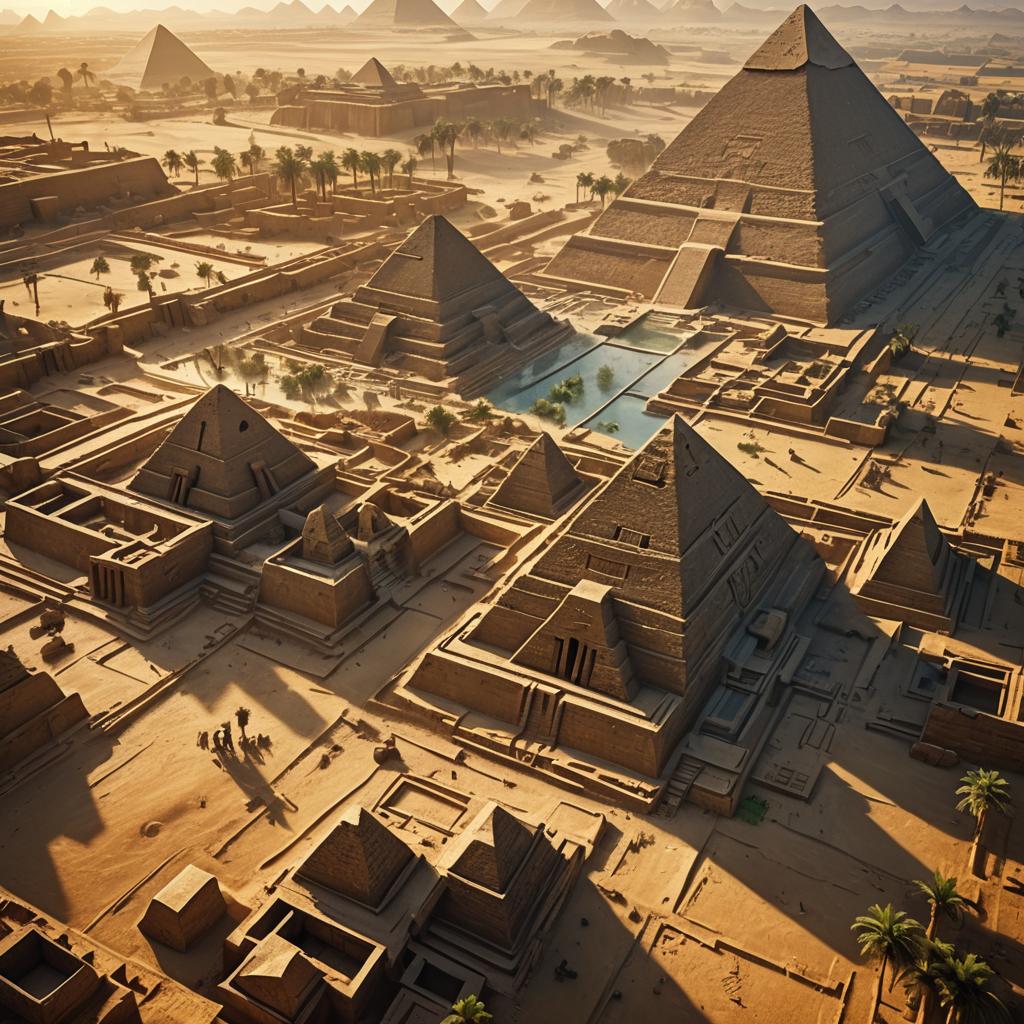
The Ancient Egyptians have bequeathed us a remarkable legacy that extends far beyond their monumental pyramids and enigmatic hieroglyphs. Their civilization, which flourished for over three millennia along the banks of the Nile, has provided invaluable insights into a variety of domains that continue to captivate scholars and enthusiasts alike.
Architectural and engineering marvels
The architectural achievements of the Ancient Egyptians remain among the most enduring symbols of their ingenuity. The grandeur of the Pyramids of Giza, the Sphinx, and the sprawling temples of Karnak and Luxor showcase their mastery in construction and design. Their ability to align these monumental structures with astronomical events, such as solstices and the stars, underscores their sophisticated understanding of both engineering and celestial mechanics. These precise alignments were not merely for aesthetic purposes but held religious and cultural significance, reflecting their integration of science and spirituality.
Mathematical and astronomical knowledge
Egyptian contributions to mathematics and astronomy were pivotal in their time. Their use of geometry was instrumental in architectural projects, while their astronomical observations were foundational in developing one of the earliest calendar systems. This calendar, based on the lunar cycles and the heliacal rising of Sirius, was essential for agricultural planning, including the timing of planting and harvesting. This sophisticated approach to timekeeping also allowed them to create complex alignments in their structures, demonstrating a profound understanding of the natural world and its cycles.
Medicine
The medical practices of the Ancient Egyptians were surprisingly advanced. They employed a range of treatments that included herbal remedies, surgical procedures, and practical knowledge of anatomy.
The Ebers Papyrus, one of the most significant medical texts from ancient times, provides detailed insights into their medical practices. Notably, it describes various remedies using natural ingredients, such as honey and various herbs, which were believed to have healing properties.
Moreover, the Ebers Papyrus offers insights into the integration of magic and medicine, illustrating how ancient Egyptians combined practical treatments with spiritual and ritual practices. This combination highlights their holistic approach to health, blending empirical knowledge with their religious and cultural beliefs.
Writing
The development of hieroglyphics was a monumental achievement in writing systems. This intricate script, used for religious, ceremonial, and administrative purposes, facilitated the recording of history, culture, and daily activities.
The introduction of papyrus as a writing material was equally transformative, providing a more versatile and durable medium compared to previous materials like stone and clay. Papyrus scrolls enabled the documentation and transmission of knowledge across generations, significantly impacting the administration and cultural preservation of Ancient Egypt.
Religion
Ancient Egyptian religion and mythology offer a window into their spiritual and cultural ethos. Their pantheon of gods and goddesses, along with elaborate rituals and beliefs about the afterlife, reveals a deeply complex and rich spiritual life. The alignment of their temples and pyramids with celestial bodies and the incorporation of mythological themes in their art and architecture highlight their belief in the divine order of the universe. These religious narratives and practices not only shaped their cultural identity but also influenced neighboring civilizations such as Greece.
In Hellenistic Egypt, where Greek and Egyptian cultures intertwined following Alexander the Great’s conquest, the Greek god Hermes and the Egyptian god Ptah were combined into a single syncretic deity. Hermes, the Greek messenger of the gods, associated with commerce, communication, and wisdom, was merged with Ptah, the Egyptian god of creation and craftsmanship.
The fusion of these gods created a composite deity who embodied both the intellectual and creative aspects of their predecessors. This new deity, often depicted with elements from both Hermes and Ptah, symbolized a harmonious blend of Greek and Egyptian religious traditions, reflecting the cultural and intellectual exchange that characterized the Ptolemaic period.
Artistic and cultural expressions
The art of Ancient Egypt, characterized by its distinctive style and symbolism, provides significant insights into their social and cultural life. From vibrant wall paintings and intricate jewelry to monumental statues, Egyptian art reflects their values, societal roles, and everyday activities. The use of artistic conventions, such as the representation of figures in composite view and the emphasis on symmetry and order, reveals much about their aesthetic preferences and social structure. This artistic legacy helps us understand the cultural priorities and social dynamics of this ancient civilization.
Innovations in agriculture
The success of Ancient Egyptian agriculture was largely due to their innovative use of irrigation techniques, harnessing the annual floods of the Nile River. These floods deposited nutrient-rich silt on the fields, enabling the cultivation of staple crops like wheat and barley.
The Egyptians also developed methods for brewing beer and baking bread, which were integral to their diet and economy. The effective management of these resources allowed them to support a growing population and build a prosperous civilization, demonstrating their adaptability and ingenuity in agricultural practices.
Trade
The extent of Ancient Egyptian trade networks reveals a civilization deeply connected with its neighbors. Engaging in commerce with regions such as the Near East, Africa, and the Mediterranean facilitated not only the exchange of goods like gold, incense, and exotic animals but also the cross-pollination of ideas and cultural practices.
This extensive trade network contributed to Egypt’s economic prosperity and cultural richness, reflecting their role as a major player in the ancient world’s interconnected economy.
Legacy
These contributions from Ancient Egyptian civilization have left an indelible mark across multiple domains, profoundly influencing fields ranging from architecture and medicine to art and science. Their innovations and insights not only shaped their own society but also laid foundational principles that continue to resonate throughout history.
The legacy of their achievements remains a rich source of study and intrigue, offering valuable lessons and inspiration.






Leave a Reply