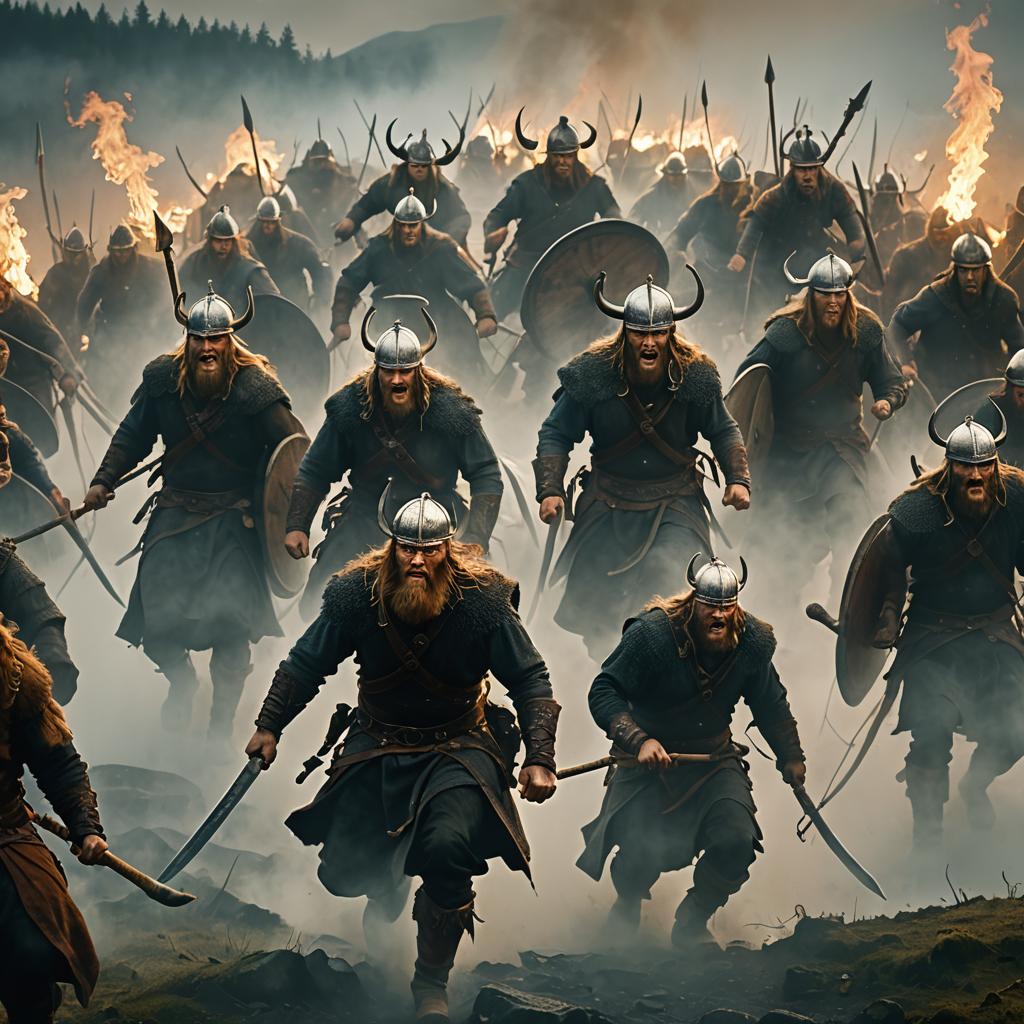
In Norse mythology, the berserkers stand out as figures whose fierce, trance-like rage captivates the imagination. Their name, “berserk,” derives from Old Norse, combining “ber” (bear) and “serk” (shirt), suggesting they donned bear skins and were imbued with an almost primal ferocity in battle.
The berserkers could enter a state of fury known as “berserkergang.” In this altered state, they exhibited remarkable strength and fearlessness, engaging in combat with a ferocity that made them appear invincible. Historical accounts and sagas depict these warriors as charging into battle with wild abandon, their actions so extreme that they often unsettled even their own comrades.
The exact nature of the berserkers’ trance is shrouded in mystery, but some theories suggest it was induced by hallucinogenic substances. Among these, the Amanita muscaria mushroom—a potent psychoactive fungi—stands out as a probable candidate. This mushroom, with its distinctive red cap and white spots, was known in ancient times for its mind-altering effects. Its use could have played a role in the berserkers’ ritualistic preparations, altering their consciousness and enhancing their combat abilities.
Descriptions of the berserkers’ frenzy often include bizarre behaviors, such as biting their shields, howling like wild animals, and exhibiting superhuman strength. Such actions suggest that the altered state they achieved was not merely a mental phenomenon but involved profound changes in their perception and physical capabilities. The intense psychological experience of berserkergang may have involved a combination of psychoactive substances and intense ritual practices designed to invoke a state of profound psychological and physical transformation.
The cultural impact of the berserkers
The cultural impact of the berserkers extends beyond their battlefield prowess. They symbolize the raw, untamed aspects of nature and the human psyche, contrasting sharply with the more measured and strategic aspects of Viking warfare. Their story reflects the Norse fascination with the boundary between order and chaos, sanity and madness.
While the berserkers were formidable, their uncontrollable nature often led to their downfall. Their inability to restrain their fury could result in personal defeat. Their unpredictability made them challenging to manage, both on and off wars.
In modern times, the berserkers’ legacy persists, inspiring stories and interpretations that explore their unique psychological state. Their altered states of consciousness have become a symbol of both the power and peril of unrestrained mental and physical transformation. Through their legends, we gain insight into the complex interplay between human nature and the profound impact of myth on cultural identity.





Leave a Reply