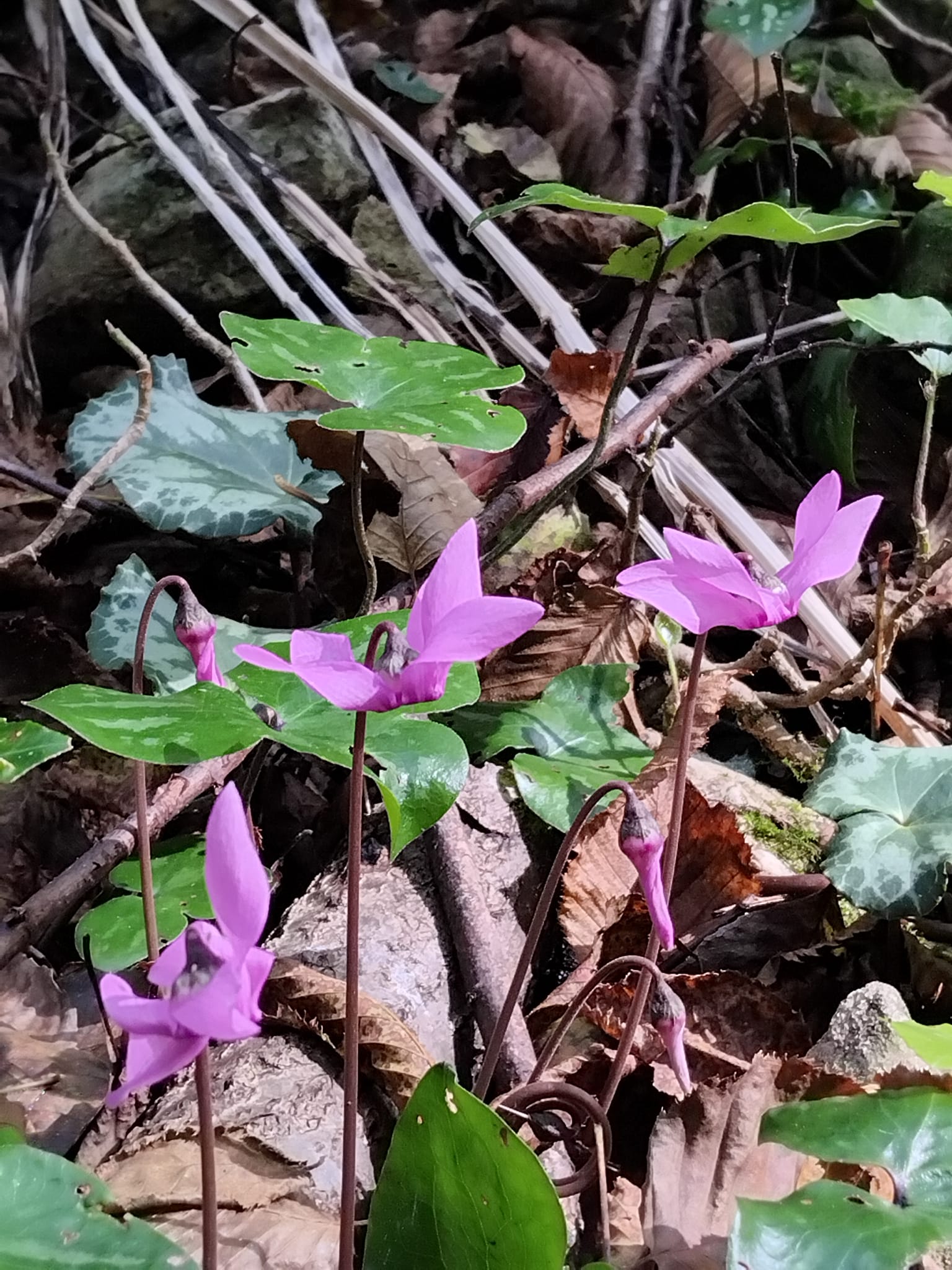
Cyclamen, now a common sight in the countryside across Europe, thrives as a symbol of quiet resilience and natural beauty. Whether wandering through Mediterranean landscapes or exploring the cooler northern regions like UK, travelers often encounter this delicate flower, brightening winter’s dreariest days. Cyclamen’s ability to flourish in rocky terrain and cold seasons makes it a striking presence, inviting those who journey through nature to pause and appreciate its enduring charm.
Unlike many flowers that disappear during the colder months, cyclamen continues to bloom, defying the season’s challenges. It graces European gardens and wild landscapes with shades of pink, white, red, and purple, radiating life when most others fade. Cyclamen stands as a symbol of resilience and strength, showing that beauty can thrive even in adversity. This ability to bloom through winter gives it a unique role in nature’s cycle, offering hope and color amid the stillness of the cold.
Folklore
Cyclamen holds deep significance in folklore, carrying a mix of mystery, healing, and protection. In ancient Greece, it symbolized love and passion, often appearing in potions and rituals to strengthen emotional connections. In medieval Europe, people believed cyclamen protected their homes, warding off evil spirits and misfortune. With its roots reaching deep into the earth, the flower became linked to the underworld, adding to its air of mystery.
In Italy, cyclamen earned the nickname “bread and butter plant” due to its role in protecting households from curses. Though it carried positive associations for many, some considered it a “witch’s plant” due to its use in magical rituals. This duality, of light and shadow, gave cyclamen a complex place in various cultures, where it was both revered and feared.







Leave a Reply