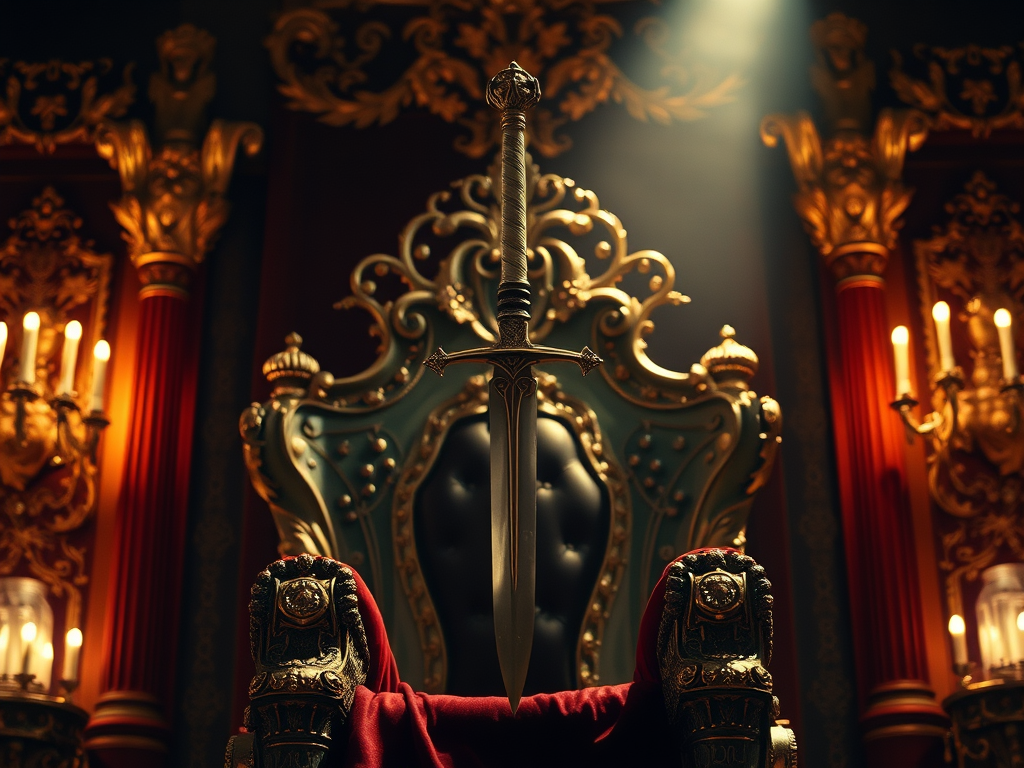
The “Sword of Damocles” originates from the writings of Cicero, the Roman philosopher, statesman, and orator. In his work Tusculan Disputations, Cicero recounts this tale to illustrate the dangers lurking behind positions of power and influence
The lesson learned by Damocles
In the story, Damocles, a courtier in the court of Dionysius II, envies the tyrant’s life of privilege and power. Eager to teach Damocles a lesson, Dionysius offers him a chance to sit on the throne for a day, surrounded by the luxuries and honors of kingship. But as Damocles settles in, he looks up and notices a sharp sword hanging directly over his head, held by a single horsehair. This terrifying sight robs him of any joy in his newfound position. He quickly realizes that power and luxury cannot be separated from the threat of sudden danger.
The lasting influence of the sword of Damocles
Cicero’s retelling of the story resonated deeply with many who saw parallels in their own lives or in the lives of powerful figures. Throughout history, philosophers, politicians, and writers have referenced the “Sword of Damocles” to capture the hidden burdens of authority. Figures such as Winston Churchill, John F. Kennedy, and even modern CEOs have cited the story as a reminder of the responsibilities and vulnerabilities that come with leadership. For those who find themselves at the top, the sword serves as a potent symbol of the price of privilege.







Leave a Reply