This article contains spoilers for Cixin Liu’s The Three-Body Problem trilogy and delves into speculative ideas about extraterrestrial civilizations.
The Three-Body Problem trilogy by Chinese author Cixin Liu has captivated readers worldwide with its blend of hard science fiction and profound philosophical questions. The story begins with humanity’s discovery of an alien civilization, the Trisolarans, whose struggle to survive in an unstable star system leads them to set their sights on Earth. Throughout the series, humanity faces moral dilemmas, existential threats, and deep uncertainties about the nature of intelligence across the universe. In this epic narrative, Liu raises questions about the viability of peace and cooperation with alien civilizations and whether the universe is a fundamentally hostile or neutral place.
The Dark Forest hypothesis
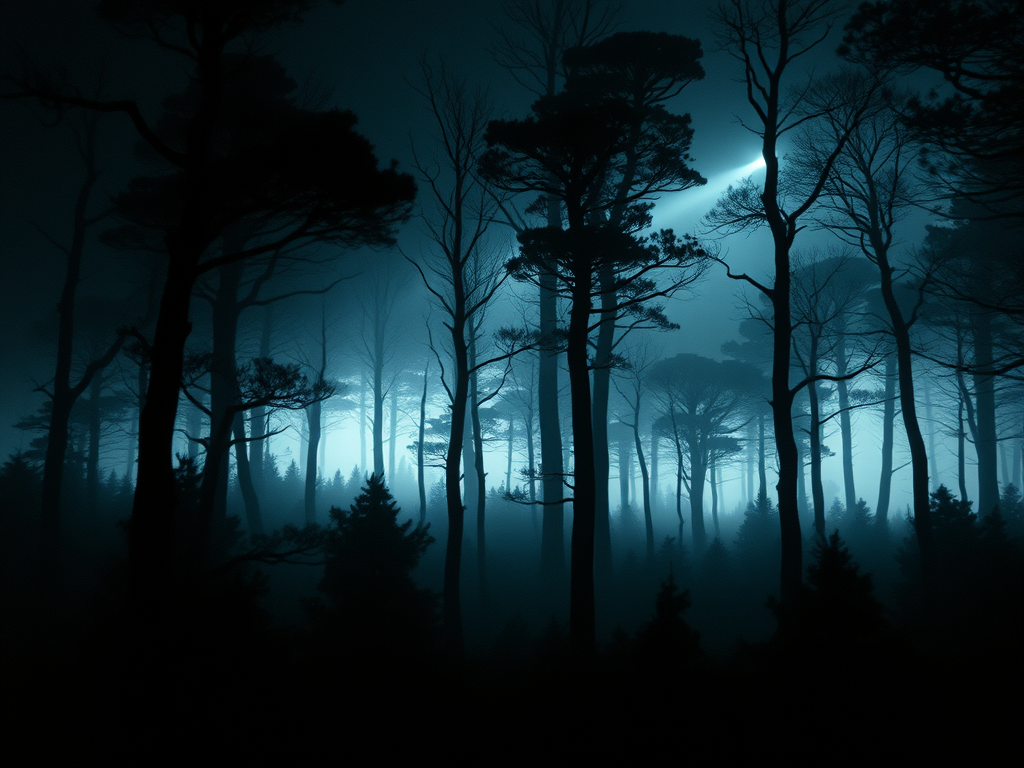
In the second book of the trilogy, The Dark Forest, Liu introduces a radical concept: the dark forest hypothesis. According to this idea, the universe operates like a dark forest where civilizations lie hidden, fearful of being discovered by others. Every civilization, potentially harboring hostile or self-interested motives, represents a mortal threat to others. As a result, civilizations hide their existence and, if forced to reveal themselves, may strike preemptively to ensure their own survival. The dark forest hypothesis presents the universe as a vast wilderness in which the desire to survive eclipses empathy, cooperation, and openness.
Paranoia as a cosmic survival strategy
Liu’s work suggests that civilizations face a cruel calculus: if another civilization learns of your existence, they might eventually become powerful enough to threaten you. Because it is impossible to fully understand another civilization’s values or long-term goals, the safest course of action might be to assume the worst. In this view, survival demands aggression or concealment, leading to a universe devoid of trust or love.
The dark forest hypothesis suggests that the only rational response to the unknown is fear and preemptive hostility. But must we assume that all civilizations would adopt such a harsh approach? Just as humanity contains diverse cultures and values, other civilizations could embrace different paths. Destruction and egotism might not be universal imperatives; they could be human projections onto the cosmos. The universe’s true nature may elude simple classifications of friend or foe, survivalist or altruistic.
If intelligent civilizations exist, could the universe possess a form of immunity against aggression? Could there be mechanisms, natural or evolved, that curb psychopathic tendencies in advanced species? Perhaps the universe contains inherent checks that prevent purely destructive civilizations from enduring. Just as ecosystems on Earth depend on balance and mutual adaptation, the universe might also discourage or neutralize aggressive entities, fostering a more complex interplay between civilizations.
An uncertain future
The dark forest hypothesis paints an unsettling picture of a universe where mutual destruction and paranoia reign. Yet this view does not need to be humanity’s guiding philosophy. The quest for understanding alien civilizations remains speculative, and while caution is wise, closing off entirely to the possibility of interstellar contact could lead us to miss valuable opportunities. Humanity’s future may hinge on how we balance caution with openness, skepticism with curiosity.
Ultimately, the dark forest hypothesis offers one possible interpretation of how civilizations might interact on a cosmic scale. Its bleak view of the universe captures our fears of the unknown, but it also highlights the limitations of our imagination. The question remains: will we approach the universe as a hostile territory where survival trumps all, or will we find a path that fosters understanding, even in the face of immense risk? The answer may rest in our capacity to transcend our own fears and remain open to the mystery of the universe.



Leave a Reply