This article is AI generated. I wanted to explore how deep AI can understand concepts about the unity in our universe prompting to write about Spinoza, Plotinus, and panpsychism. I did struggle to explain it, as for some reason despite the large database it took many attempts to arrive to the following text. Due to time constraints I stopped at this version:
Spinoza vs Plotinus
Spinoza and Plotinus begin from the same conviction: the universe exists as one. No matter how loudly the world appears to split into parts, they both insist that underneath everything lies an indivisible reality. That unity becomes the backbone of their metaphysics, the foundation of their spiritual vision, and the key to understanding the human place in the cosmos. To see what they really meant, we need to know the lives that shaped their thought.
Spinoza grew up in seventeenth-century Amsterdam, at the crossroads of trade, politics, and religious tension. Excommunicated from his Jewish community for questioning inherited beliefs, he lived a quiet life as a lens-grinder. His environment forced him into independence. He rejected any authority that stood outside nature, so he built a system where God and Nature form one substance. He preferred clarity, necessity, and intellectual honesty, even when it cost him a place in society. His life mirrors his philosophy: austere, immanent, grounded, and radically coherent.
Plotinus lived almost fifteen centuries earlier, in a world shaped by Roman power and Hellenistic spirituality. He joined a military expedition to reach Persia and India because he wanted firsthand access to Eastern wisdom. When the expedition collapsed, he returned to Rome and opened a school where his students described him as strangely remote, as if he lived half in this world and half in the invisible one. His thought reflects that distance. He believed that the physical world emanates from a supreme principle—the One—which exists beyond being and beyond thought. His life unfolded like an ascent: always reaching upward, always turning toward a reality no senses could grasp.
Their systems overlap because both of them view unity as the source of everything. Spinoza sees unity as the internal structure of the world itself, a single substance expressing infinite attributes. Plotinus sees unity as a transcendent origin that overflows into levels of reality—first Mind, then Soul, then the world. Spinoza treats the human mind as one of the modes of nature; Plotinus treats the human soul as a spark that momentarily engages with the material realm while belonging to something higher. Spinoza’s unity has weight and precision. Plotinus’s unity has radiance and depth.
The contrast becomes sharp when we follow the direction each philosopher takes. Spinoza moves downward into immanence. He wants us to understand the necessities of nature so we can live without illusions. He believes freedom comes from recognising why things must be the way they are. Plotinus moves upward into transcendence. He wants us to return to the One by shedding the distractions of the material world. He believes freedom comes from rising above what confines us. Spinoza gives us reconciliation with nature. Plotinus gives us a ladder beyond nature.
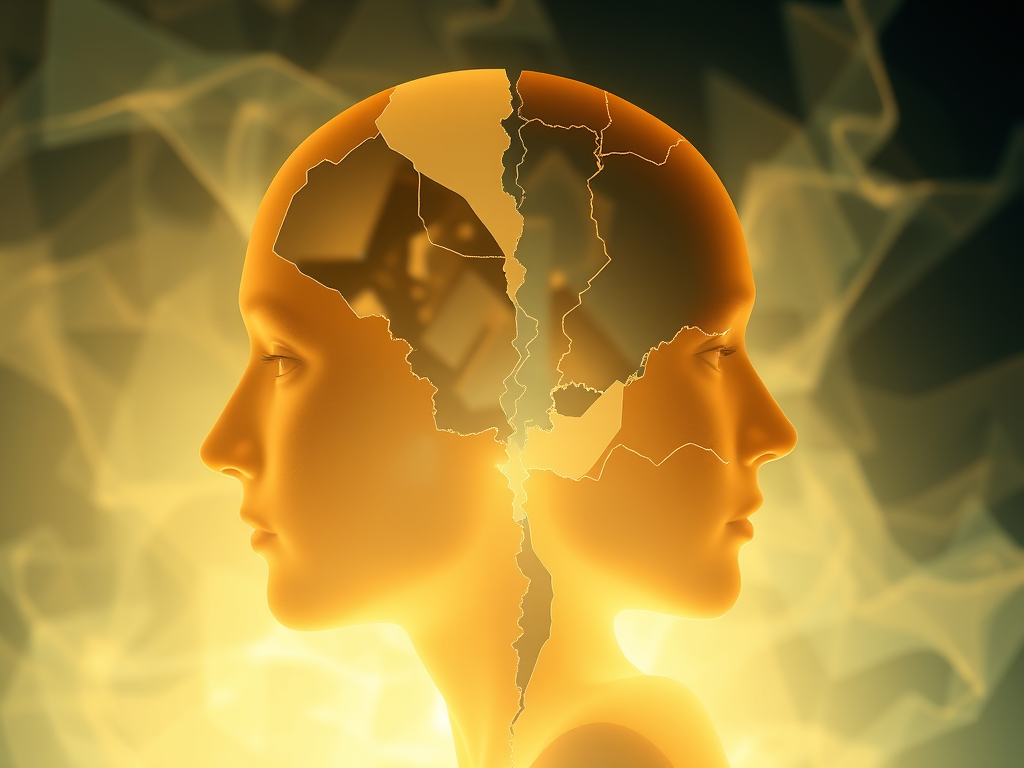
The synthesis of their positions lies in their shared assumption that reality forms a continuous whole. Whether that whole is contained within the world, as Spinoza insists, or stands beyond the world, as Plotinus argues, both see consciousness as integral to the fabric of existence (I am not sure that they were really directly preoccupied with the idea of consciousness). This opens the door to panpsychism. If the universe holds together as one, mind is not a late arrival; it expresses the unity itself. Panpsychism simply extends this logic by treating consciousness as a basic feature of reality, not a biological accident. Spinoza would frame it as one of the attributes of the single substance. Plotinus would treat it as the presence of the Soul echoing through all levels of being.
In the end, panpsychism becomes the modern language for something they both grasped long before anyone coined the term: a universe that lives as one does not produce consciousness from nothing; it carries consciousness in its very structure.
I noted that despite the prompt the AI was more preoccupied to tick the boxes. While the text is fairly well written, it lack the depth and the ability to highlight why the concepts are so fascinating. I did not prompt about the implications of the concepts because in the past AI was able to provide that part of text without prompts.
After all if we have philosophical inclinations it is up to us to contemplate what is the relevance of these generous ideas to our modern world.



Leave a Reply