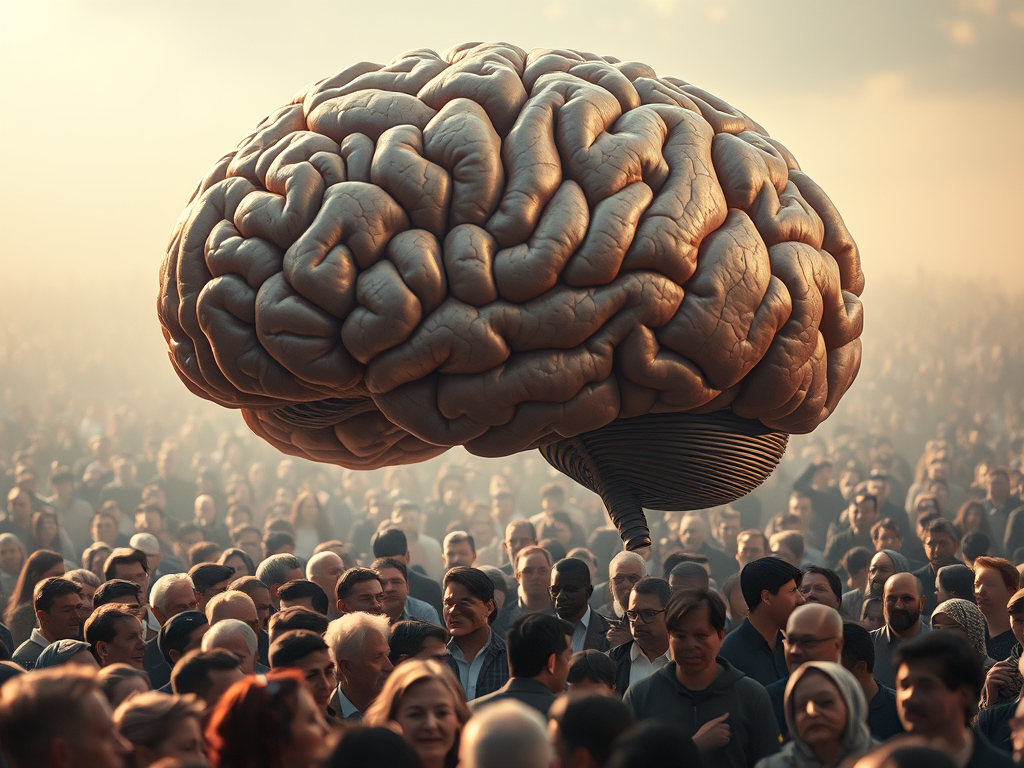
Deliberate choices are part of our self regulation mechanisms by repeatedly engaging the brain systems that hold goals in mind, evaluate options, and shape impulses into intentional action. When we choose on purpose, we train those circuits the way practice trains a muscle.
Human behaviour reflects a delicate balance between instinct, emotion, and rational thought. Complex actions, from moral decisions to creative problem-solving, emerge from the dynamic interplay of brain networks. These networks translate perception and emotion into action, revealing the mechanisms behind self-knowledge, self-control, and the ability to adjust behaviour for optimal adaptation to both internal states and the external environment.
The prefrontal cortex (PFC), located at the front of the brain, acts as a hub for planning, attention, and goal-directed behaviour. Whenever we make a deliberate choice, networks within the PFC—especially the dorsolateral prefrontal cortex (DLPFC), orbitofrontal cortex (OFC), and anterior cingulate cortex (ACC)—become highly active, coordinating thought, emotion, and action to guide behaviour toward intended outcomes.
As part of the prefrontal cortex, the anterior cingulate cortex (ACC) monitors conflicts between competing impulses or goals, signalling when to step in and regain control, helping behaviour stay aligned with intentions. At the same time, the ventromedial prefrontal cortex (VMPFC) weaves emotion and social understanding into decision-making, allowing us to weigh risks, rewards, and moral considerations. Planning and adapting strategies depend on the dorsolateral prefrontal cortex (DLPFC), which holds information in mind, shifts approaches when circumstances change, and keeps focus on long-term objectives. The orbitofrontal cortex (OFC) ensures responsiveness to changing situations, helping us learn from outcomes and fine-tune actions accordingly.
Essentially answering “what am I trying to do here?” in real time, the DLPFC supports deliberate choice by holding goals, rules, and standards online, . Imaging and stimulation studies show that stronger engagement of this region shifts behavior away from impulse-driven responding and toward long-term value consistency, even when temptation is emotionally salient. What’s especially interesting is that this isn’t just about inhibition. The DLPFC also increases the subjective weight of future outcomes, making delayed rewards feel more real and motivationally present rather than abstract. Each time we pause, retrieve our goal, and act in line with it, we strengthen this circuit through use-dependent plasticity, effectively training the brain to default less to reflex and more to reflective control.
Deliberate choices are rooted in top-down regulation, the process by which the reflective, planning, and value-oriented activity of the prefrontal cortex shapes the operation of deeper brain systems. The purpose of the top-down regulation is to allow the brain to interpret, organize, and guide impulses instead of reacting automatically, forming the foundation for self-regulation — the capacity to guide emotional and reward responses rather than being carried by them.
The PFC exerts this top-down influence by sending signals to subcortical regions, effectively modulating their activity. Through these connections, the PFC can adjust the intensity, timing, and expression of emotional, habitual, and reward-driven responses. This is how reflection, long-term planning, and value judgment translate into actual control over behavior.
The most relevant subcortical structures for our discussion are the limbic system and basal ganglia. The limbic system, with the amygdala at its core, monitors emotional significance, detecting threats, rewards, and personally meaningful events. Its signals generate rapid emotional responses that can dominate behavior if left unchecked. The basal ganglia, including the striatum, encode habits and reinforce reward-driven behavior, enabling fast, automatic responses based on past experience.
Through top-down influence, the prefrontal cortex (PFC) interprets and modulates our emotional life by analyzing signals from the amygdala, which is the brain structure responsible for detecting threats, rewards, and personally meaningful events. Emotional processing from the amygdala can guide choices by informing decision-making rather than producing automatic reactions. By integrating these emotional signals, the PFC transforms raw affective responses into deliberate guidance for behavior. For example, when someone feels immediate anxiety before giving a public presentation, the amygdala signals potential threat, triggering bodily arousal. The PFC evaluates the situation and decides to channel that arousal into preparation and focus, allowing the person to deliver the talk effectively rather than freezing or panicking.
The prefrontal cortex (PFC) also processes habitual and reward-driven signals from the striatum and basal ganglia, which encode routines and reinforce reward-seeking behavior. The PFC evaluates these signals to determine how attention, effort, and motivation should be allocated over the long term. The PFC can delay, reshape, or redirect habitual and reward-driven tendencies toward meaningful goals, ensuring that actions arise from reflection and planning rather than immediate urges. For example, a person may habitually check social media whenever a notification appears, which provides instant reward. The PFC can intervene by assessing long-term priorities, deciding to finish work first, and redirecting attention away from the habitual urge, so that reward-seeking behavior aligns with broader goals rather than immediate gratification.
Coordinating emotional modulation from the amygdala with habit- and reward-driven signals from the striatum and basal ganglia produces self-regulation. By integrating these emotional and motivational signals, the prefrontal cortex ensures that emotional responses remain vivid, desires remain motivating, and habits remain efficient, while behavior is guided by reflection, personal values, and long-term considerations rather than being dominated by immediate impulses.
During deliberate choices, the brain does more than weigh immediate rewards, long-term outcomes, social norms, or personal values. It accumulates evidence and integrates information so rapidly that conscious awareness captures only the final decision. The prefrontal cortex coordinates this process, evaluating potential actions until one reaches a threshold and is executed.
Neuroimaging shows that when choices align with personal standards or long-term goals, dorsolateral prefrontal cortex activity reflects the integration of cognitive control, reward signals, and social considerations. While the dorsal part of the prefrontal cortex guides decisions toward options consistent with our internalized norms, subcortical regions, including the striatum and orbitofrontal cortex, provide value-based inputs that shape evidence accumulation. This distributed network balances competing priorities, producing decisions that feel conscious even though most computations occur beneath awareness.
As you consistently choose in line with a goal, the basal ganglia gradually encode those sequences as habits. What began as effortful, conscious self control can become more automatic. Neuroscience models of goal directed versus habitual control describe how early stages rely heavily on prefrontal computations, while later stages recruit more streamlined loops through the striatum as patterns solidify. By choosing deliberately, you teach your brain a pattern; with repetition, the pattern requires less effort to express.
In practical terms, the first deliberate choices may feel effortful. With practice, the same choice feels easier because the supporting networks fire more readily. The brain’s plasticity supports this process: circuits involved in self regulation sharpen through use, which means deliberate choices today increase your regulatory capacity tomorrow.






Leave a Reply