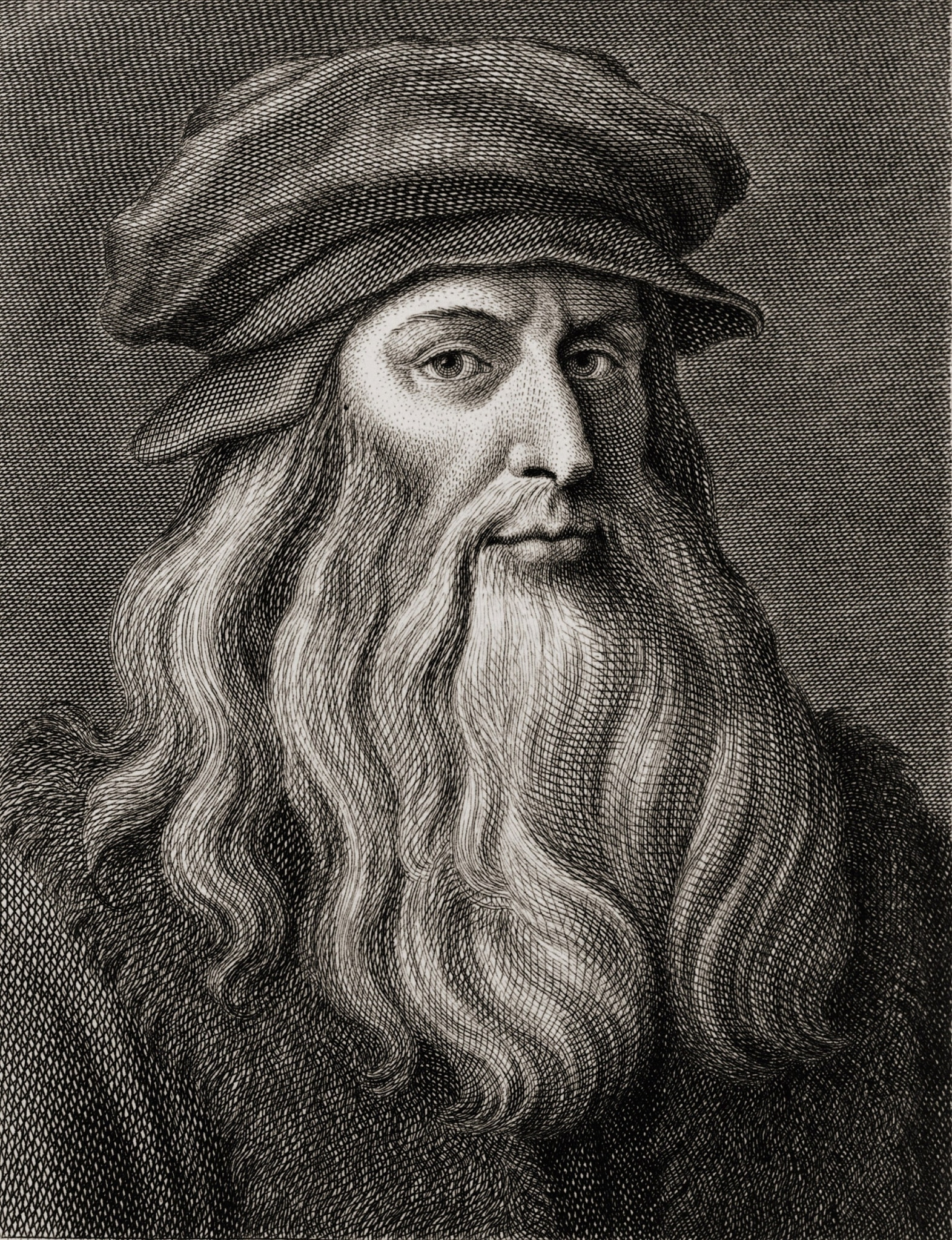

Leonardo da Vinci is one of history’s most fascinating examples of a chronic procrastinator whose habits both hindered and ultimately enriched his creative life. Throughout his early career, he struggled with persistent delays, repeatedly postponing commissions and abandoning projects for months or even years. His notebooks reveal a mind constantly pulled in competing directions—an insatiable curiosity that made it difficult for him to stay focused on a single task long enough to finish it. This tendency to drift from one idea to another meant that many of his early works remained incomplete, frustrating patrons and reinforcing his reputation as a brilliant but unreliable artist.
His procrastination was not simple laziness; it was rooted in perfectionism, intellectual restlessness, and a desire to understand every detail before committing to a final product. These traits often paralyzed him at the moment of execution. Faced with a commission, he would frequently divert his attention to side studies—experimenting with pigments, dissecting animals, or sketching mechanical devices—activities that were fascinating but not directly related to the task at hand. His delays became so notorious that even contemporaries joked about his inability to finish anything.
Over time, however, Leonardo underwent a meaningful shift. As he matured, he developed a clearer sense of purpose and a growing recognition that unfinished ideas, no matter how brilliant, could not influence the world. This realization gradually reshaped his relationship with work. He began to see completion not as a constraint on his creativity but as a necessary step in giving his ideas lasting impact. His increasing confidence in his artistic and scientific vision helped him overcome the paralysis of perfectionism, allowing him to commit more fully to the projects he undertook.
This transformation did not eliminate his procrastination entirely, but it did lead to more focused working patterns and a greater willingness to bring major works to completion. The results were extraordinary. During this period of renewed discipline, he produced The Last Supper, one of the most influential paintings in Western art, and carried out groundbreaking studies in anatomy, engineering, hydraulics, and natural science. These achievements demonstrate how Leonardo learned to channel his wandering mind into sustained effort, turning a lifelong struggle with procrastination into a catalyst for deeper insight and innovation.
His story shows that procrastination, even when deeply ingrained, can be redirected rather than simply “fixed.” His evolution illustrates how understanding one’s own tendencies—and learning to work with them rather than against them—can lead to profound creative breakthroughs.
Leonardo da Vinci stands in history like a figure drawn from myth, and a Jungian perspective reveals why. His life reads as the unfolding of an archetypal drama, one in which the conscious brilliance of the Renaissance meets the deep, symbolic currents of the collective unconscious. From childhood, Leonardo seemed touched by the archetype of the Puer Aeternus — the eternal youth — gifted with wonder, imagination, and an almost otherworldly sensitivity. Yet this youthful openness was paired with the archetype of the Magician, the one who seeks hidden laws and transforms raw material into revelation. These two forces shaped him: the child who sees everything as if for the first time, and the alchemist who must understand the secret structure of the world.
His notebooks reveal a psyche visited by images that rise from far below the surface of rational thought. The swirling floods, the embryonic forms, the androgynous faces — these are not merely artistic studies but eruptions of archetypal material. Water, for Leonardo, was never just water. It was the primordial unconscious, the matrix of creation and dissolution. His repeated return to deluge imagery suggests a man who felt the pull of the deep, chaotic forces beneath the ordered world he so meticulously observed. Jung would say that Leonardo lived with one foot in the realm of the collective unconscious, and that the archetype of the Great Mother — both generative and destructive — moved through his imagination in the form of rivers, storms, and cosmic floods.
The androgyny in his figures reveals another archetypal drama: the search for the union of opposites. Leonardo’s faces hover between masculine and feminine, not as a stylistic choice but as an expression of the coniunctio, the alchemical marriage of anima and animus. The Mona Lisa’s smile, serene yet unsettling, carries the ambiguity of an archetype that cannot be pinned down. St. John the Baptist, with his soft features and enigmatic gesture, seems to belong to a world where gender dissolves into symbolic unity. Jung would see in these figures Leonardo’s instinctive movement toward psychic wholeness, a longing to reconcile the divided parts of the self.
Even Leonardo’s inability to finish many of his works becomes meaningful in this light. He was a man whose unconscious was too vast, too insistent, to be contained by the narrow demands of completion. New images, new symbols, new fascinations continually pulled him away from the task at hand. This is the fate of those touched by the archetype of the Creator: they are driven not by the finished product but by the inner necessity of the image that wants to be born. Leonardo was not avoiding completion; he was following the next summons from the depths.
Seen through a Jungian lens, Leonardo’s life can be seen as a narrative of individuation that never quite reached its final form. He moved between worlds — the empirical and the symbolic, the masculine and the feminine, the conscious and the unconscious — without ever settling fully into one. His genius lies precisely in this in between state. He was not simply a man of the Renaissance; he was an embodiment of the archetypes that shape human imagination across all ages. His art and science were not separate pursuits but two expressions of the same inner journey: the attempt to give form to the invisible forces that move within the soul.




Leave a Reply