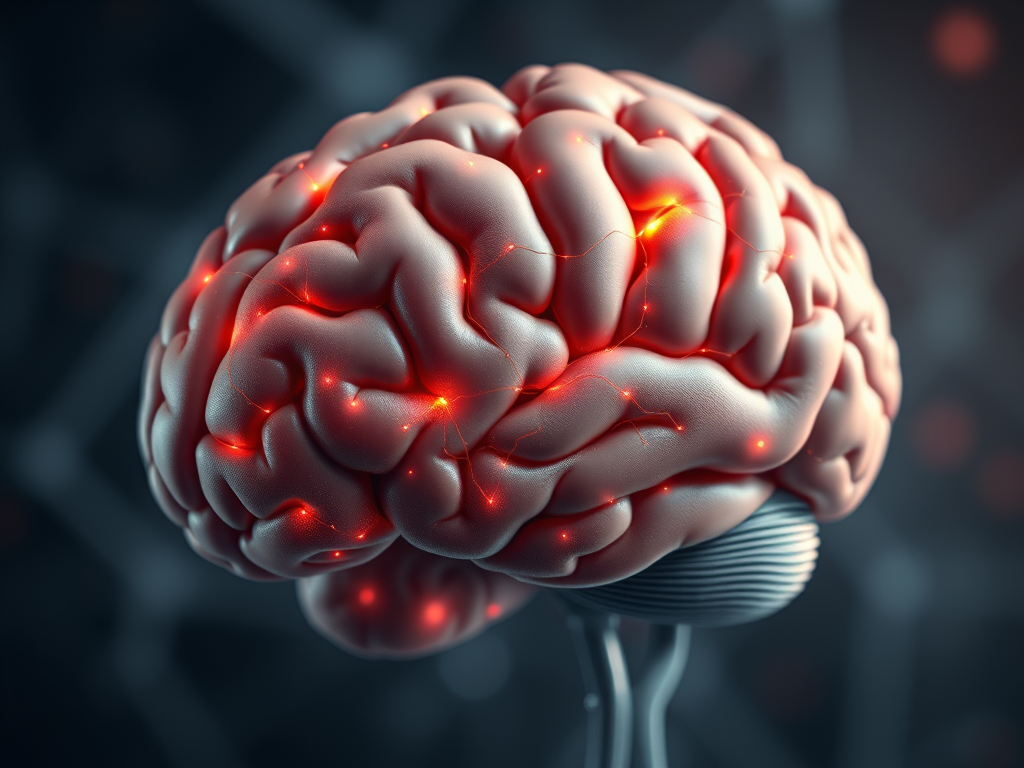
The prefrontal cortex (PFC) acts as the executive hub of the brain, guiding thought, emotion, and action. Situated at the front of the frontal lobes, it integrates information from sensory areas, memory centers, and emotional networks to coordinate behaviour that aligns with goals and social norms. Influence of the PFC is subtle but pervasive, affecting almost every aspect of human decision-making.
The PFC is not a uniform structure; it consists of distinct subregions, each contributing uniquely to human behaviour. The dorsolateral prefrontal cortex (DLPFC) governs executive functions such as planning, working memory, and cognitive flexibility. This area allows holding information in mind while manipulating it, shifting strategies when circumstances change, and planning sequences of actions toward long-term goals. Damage to the DLPFC produces difficulties in organizing thoughts, solving problems, and suppressing impulsive responses, highlighting the role in goal-directed behaviour and rational decision-making.
The ventromedial prefrontal cortex (VMPFC) integrates emotional and social information into choices. Connections with the amygdala and limbic system allow evaluation of risks, rewards, and moral dilemmas. Dysfunction of the VMPFC can produce reckless decisions, poor moral judgment, or indifference to social consequences, illustrating how emotion and cognition converge in shaping behaviour.
The orbitofrontal cortex (OFC) monitors rewards and punishments, guiding adaptive responses to changing environments. This area helps learn from mistakes and adjust actions when outcomes deviate from expectations. Damage to the OFC leads to impulsivity, compulsive actions, and difficulty anticipating consequences, demonstrating the importance of flexible, socially appropriate behaviour.
The anterior cingulate cortex (ACC) detects conflicts between competing impulses or goals and signals the need for cognitive control. This region plays a key role in error monitoring, attention, and motivation. Dysfunction in the ACC can result in apathy, poor attention regulation, or excessive anxiety, revealing its role in balancing internal drives with external demands.
The PFC governs planning, reasoning, and impulse control, allowing consideration of consequences, delaying gratification, and resisting impulses that satisfy immediate desires but harm long-term goals. Communication with the amygdala moderates emotional reactions and enables empathy and ethical reasoning. Failure of this balance leads to impulsivity or reactive behaviour, showing how moral and social conduct relies on prefrontal regulation.
The PFC also underpins creativity and problem-solving. Holding multiple concepts in working memory and considering abstract possibilities allow innovation and simulation of scenarios beyond immediate experience. This capacity to plan complex actions differentiates human behaviour from other species. Continued development into young adulthood explains adolescent risk-taking and poor foresight. Lifestyle factors such as sleep, stress management, and cognitive engagement influence efficiency, demonstrating that behaviour can be modified by nurturing the brain’s executive networks.
Subregions of the PFC operate in dynamic networks, constantly communicating with each other and with other brain regions. Interplay between cognitive control (DLPFC), emotional evaluation (VMPFC), reward monitoring (OFC), and conflict detection (ACC) enables navigation of complex social environments, pursuit of long-term objectives, and effective impulse regulation.
Practically, the prefrontal cortex functions as the conductor of the brain’s inner orchestra, coordinating emotional impulses, cognitive strategies, and social awareness into coherent action. Mapping subregion contributions explains why human behaviour is flexible, context-dependent, and capable of foresight, creativity, and moral reasoning.







Leave a Reply