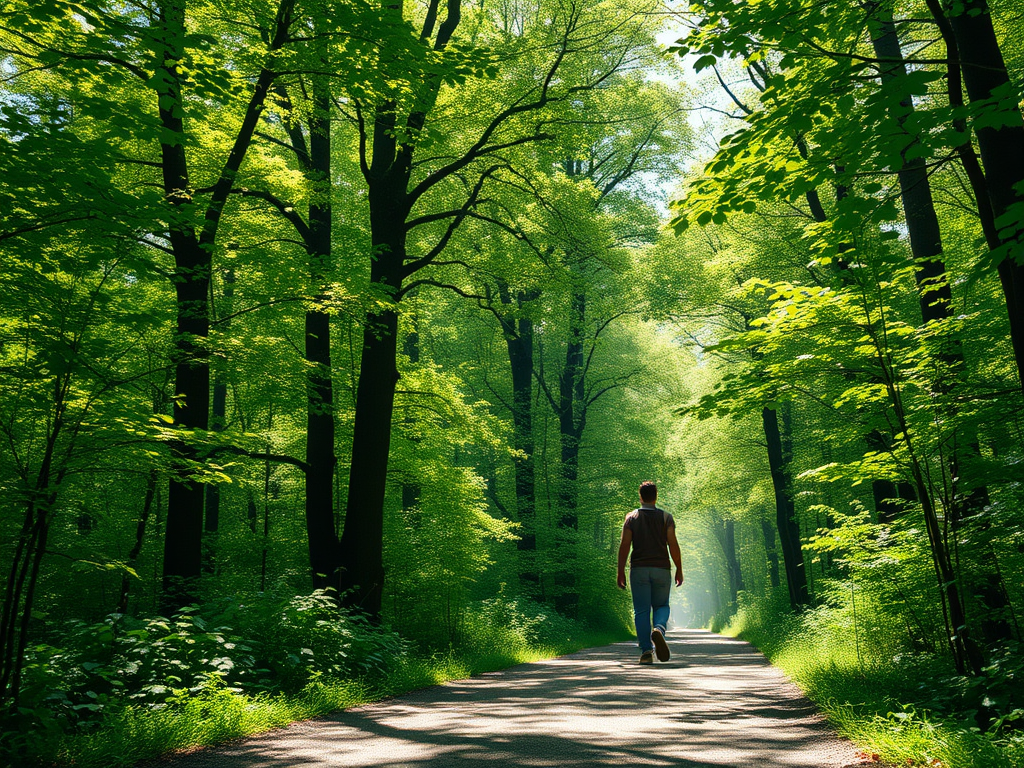
Walking in nature isn’t just a leisurely pastime for us; it serves as a powerful tool for improving mental well-being through a process known as behavioral activation. In psychology, behavioral activation refers to engaging in purposeful activities that help counteract the inertia of negative moods or depressive states. It’s about breaking cycles of inactivity and discouragement by intentionally involving ourselves in activities that promote a sense of accomplishment, pleasure, or connection.
Benefits on our wellbeing
When we walk in nature, we tap into multiple benefits that align with the principles of behavioral activation. One of the key benefits is the physical engagement of our bodies in motion. Regular walking improves our physical health, which, in turn, boosts our mental health. The simple act of walking releases endorphins, chemicals in the brain that act as natural mood lifters. The rhythmic, repetitive movement helps regulate our nervous system, lowering stress and anxiety while enhancing overall emotional balance.
Moreover, the natural environment has a calming effect on us. Exposure to nature reduces cortisol levels, which are associated with stress, and increases feelings of relaxation and well-being. Nature also provides a welcome distraction from the often overwhelming demands of daily life. Whether it’s the rustling of leaves, the chirping of birds, or the scent of pine trees, these sensory experiences ground us in the present moment, offering a break from worry and overthinking.
Mindfulness
Walking in nature also provides us with a form of mindfulness. Mindfulness, as an active practice of being present, fits perfectly with the act of walking in nature. By focusing on the sights, sounds, and smells around us, we can shift our attention away from internal struggles and rumination. This present-centered focus helps to reduce feelings of depression and anxiety, making it easier to reconnect with ourselves and our surroundings.
With each step, we actively participate in something that is both good for our bodies and minds. This sense of achievement boosts our self-efficacy, the belief in our ability to make changes or overcome obstacles. For many of us, this leads to a ripple effect: once we begin walking regularly, the sense of accomplishment from one small action encourages the pursuit of other activities, whether it’s social interaction, learning something new, or achieving goals that might have felt distant before.
As we immerse ourselves in nature, we also engage in social activation if walking with others, whether friends or family, or even encountering other walkers along the path. Human connection, even brief exchanges, plays a significant role in improving mood and promoting a sense of belonging, which are essential elements in overcoming feelings of isolation or depression.







Leave a Reply