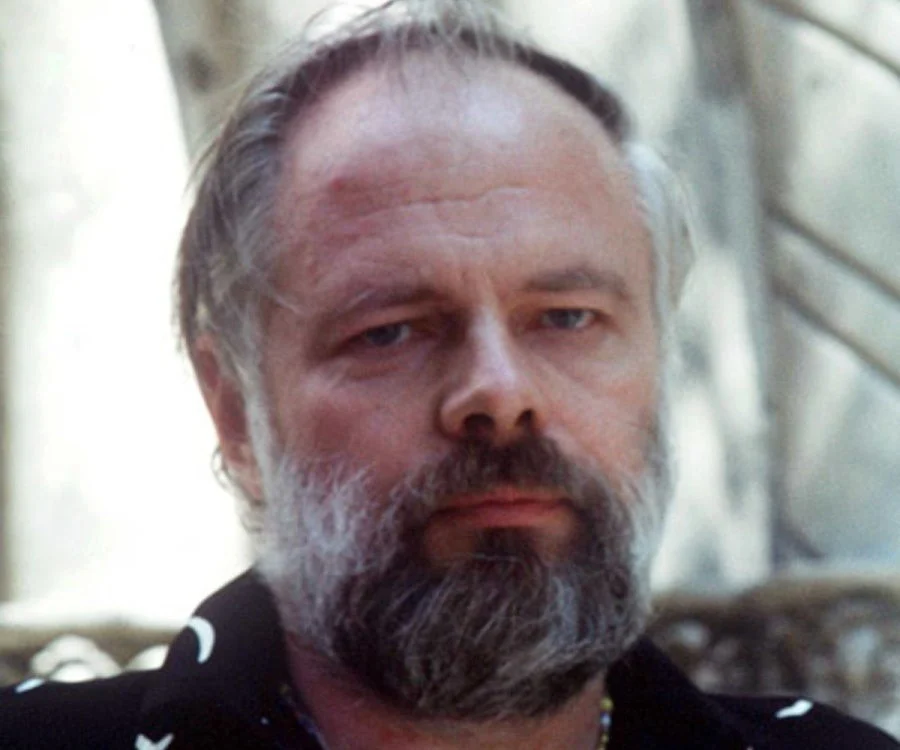
Philip K. Dick transforms science fiction into a field of psychological, spiritual, and philosophical exploration. His writing engages the imagination while unlocking deeper layers of perception and self-awareness. Through bold narrative structures and relentless inquiry, he expands the genre far beyond its traditional boundaries. Each novel and story invites the reader into a world where truth evolves, identity reveals unexpected layers, and reality pulses with infinite possibility.
A restless seeker in a changing world
Born in 1928 in Chicago and raised in California, Dick entered the postwar cultural landscape with a sensitivity that tuned him to the dissonance between surface and substance. His early life shaped a mind oriented toward deep introspection, metaphysical curiosity, and a profound concern for the inner life of human beings. With an appetite for philosophy, literature, and speculative thought, Dick began writing stories that reflected a distinct voice—imaginative, intense, and unafraid to confront the shifting nature of reality.
Throughout the 1950s and 1960s, he filled pages with visions that challenged linear thinking and mechanical storytelling. Each work opened a door to deeper questions about perception, time, memory, and the structures of authority. His fiction established new coordinates for science fiction, blending technological speculation with emotional insight.
Perception as portal
Dick orients his fiction around one central idea: perception creates experience. In his novels, reality responds to consciousness, and the boundaries between inner and outer worlds remain fluid. Ubik reveals time as an interactive medium, alive and responsive. The Three Stigmata of Palmer Eldritch introduces metaphysical dimensions through psychedelic experience and corporate intervention. A Scanner Darkly explores identity through surveillance and psychological fragmentation, opening the reader to the possibility of multiple selves.
Each narrative emphasizes awareness over certainty. Dick empowers the reader to question not out of doubt but out of devotion to clarity. He grants vision through contradiction and harmony alike, offering stories that flow from psychological depth and philosophical daring.
The pink light and the inner awakening
In 1974, Dick experienced a sequence of visionary insights that he later described as contact with a vast living intelligence. These moments, infused with light and intuition, opened his thought to the possibility of layered time, parallel consciousness, and divine communication. He gave this intelligence the name VALIS and entered a creative period rich with metaphysical focus.
He recorded his reflections in a massive body of writing known as the Exegesis—a synthesis of spiritual philosophy, personal exploration, and conceptual experimentation. This stream of insight shaped works such as VALIS, Radio Free Albemuth, and Divine Invasion, each of which weaves theological reflection with speculative narrative.
This period reveals a writer fully immersed in inquiry, anchored in spiritual wonder and intellectual courage. His mind engaged multiple traditions—from early Christianity to modern mysticism—while continuing to innovate within fiction’s most elastic genre.
A style of momentum and revelation
Dick’s prose style flows with immediacy. His stories unfold quickly, often through dialogue and internal conflict, always with a sense of urgency. He favors action that opens doors to reflection. Characters speak and move with a vivid presence, carrying the emotional charge of their dilemmas and visions.
Structure plays a central role in his style. He builds tension not through conventional plot twists but through layered realities, shifting perceptions, and unexpected intrusions of the sacred into the everyday. His language avoids ornamentation and reaches for impact. Each sentence contributes to a larger architecture of revelation.
Enduring impact and cultural presence
Dick’s influence continues to shape literature, film, and philosophical discourse. Adaptations such as Blade Runner, Minority Report, A Scanner Darkly, and The Man in the High Castle carry his themes into visual language, introducing new audiences to the philosophical and emotional richness of his thought. These interpretations confirm the timeless appeal of his central concerns: freedom, awareness, identity, and the nature of reality.
His stories speak to a world increasingly shaped by data, simulation, and narrative manipulation. Through his work, readers find tools for navigating this complexity. He offers not escape, but orientation. His voice strengthens the desire for meaning, authenticity, and inward attention.
The invitation to awaken
Philip K. Dick opens a space where fiction meets philosophy, where intuition guides inquiry, and where each reader becomes a co-creator of experience. His writing affirms the value of imagination grounded in truth-seeking. He respects the intellect while feeding the spirit.
Every novel, every character, and every shift in perception contributes to a larger vision: consciousness as the key to transformation. Dick’s legacy invites full participation in the mystery of life. He calls forth courage, curiosity, and the willingness to see with fresh eyes.
In his universe, clarity emerges through challenge, and understanding deepens through openness. He writes with a mind tuned to wonder, a heart attuned to complexity, and a spirit committed to the possibilities of being fully alive.







Leave a Reply