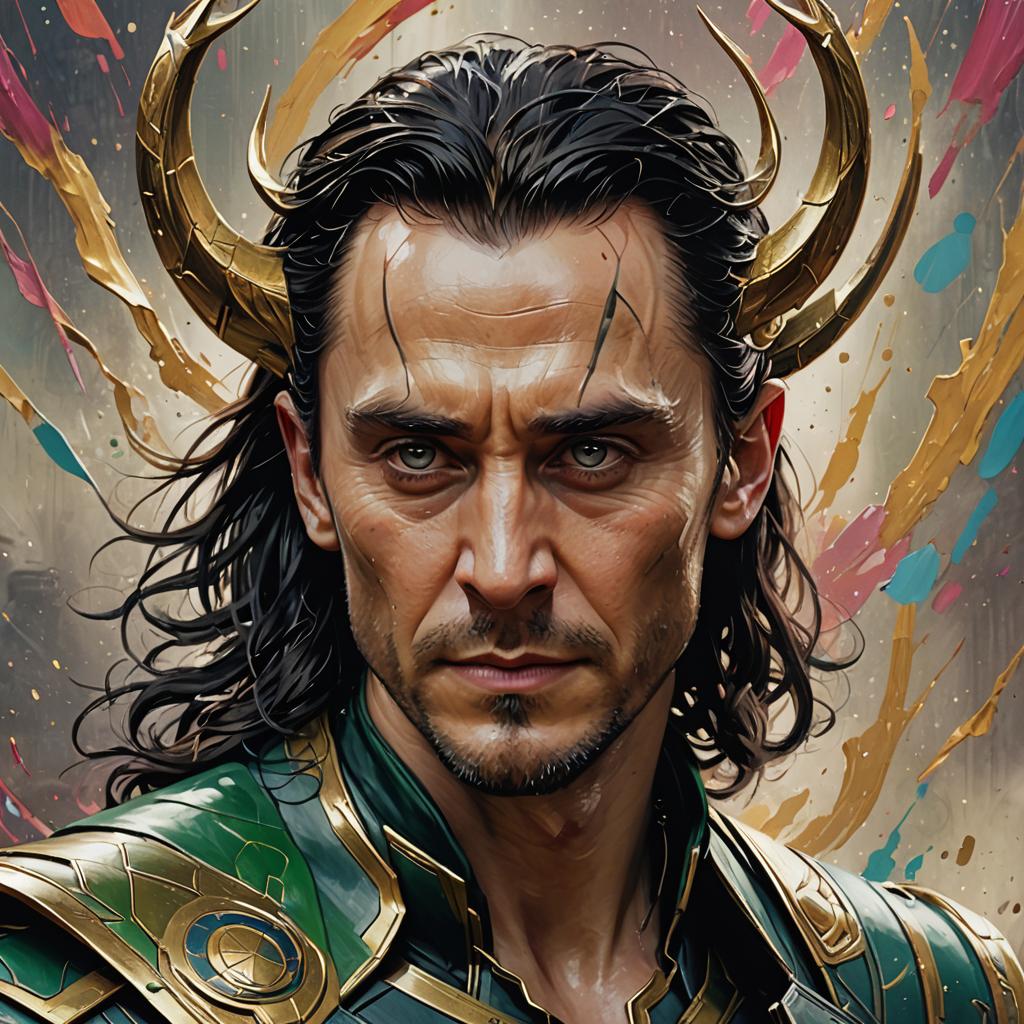
Loki is one of the most intriguing gods in Norse mythology. Despite the many trials and tribulations he encounters, Loki, the trickster, consistently demonstrates his resilience through his resourcefulness, creativity, and unwavering determination.
One of the most famous examples of Loki’s resilience is his role in the death of Baldr, the beloved son of Odin and Friggwas. This god is known for his beauty, goodness, and invulnerability. However, he was plagued by ominous dreams of his own death, prompting Frigg to extract oaths from all beings and elements of nature to never harm him.
Feeling invincible, the gods would playfully hurl weapons and objects at Baldr, knowing that nothing could harm him. However, Loki, envious of Baldr’s popularity and seeking mischief, discovered that mistletoe had been overlooked in Frigg’s oath-taking ceremony. Taking advantage of this loophole, Loki crafted a dart of mistletoe and gave it to Baldr’s blind brother, Hodr, urging him to join in the game.
Tragically unaware of the nature of the dart, Hodr threw it at Baldr, piercing him and causing his death. The gods grieved and Frigg’s cried.
Loki soon found himself the target of the gods’ wrath. Despite being pursued relentlessly by the furious gods seeking retribution for his treachery, Loki’s resourcefulness and cunning allowed him to evade capture. He took on various disguises to evade capture, transforming into a salmon, a falcon, and other creatures to elude his pursuers.
What are the psychological lessons of the tale from a Jungian perspective?
From a Jungian perspective it is worth analysing the following aspects of the myth:
1. The overprotection provided by Baldr’s parent – it can be seen as a mother complex that actually contributed to his demise.
2. Baldr’s invulnerability is a form of narcissism.
3. In his interaction with Baldr, Loki is controlled by dark tendencies such as envy, which are nested in the shadow archetype
4. Loki as manifestation of the trickster archetype
5. Loki’s shapeshifting as symbol of resilience
The mother complex
The mother complex, as described by Carl Jung, refers to the constellation of emotions, attitudes, and experiences associated with the archetype of the protection. This term encompasses both positive and negative aspects of parenting. On a positive it can include feelings of nurturance, protection, and dependence. From a negative perspective there are potential issues such as overprotection, enmeshment, and psychological dependency.
Jungian psychology suggests that an excessive emphasis on protection and sheltering can have unintended consequences, including the inhibition of individuation. Synonym to self-realization, individuation is the process of becoming a psychologically whole and autonomous individual.
In the case of Baldr, his parents’ overprotective behavior is an expression of the mother complex. By insulating Baldr from all potential sources of harm, Odin and Frigg inadvertently contribute to his psychological vulnerability.
Paradoxically, Odin and Frigg unwittingly set in motion the very events that lead to his downfall. In their efforts to shield Baldr from harm, they fail to acknowledge that they cannot protect him from everything.
Baldr’s narcissism
For Baldr, his invulnerability is a central aspect of his identity. This sense and superiority contributes to Baldr’s narcissistic tendencies. His hubris is that he believes himself to be above mortal concerns and immune to harm.
His narcissism grows following the admiration he receives from others. This constant validation of his supposed invincibility fuels Baldr’s sense of entitlement and reinforces his belief in his own superiority.
It is his refusal to acknowledge his own vulnerabilities and mortality that ultimately leads to his downfall. By embodying the idealized image of strength, beauty, and invincibility, Baldr denies his vulnerabilities, effectively repressing his shadow aspects.
In this sense, Baldr’s invulnerability is a metaphor for the pitfalls of narcissism. The illusion of perfection and invincibility can ultimately mask deeper insecurities and vulnerabilities that reflect the shadow.
Loki as manifestation of the shadow archetype
Loki’s envy of Baldr’s popularity among the gods leads him to orchestrate Baldr’s demise through deceit and trickery. This envy and resentment reflect the darker aspects of Loki’s psyche, characteristic of the shadow archetype. His jealousy blinds him to the potential consequences of his actions, leading to tragedy and chaos for the entire pantheon.
In this way, Loki embodies the shadow’s propensity for undermining and sabotaging the well-being of oneself and others. His envy-driven actions highlight the destructive potential of unconscious motivations.
Loki as a trickster
From a Jungian perspective, Loki’s role as the trickster in Norse mythology holds significant symbolic meaning, particularly in relation to the concept of individuation—the process of integrating the conscious and unconscious aspects of the psyche to achieve wholeness and self-realization.
As the trickster figure, Loki embodies qualities such as cunning, unpredictability, and mischief. He disrupts the status quo, challenges societal norms, and pushes boundaries, often through acts of deception and subversion. In doing so, Loki stimulates changes, both within himself and in the world around him.
Baldr’s apparent immunity to harm leads to a state of immaturity and naivety. This is because he is shielded from the challenges and adversities that shape the growth and development of the other gods. This state of complacency keeps Baldr trapped in a perpetual state of dependency, preventing him from fully embracing the complexities of life.
Loki, with his cunning and subversive nature, recognizes the dangers of this complacency and seeks to disrupt the illusion of invulnerability surrounding Baldr. Through acts of deception and manipulation, Loki orchestrates Baldr’s demise, challenging the gods to confront the fragility of existence and the inevitability of fate.
Baldr’s death serves as a cautionary tale about the dangers of false beliefs and the consequences of blind faith. The belief in Baldr’s invulnerability creates a false sense of security, leading them to neglect the risks and uncertainties of existence. Loki’s deception exposes the fallacy of our assumptions, reminding us of the importance of critical thinking in the face of seemingly immutable truths. This cautionary tale urges us to question our own beliefs and assumptions, recognizing that unchecked certainty can lead to complacency.
Shapeshifting as a symbol of resilience
By embodying various forms, Loki demonstrates his capacity to adapt to changing environments and circumstances, emphasizing the importance of flexibility and versatility in times of crisis. Practically shapeshifting reflects a deeper psychological resilience—a willingness to embrace change and embrace new identities as a means of self-preservation.
Also, shapeshifting symbolizes his fluidity of identity and his ability to navigate the complexities of the self. In embracing different forms, Loki transcends rigid definitions and limitations, embracing the fluid nature of existence.




Leave a Reply