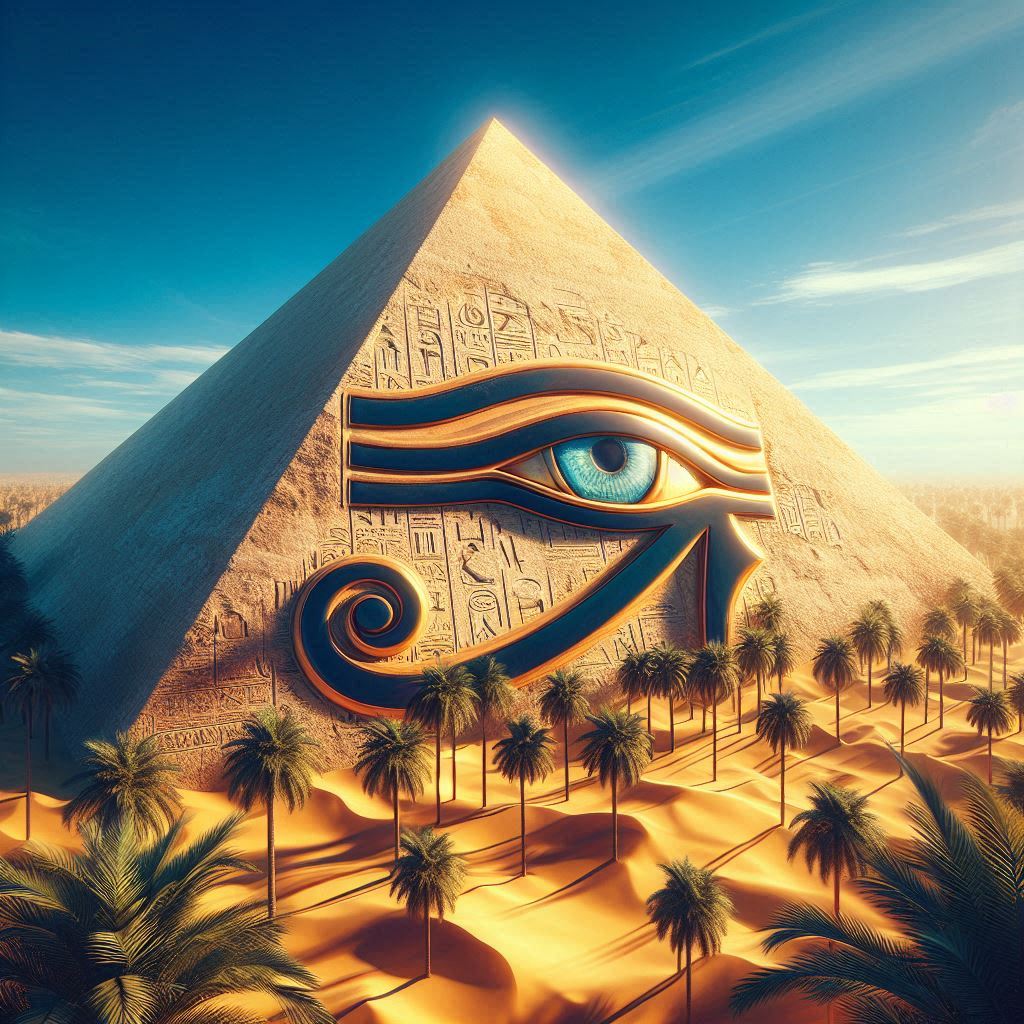
The ancient Egyptian myth of Horus is one of the most compelling and intricate tales from antiquity, rich with symbolism and profound psychological significance. Through the lens of Carl Jung’s analytical psychology, the story of Horus can be interpreted as a manifestation of universal archetypes and the dynamics of the collective unconscious.
The myth of Horus
The myth of Horus primarily revolves around the cosmic struggle between Horus, the god of the sky, and his uncle Set, the god of chaos and desert. Horus is the son of Osiris, the god of the afterlife, and Isis, the goddess of magic and motherhood. After Set murders Osiris and usurps the throne of Egypt, Horus embarks on a quest to avenge his father and reclaim his rightful place as the ruler.
This myth is rich with symbolism: the divine kingship of Horus, the protective and nurturing nature of Isis, the destructive chaos embodied by Set, and the resurrection and immortality of Osiris. Each of these elements resonates with Jungian archetypes and offers insights into the human psyche.
Horus as the hero archetype
In Jungian psychology, the hero archetype represents the ego’s quest for self-actualization and individuation. Horus embodies this archetype through his journey of overcoming adversity, facing his shadow (Set), and achieving wholeness. His battles with Set symbolize the internal struggle each individual faces with their own darker aspects and unconscious desires.
Horus’s ultimate victory and ascension to the throne reflect the successful integration of these shadow elements, leading to inner equilibrium, which is the legend is represented by the concept of Ma’at. This mirrors the process of individuation, where the conscious and unconscious aspects of the psyche are harmonized.
Horus and perspective
Horus, with his falcon head, symbolizes the ability to see from a high vantage point. This elevated view represents seeing the bigger picture, understanding the broader context, and gaining insight into the interconnectedness of different aspects of life.
The perspective provided by Horus’s falcon vision is not just about understanding external situations but also about looking inward. By seeing ourselves from above, we gain clarity about our behaviors, motivations, and patterns. This self-reflective perspective fosters deep self-awareness and self-knowledge. This helps in understanding our true nature, strengths, weaknesses, and the underlying reasons for our actions.
The detachment symbolized by Horus is about achieving objectivity. It allows us to step back from our subjective experiences and see them as part of a larger whole. An objective view is crucial for gaining self-awareness, as it reduces bias and emotional interference.
Isis and the Great Mother archetype
Isis, as the mother of Horus and wife of Osiris, embodies the Great Mother archetype. She represents fertility, protection, nurturing, and the redemptive power of love and magic. Her unwavering support and magical prowess are crucial in the resurrection of Osiris and the protection and upbringing of Horus.
Jung saw the Great Mother archetype as a dual figure, capable of nurturing and destroying. Isis’s role in the myth highlights her protective and life-giving aspects, showcasing the nurturing energy that guides and sustains the hero on his journey.
Set as the shadow archetype
Set, the god of chaos and disorder, is a quintessential representation of the shadow archetype in Jungian psychology. The shadow comprises the repressed, darker aspects of the self, often embodying chaos, destruction, and the unacknowledged parts of the psyche.
Set’s antagonism towards Horus symbolizes the externalization of these inner conflicts. The myth illustrates the necessity of confronting and integrating the shadow to achieve wholeness. Horus’s repeated battles with Set signify the ongoing internal struggle and our resilience in facing his inner darkness.
Osiris and the archetype of the Wise Old Man
Osiris, the father of Horus and the god of the afterlife represents the Wise Old Man archetype. He embodies qualities like wisdom and the guiding spirit that transcends mortality. Despite his death, Osiris’s wisdom and legacy persist, providing guidance and inspiration to Horus.
In Jungian terms, the Wise Old Man serves as a mentor and a symbol of the higher self. In purpose in the psyche is to offer insight during our spiritual quests. Osiris’s resurrection and continued influence signify the enduring nature of wisdom and the perpetual cycle of life, death, and rebirth.
Restoring Ma’at
The ultimate goal of Horus’s journey is the restoration of Ma’at. This is an ancient Egyptian concept symbolizing truth, balance, order, and harmony. This aligns with the psychological goal of achieving inner equilibrium and wholeness. The myth suggests that this state is attained through the harmonious interaction between the anima and the ego.
The anima’s nurturing guidance is crucial for the ego’s actions, which are necessary to confront and integrate the chaotic aspects of the psyche. This holistic process leads to the re-establishment of Ma’at, symbolizing inner harmony and psychological wholeness.
Concluding remarks
The myth of Horus, like all myths, arises from the collective unconscious—a reservoir of shared experiences and archetypal patterns common to all humanity. Jung believed that myths are expressions of the collective unconscious, revealing universal truths and psychological processes. The appeal of the Horus myth lies in its embodiment of these themes.







Leave a Reply