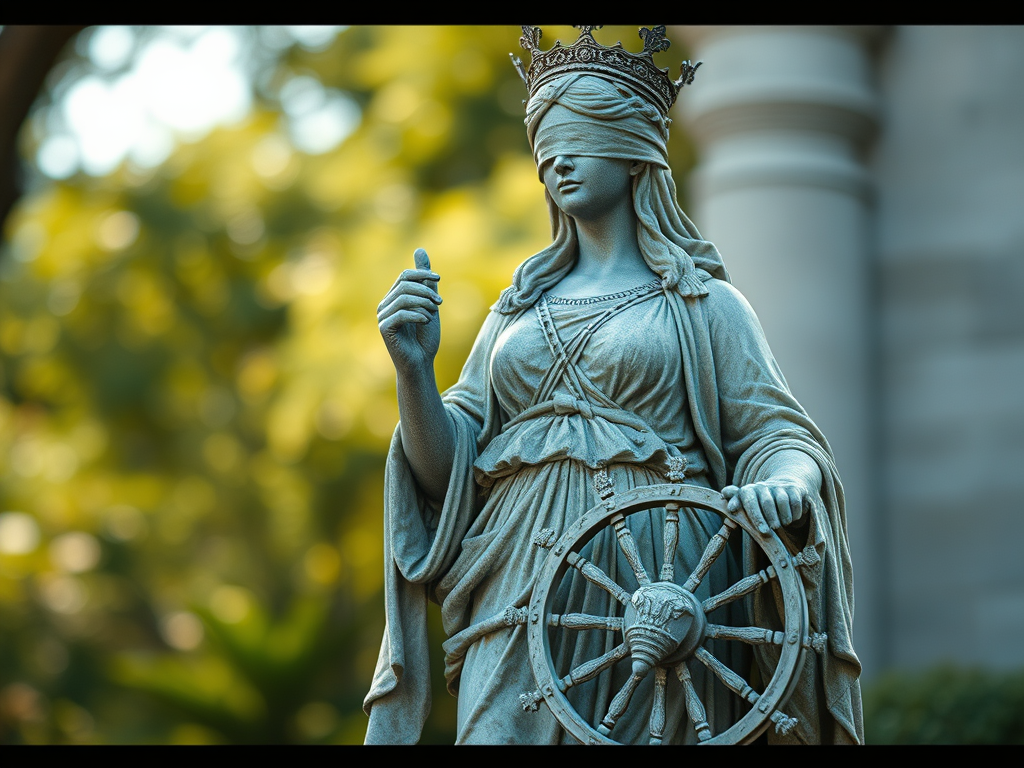
Fortuna, the Roman goddess of fortune and luck, holds a significant place in ancient mythology. Her name derives from the Latin word fors, meaning chance or luck, embodying the unpredictable nature of both good and bad fortune. The Romans believed that Fortuna governed the fate of individuals and the destiny of entire nations. Her influence extended beyond mere luck, encompassing the unpredictable swings of life, from prosperity to disaster.
Depictions of Fortuna
Ancient depictions of Fortuna often show her with a variety of symbols that emphasize her power over chance and change. The wheel of fortune, one of her most recognizable symbols, represents the constant turning of life’s events, which can lift people up or bring them down. In her other hand, Fortuna frequently holds a cornucopia, symbolizing abundance and the bounty she can provide when fortune smiles. Artists sometimes portrayed her as blindfolded, signifying her impartiality, highlighting how she dispenses fortune without regard to merit or status.
Worship of Fortuna in ancient Rome
In ancient Rome, Fortuna’s worship involved intricate rituals and devotions reflecting her vital role as the goddess of luck and fortune. The Romans established various shrines and temples in her honor, such as the Temple of Fortuna in Rome, which stood as a grand tribute to her power over fate. Her most significant festival, the Fortuna Publica Populi Romani, occurred annually on June 24, where Romans gathered to seek her blessings and protection for both personal and communal prosperity. Priests conducted rituals at her temples, lighting incense and offering fruits, grains, and sacrifices, hoping to ensure her favor.
Fortuna and the rituals of women
Women held a unique relationship with Fortuna and often turned to her for blessings in matters of fertility, marriage, and family well-being. Fortuna Virilis, a specific aspect of the goddess, received devotion primarily from women seeking harmony in relationships or stability in the home. Women conducted private rituals by bathing statues of Fortuna in milk and offering sweet cakes or honey. This practice symbolized their desire for a nurturing and protective influence in their lives. In some accounts, young women would carry small statues or amulets of Fortuna as charms to bring good luck in marriage and motherhood.
The Wheel of Fortune as a ritual object
One of Fortuna’s most recognized symbols, the Wheel of Fortune, became a focal point in rituals associated with the goddess. This wheel, depicted in art and used in rituals, symbolized life’s ever-turning cycle of fortune. People would spin symbolic wheels during ceremonies to symbolize surrendering control and acknowledging her dominance over fate. These ritualistic spins reinforced the idea that fortune could shift unpredictably, and individuals invoked her to guide the wheel in their favor, praying for stability and good fortune.
Military rituals
Roman soldiers and generals held Fortuna in high regard, frequently seeking her protection and blessings before heading into battle. In these military rituals, soldiers would gather around altars dedicated to Fortuna Redux, the aspect of Fortuna associated with safe returns and victory. Commanders made offerings of animals or valuable items and recited prayers to ensure Fortuna’s goodwill. Soldiers often wore amulets or engraved Fortuna’s symbols on their weapons, believing that these actions would bring them success and shield them from harm. Before embarking on campaigns, entire legions sometimes participated in elaborate rites to ask the goddess to favor their endeavors.
Superstitions and Fortuna’s role in daily life
Fortuna inspired numerous superstitions in Roman society, where people constantly sought signs of her favor or displeasure. Romans believed that certain actions or omens could signal Fortuna’s presence. For example, finding a coin or stumbling upon unexpected wealth was thought to indicate her blessings, while a sudden loss symbolized her withdrawal. Many Romans avoided making grand declarations about their future successes, fearing she might punish such displays of overconfidence. People developed rituals like knocking on wood or whispering prayers to ensure Fortuna’s continued favor and prevent any unforeseen reversal of fortune.
Fortuna in agricultural rituals
Agricultural rituals reflected Fortuna’s influence on crops and the prosperity of farms. Roman farmers performed seasonal rites to secure her favor and protection, particularly during sowing and harvest times. They made offerings of the first grain or produce to the goddess, believing that her favor could ensure a bountiful harvest and protect against natural disasters. In some areas, farmers would dedicate the finest portion of their harvest to Fortuna’s shrines, expressing gratitude for her blessings and seeking continued abundance. These rituals reinforced her connection to both natural cycles and human survival.
Fortuna’s place in gambling
Romans associated Fortuna closely with games of chance, as they believed she ruled over outcomes that involved luck and risk. Gamblers would invoke her name before placing bets, hoping she would smile upon them and bring them success. Rituals in her honor often took place in gambling houses, where gamblers made small offerings of coins to her shrine or statues. Superstitions around Fortuna’s presence were particularly common, with gamblers sometimes refusing to play on days deemed unfavorable by omens. The connection between Fortuna and gambling highlighted the Romans’ belief in her unpredictable nature, capable of both granting sudden wealth and swiftly taking it away.
Fortuna and the concept of fate
While Fortuna personifies chance and luck, she is often linked to the larger concept of fate. Ancient Roman beliefs did not draw a strict line between fortune and fate, as both forces were seen as shaping the course of events. Fortuna’s influence on individuals and nations suggests that luck and destiny are intertwined, with her whims altering the path set by fate. This perspective reinforced the belief that even the best-laid plans could be overturned by forces beyond human comprehension.
Legacy of Fortuna’s rituals in modern superstitions
While formal worship of Fortuna diminished with the rise of Christianity, many of her associated rituals and superstitions survived in different forms. Modern practices like carrying lucky charms, making wishes on coins, and invoking “good luck” before challenges all echo the ancient rituals once dedicated to Fortuna. Though her temples may have fallen, the legacy of Fortuna lives on, reminding us that humans still seek the intervention of luck and fortune, much as the Romans once did. These contemporary expressions show that Fortuna’s influence persists, embedded in cultural traditions and everyday gestures that reflect our enduring relationship with chance.






Leave a Reply