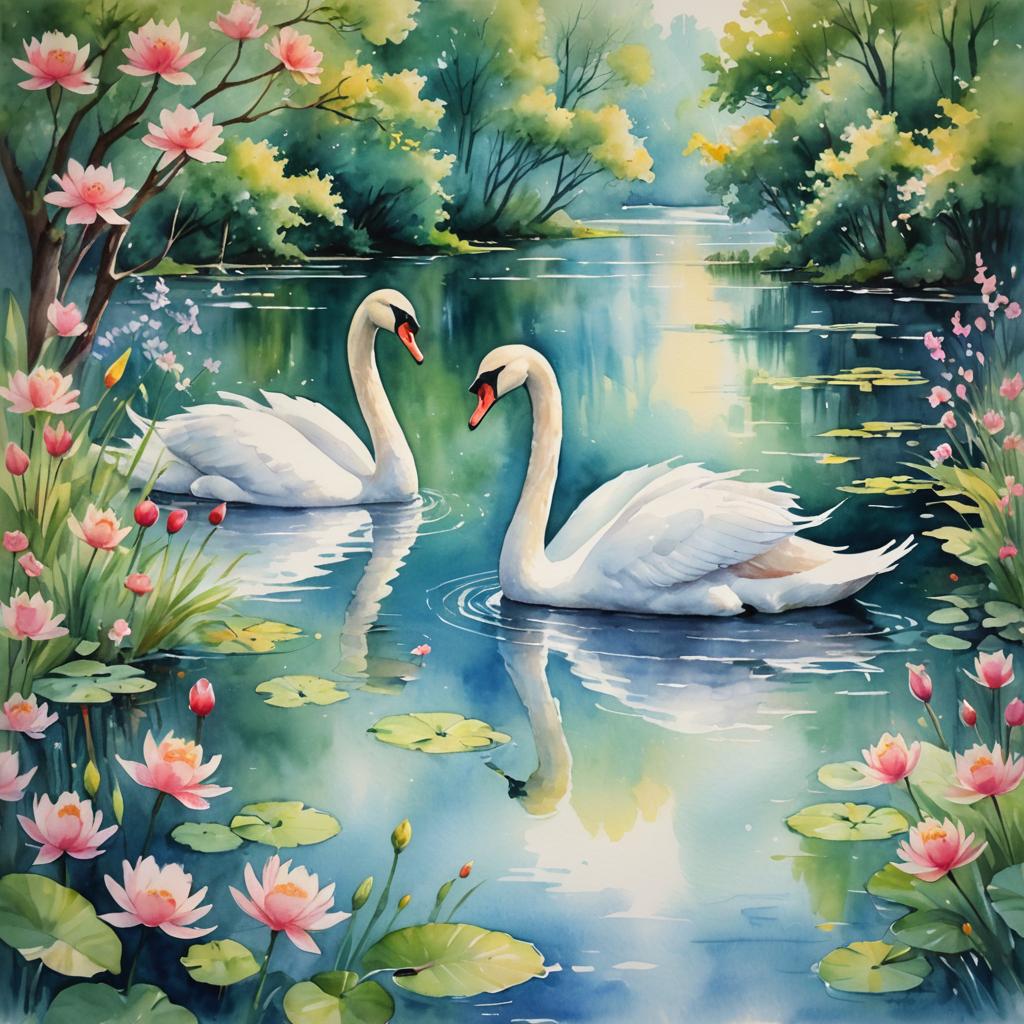
Swans have long been revered for their elegance and grace, often serving as symbols of purity, beauty, and transformation. In both dreams and mythology, swans carry a deeper significance, acting as bridges between the material and spiritual worlds. Their presence evokes a sense of mystery and profound wisdom, drawing on ancient cultural stories as well as our own inner experiences. By exploring the role of swans in dreams and mythology, we can better understand their multifaceted symbolism and the emotional, psychological, and spiritual dimensions they represent.
Dreams of swans
When swans appear in dreams, they often symbolize transformation. Their association with water, a common symbol for emotions and the unconscious, links them to deep inner change. A dream of a swan gliding effortlessly on calm waters might suggest a period of serenity and emotional balance. If the swan flies or takes off, this may indicate transcendence or the realization of one’s higher self. The purity of the swan’s white feathers is also a common dream symbol, representing spiritual purity, innocence, or a desire to reconnect with one’s true nature.
Dreaming of a swan in distress or facing danger might reflect inner conflict or emotional turbulence. Just as swans are known for their loyalty and devotion, particularly to their mates, a dream of a lone swan could reflect feelings of isolation or a search for deeper emotional connections. Swans, by their very nature, evoke the tension between freedom and attachment. They call upon the dreamer to reflect on their own emotional bonds and the nature of love in their lives.
Ancient mythology
Swans feature prominently in many ancient myths and legends. In Greek mythology, the swan is associated with Apollo, the god of music, poetry, and prophecy, reflecting their connection to creativity and higher knowledge. Zeus, too, famously transformed into a swan in the myth of Leda, where he seduced her in this form, a tale that interweaves the swan with themes of desire, transformation, and the interplay between divine and human realms.
Celtic mythology also reveres the swan. Swans were believed to be mystical creatures that could move between worlds, particularly between the physical world and the Otherworld, the realm of spirits. They often appear in stories as shape-shifters, beings that transform from human to swan form, symbolizing the fluidity of identity and the soul’s journey between life and death. In Irish legends, the Children of Lir were transformed into swans for 900 years, cursed to roam the seas until their redemption, a powerful narrative that reflects themes of exile, longing, and eventual liberation.
Nordic symbols
In Nordic mythology, swans were linked to love, loyalty, and fate. The Valkyries, divine maidens who chose the fate of warriors in battle, were often depicted as wearing swan feathers. Their connection to swans represents the ethereal nature of fate and the power of transformation through sacrifice. In some versions of these myths, swan maidens descend to the earth to bathe in lakes, and if a mortal man captures one of their feathered cloaks, she must stay with him until he releases her, a metaphor for the delicate balance between freedom and captivity in relationships.
Eastern beliefs
In Hinduism, the swan is closely associated with the goddess Saraswati, who embodies wisdom, knowledge, and artistic inspiration. The swan, often depicted alongside her, is said to have the ability to separate milk from water, symbolizing the power of discernment and spiritual wisdom. The swan here represents the soul’s ability to transcend the material world and access divine truths. In Buddhist traditions, swans are symbols of spiritual awakening, purity, and enlightenment. Their ability to glide over water without being touched by it reflects the ideal of remaining untouched by the illusions and attachments of the world.
Jungian interpretation
From a Jungian perspective, the swan represents the process of individuation, the psychological journey toward self-realization and wholeness. As a creature that moves gracefully between water and air, the swan symbolizes the integration of unconscious emotions and higher consciousness. Its transformation from a cygnet to a beautiful swan echoes the process of personal growth, where the ego evolves into a more complete and integrated self. Jung also associated birds with the spirit or soul, so swans in dreams or myths can be seen as symbols of the soul’s quest for freedom and expression.
Modern symbolism
In modern culture, swans often symbolize romance, fidelity, and beauty. Their lifelong monogamous relationships make them symbols of enduring love and commitment. Swans’ sleek, majestic appearance has led them to be associated with perfection and aesthetic grace in art, literature, and ballet, most famously in Tchaikovsky’s Swan Lake, where the swan serves as a metaphor for the tragic yet beautiful nature of love, fate, and sacrifice.
Swans in contemporary interpretations often retain their traditional associations but have taken on new layers of meaning. For some, they represent inner peace and the search for beauty in a chaotic world. Their silent glide across the water symbolizes the desire for harmony amidst emotional turmoil. In a world that often feels fragmented, the swan’s ability to transition between states of being reflects our own longing for wholeness and balance.
Swans as guides
Swans in dreams and mythology serve as powerful symbols of transformation, beauty, and the journey between worlds. They represent not only the physical grace and purity we observe in nature but also the deeper psychological and spiritual processes that shape our lives. Whether appearing in dreams as messengers of emotional change or in mythology as guides between realms, swans remind us of the eternal dance between our inner and outer worlds. Their elegance and mystery continue to inspire, offering a bridge between the material and the divine, between our earthly struggles and the higher truths we seek.







Leave a Reply