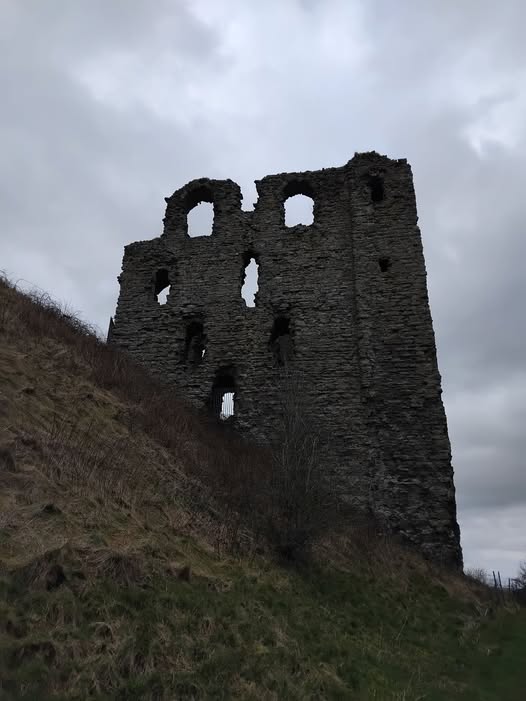
Nestled in the picturesque Shropshire countryside, Clun Castle stands as a testament to England’s tumultuous medieval history. Perched high on a natural rocky mound, the castle overlooks the tranquil River Clun, offering visitors a glimpse into a bygone era. Established shortly after the Norman Conquest, Clun Castle played a pivotal role in the defense of the Anglo-Welsh border. Its strategic location and storied past make it a site of significant historical interest.
The Norman foundation
In the late 11th century, William the Conqueror granted lands to his loyal followers to secure the volatile Anglo-Welsh border. Among these was Picot de Say, who received the estates of Clun and Stokesay. Recognizing the strategic importance of the area, Picot constructed a motte-and-bailey castle atop a natural spur, effectively guarding the Clun valley. This stronghold became the center of the vast barony of Clun, symbolizing Norman authority in the region.
The Fitzalan legacy
By 1155, through marriage to Isabella de Say, the castle came under the ownership of William Fitzalan of Oswestry. The Fitzalan family, wielding considerable power, administered the barony for the next 400 years. They governed with a blend of Welsh and English law, reflecting the unique cultural landscape of the borderlands. Under their stewardship, the nearby settlement of Clun expanded, with a new town layout featuring a grid of streets and regular burgage plots.
Turbulent times
The castle’s history is marked by several attacks. In 1196, Rhys, prince of south Wales, captured and burned it down. Later, in 1215, John Fitzalan joined a rebellion against King John, prompting the monarch to dispatch troops to besiege the castle. Despite these challenges, the fortress withstood a siege by Llewellyn of Wales in 1233, underscoring its robust defenses and strategic significance.
A shift in purpose
By the mid-14th century, the Fitzalans had shifted their primary residence to Arundel Castle in Sussex. Clun Castle transitioned into a country retreat, primarily serving as a hunting lodge. Despite this change, it remained an important administrative center, with records indicating that as late as 1370, valuables were stored securely within its walls.
Decline and legacy

The early 15th century brought devastation to the area, as followers of Owain Glyn Dwr ravaged the surroundings, leading to a decline in prosperity. By 1539, the castle was in ruins. Today, like other castles, the remains of Clun Castle offer a window into its storied past, with its dramatic riverside ruins and extensive earthworks standing as a testament to its historical significance.

Visiting Clun Castle (and other castles) provides not only a journey through history but also a chance to appreciate the resilience and adaptability of a structure that has witnessed centuries of change.







Leave a Reply