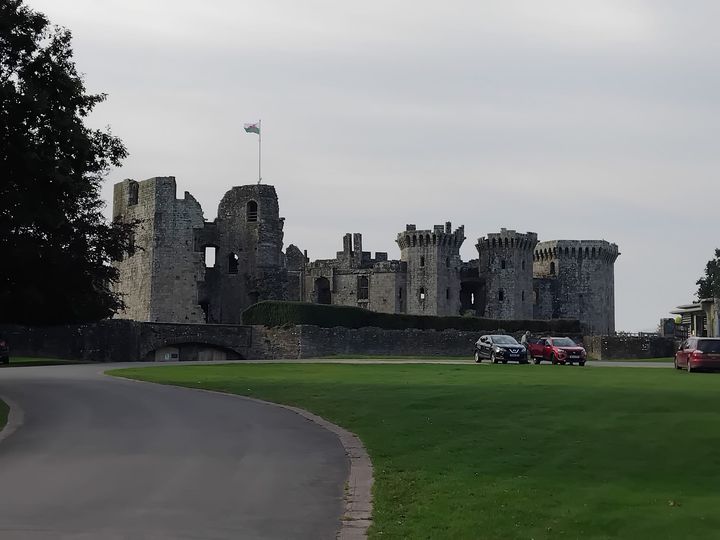
Raglan Castle stands as a remarkable example of late medieval architecture in southeast Wales. Located near the village of Raglan in Monmouthshire, this fortress offers a striking blend of military power and luxurious living. Built in the 15th century, the castle’s history reflects the turbulent times of civil war, noble ambition, and the desire for status and security.
Location
Its location, about 8 miles southwest of Monmouth and 12 miles northeast of Abergavenny, was no accident. The castle’s commanding position allowed control over key routes in the region, making it an important strategic site in Wales. The surrounding area’s fertile land also made Raglan a center of agricultural wealth. This combination of defensive strength and economic prosperity turned the castle into a symbol of power and influence during its time.
History
Sir William ap Thomas, a Welsh knight, began construction in the early 15th century, and his son, William Herbert, expanded it into the grand structure that visitors admire today. Herbert, a man of ambition and political acumen, became the Earl of Pembroke and used the castle to solidify his status among the English nobility. He made sure that Raglan Castle embodied not just military might but also the trappings of high society, including large halls, grand chambers, and an impressive gatehouse.
The castle played a significant role during the English Civil War in the 17th century. Its owner at the time, the Marquis of Worcester, remained loyal to King Charles I. As one of the last Royalist strongholds, Raglan Castle endured a prolonged siege in 1646 by Parliamentarian forces. Its walls bore witness to fierce resistance, but the tide turned, and the castle eventually fell. Parliament’s forces dismantled large sections of the castle to prevent its future use, leaving it in the ruined yet awe-inspiring state that remains today.
Tourist information
Despite its partially ruined condition, Raglan Castle still exudes a sense of grandeur. Visitors can explore its surviving towers, climb the Great Tower, and imagine life in its vast halls. The surrounding landscape, with views stretching over the Welsh countryside, enhances the castle’s atmosphere, offering a connection to its medieval past.







Leave a Reply