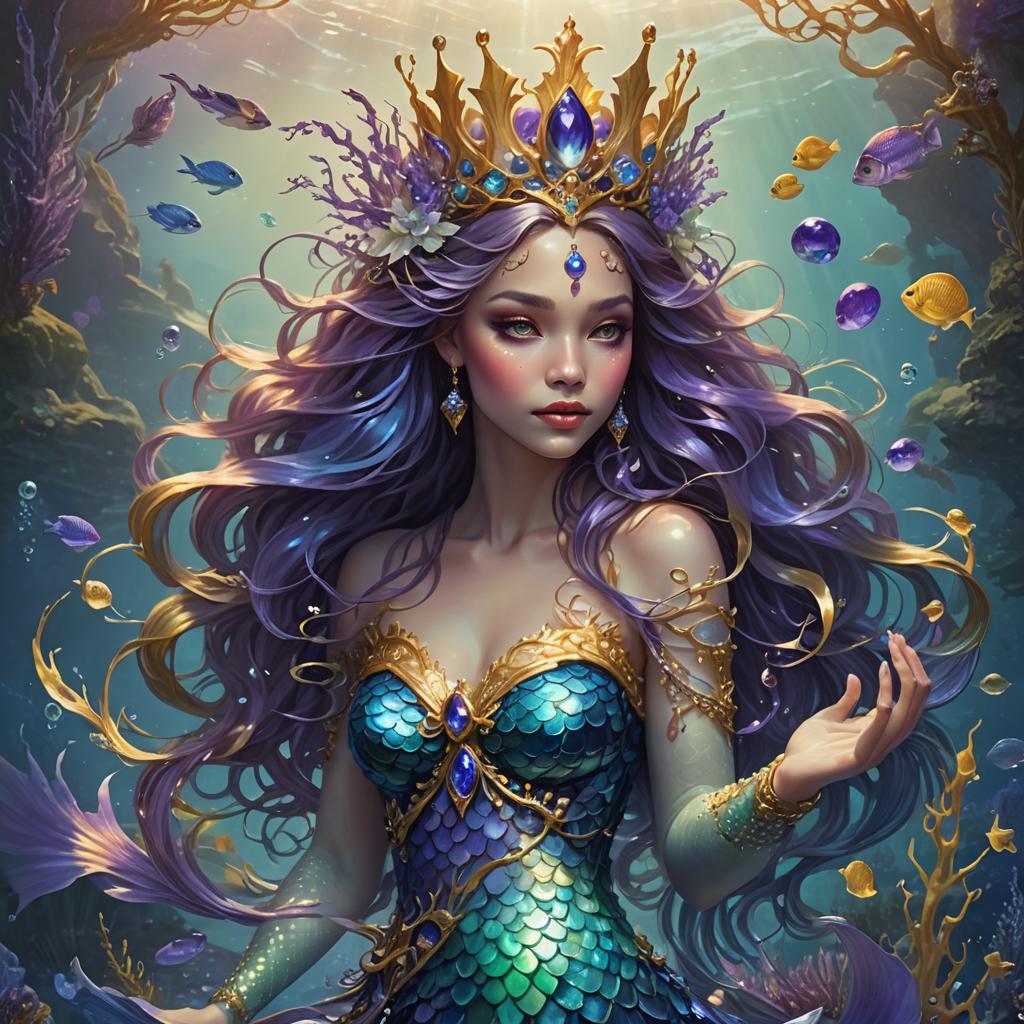
In Saxon and broader Germanic mythology, Ondines (also spelled Undines) are water spirits or elemental beings associated with water. The concept of Ondines primarily comes from folklore and mythology in the Germanic tradition, particularly as influenced by later medieval and Renaissance writers.
Note that Ondines are not mermaids. For more information on the symbolism of mermaids click the link.
Ondines are considered elemental spirits, specifically connected to the element of water. They are typically depicted as beautiful, often female, beings that inhabit water bodies like rivers, lakes, and streams.
As roles, Ondines are usually portrayed as protectors of their watery domains. They can be benevolent or malevolent, depending on how they are treated by humans.
One of the key features often attributed to Ondines in later lore (especially influenced by Paracelsus, a Swiss physician, and alchemist) is that they do not have a soul. However, they could gain a soul by marrying a human and bearing a child.
While the term “Ondine” itself is more commonly associated with later adaptations and interpretations in Renaissance and Romantic literature, the concept of water spirits is ancient and rooted in pre-Christian Germanic and Saxon traditions. In these cultures, water spirits were often feared and respected as powerful entities that could influence the natural world.
These beings were integrated into the local belief systems, where bodies of water were considered sacred and often had their own deities or spirits that were propitiated through rituals and offerings. These spirits could bless the lands with fertility or bring misfortune through floods and storms.
Their popularity during the Romantic period in literature
Ondines were frequently cast as tragic heroines in Romantic literature. A common theme was the Ondine falling in love with a human man. This love, however, often led to sorrow, as the relationship between a mortal and an immortal being was fraught with inevitable doom. The tragedy often stemmed from the Ondine’s nature—her lack of a soul and the consequences of obtaining one.
One of the most famous literary treatments of the Ondine myth is the 1811 novella Undine by Friedrich de la Motte Fouqué. In this story, Undine, a water spirit, marries a human knight to gain a soul. The tale explores themes of love, betrayal, and the supernatural, culminating in a tragic ending when the knight’s infidelity leads to his death by Undine’s hand—a consequence of the binding promise they had made.
The Ondine myth also inspired operas and ballets. For example, the ballet Ondine by Hans Werner Henze and the opera Undine by E.T.A. Hoffmann both delve into the romantic and tragic elements of these water spirits. The portrayal of Ondines in these works emphasizes their captivating beauty, their connection to nature, and the inevitable sorrow that comes with their love for mortals.
Symbolism
They embody the essence of water, representing its fluidity, its deep connection to emotions, intuition, and the hidden realms of the subconscious. Water, as a life-giving and purifying element, finds its personification in Ondines, who are seen as ethereal beings that flow with the currents of life and change.
Their beauty is often portrayed as both enchanting and dangerous, symbolizing an ideal that is captivating yet ultimately beyond human reach. Ondines, in their alluring otherworldliness, embody the dual nature of water—nurturing and healing on one hand, yet capable of sudden and devastating fury on the other. This duality reflects the broader natural world, where life and death, creation and destruction, are intertwined.
In the stories where Ondines fall in love with mortals, their narratives often explore themes of love, fidelity, and betrayal. The tale of an Ondine who marries a human under the condition of his unwavering faithfulness, only to curse him when he breaks his vow, underscores the fragility of human promises and the fleeting nature of earthly love. This story also touches on the tension between immortality and mortality, as Ondines, though immortal themselves, are drawn to the mortal world in their quest for a soul, seeking something eternal that only true love might grant.
Ondines symbolize the mysteries and complexities of the natural world, the transient nature of beauty and affection, and the profound longing for something that transcends the material and the mortal. They are figures that dwell on the threshold between the human and the divine, embodying both the allure and the peril that such a boundary represents.






Leave a Reply