
From Greek Myth to Modern Symbolism
Pan, a god from ancient Greek mythology, is a half-man, half-goat figure. Initially associated with the wild, untamed nature of forests and fields, Pan was the deity of shepherds, fertility, and rustic music. His image evokes both the beauty and the chaos of nature. However, over time, his symbolism evolved, and Pan came to represent a more universal force—an all-encompassing presence in the cosmos.
Pan’s ubiquity
Greek word pân (πᾶν), means “all” or “everything,” which suggests a profound sense of ubiquity. This connection frames Pan not just as a deity tied to rural landscapes, but as a universal force pervading all aspects of existence. Though originally a god linked to nature, fertility, and shepherds, later philosophical interpretations, especially those of thinkers like Plutarch and Proclus, saw Pan as a symbol of the cosmos itself. These philosophers linked him to the underlying chaotic energy that shapes both the physical world and its unseen, transformative forces. This resonates with the idea of panentheism—the belief that the divine is both within everything and transcendent. In this light, Pan embodies a universal presence, intricately woven into the very fabric of life.
Pan and Syrinx
One of the most famous myths involving Pan is the story of his pursuit of the nymph Syrinx. Syrinx was a beautiful nymph who, like many other nymphs, had vowed to remain chaste. Pan, enchanted by her beauty, fell in love with her and began to chase her through the forests. As he pursued her, Syrinx fled, desperate to escape his advances. She ran to the riverbank, where she prayed to the river gods for help. In response, the river gods transformed her into a cluster of reeds.
When Pan reached the river, he found only the reeds and, in his frustration, began to play the reeds, producing a melancholic tune. He was struck by the sound, and in that moment, he realized that his pursuit had led to Syrinx’s transformation. To honor her, Pan fashioned the reeds into what would become known as the pan flute (also called the syrinx), an instrument that became his signature.
This myth embodies several aspects of Pan’s symbolism: his connection to the untamed forces of nature, his passion and desire, and his ability to turn even loss and frustration into creativity. It also speaks to the interplay between love, pursuit, and transformation, elements that are often central in myths involving gods of nature like Pan.
Pan and panic
Pan’s presence could cause a sudden and overwhelming sense of terror, especially in solitary travelers or those caught in the wild.
The term “panic” specifically refers to this kind of irrational, unexplained fear or dread, which could seemingly strike without warning. The fear associated with Pan was not just a simple alarm but a deep, primal fear that could spread quickly through a group, often leading to mass hysteria or fleeing. This is why we use the word “panic” today to describe an intense and uncontrollable fear.
“The great Pan is dead”
The phrase “The Great Pan is dead” comes from Plutarch’s On the Decline of Oracles, where he recounts a mysterious event during the reign of Emperor Tiberius. A sailor named Thamus, traveling near the island of Paxos, hears a divine voice proclaiming Pan’s death.
Some view this statement as a symbol of the decline of paganism and the rise of Christianity, marking the shift from polytheism to monotheism. Others interpret it as a cultural transition—from a spirituality rooted in nature and animism to a more abstract, rational understanding of existence. This transformation reflects a broader shift in humanity’s relationship with the divine.
The metaphor of Pan’s passing
For thinkers in the Neoplatonic and Renaissance traditions, Pan’s death represented the loss of a holistic, interconnected vision of the cosmos. The Romantics, too, mourned this shift, seeing it as the erosion of humanity’s connection to the natural world and its mythic essence. In modern times, “The Great Pan is dead” has come to represent the disappearance of an enchanted world, displaced by reason, materialism, and industrialization. However, Pan’s death may not be permanent. Just as nature experiences cycles of decay and renewal, his symbolic death could signal a transformation rather than a complete end. Pan’s essence may reemerge, echoing nature’s rhythms of rebirth and renewal.
Pan and Logos
In Greek philosophy, Logos refers to the principle of order, reason, and rationality that governs the cosmos. Often associated with thinkers like Heraclitus and later Stoic philosophy, Logos signifies the divine reason that organizes and sustains the universe. In Christian thought, it is closely linked to the concept of the Word (Christ), representing both a divine creative force and the logical structure of existence. Logos is often contrasted with the chaotic, irrational forces of nature, providing a framework for understanding the cosmos through reason and harmony.
The comparison with Pan becomes relevant when we consider how both concepts represent forces that shape the world, though in very different ways. Pan, as a god of nature and chaos, embodies the untamed and primal energy that underlies the natural world. He symbolizes the raw vitality of life—the chaotic, unpredictable forces of nature that cannot be fully explained by reason alone. However, like Logos, Pan’s energy is not without purpose. In his symbolism, there is an underlying, albeit hidden, order that drives the cycles of nature. The comparison lies in the tension between chaos and order, with Pan representing the raw vitality that fuels the natural world, and Logos embodying the rational structure that gives shape to that world. Both concepts highlight the dynamic interplay between the irrational and the rational, with Pan’s chaotic forces and Logos’ order existing in a complex, interdependent relationship.
Logos and Pan vs Apollonian and Dionysian
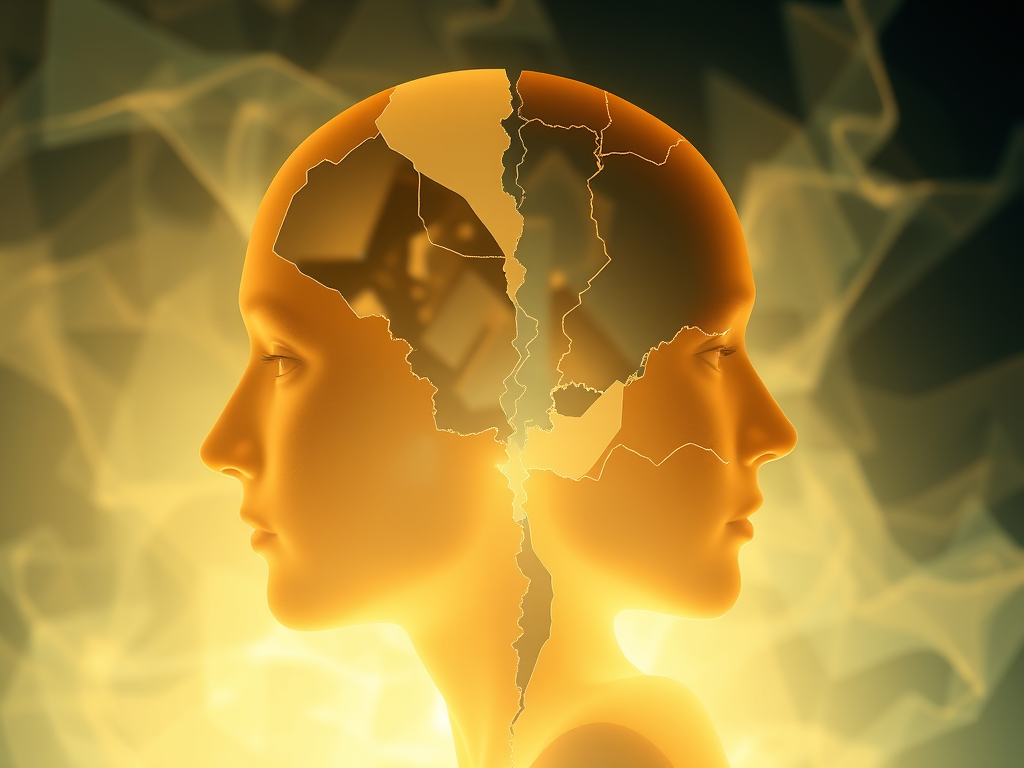
The unity of Logos and Pan is reflected in the duality of the Apollonian and Dionysian, as explored by Friedrich Nietzsche in The Birth of Tragedy. Apollo, representing the Apollonian, is the god of order, form, and rationality—symbolizing structure and clarity. Dionysus, embodying the Dionysian, is the god of chaos, passion, and the irrational—representing ecstatic freedom and the primal forces of nature. Nietzsche saw both forces as essential to human experience, with the tension between them giving rise to art, culture, and the vitality of life. Similarly, the interplay between Pan’s chaotic energy and the rational structure of Logos reflects this balance. Just as the Apollonian and Dionysian are interdependent, so too are Pan’s untamed vitality and Logos’ rational order; together, they create a unified vision of the world where chaos and order coexist and shape reality.
The death of Pan and Nietzsche
The death of Pan’s myth also resonates with Friedrich Nietzsche’s concept of the “death of God.” Nietzsche’s famous declaration mirrors Pan’s symbolic passing, marking the end of an all-encompassing divine presence. Just as the death of Pan signified the decline of a nature-based spirituality in favor of rationalism, Nietzsche saw the death of God as the end of the transcendent authority that once provided meaning to human life. This idea aligns with Nietzsche’s critique of modernity, where he observed the rise of secularism and materialism eroding the spiritual foundations of existence. For Nietzsche, the death of God created a void, forcing individuals to confront existence without relying on an external, omnipotent source of meaning. The disappearance of Pan, in a similar way, challenges humanity to redefine its relationship with the divine and the natural world.




Leave a Reply