The Dragons’ Garden, is a protected geological and landscape reserve situated near the village of Gâlgău Almașului in Sălaj County, Romania. It lies roughly ten kilometers from the small town of Jibou, nestled within the Almaș Basin. This site is not to be confused with the similarly named rock gate and cave in Alba County; the two locations share mythical connotations and similar names, but they are entirely distinct in geography, morphology, and atmosphere.
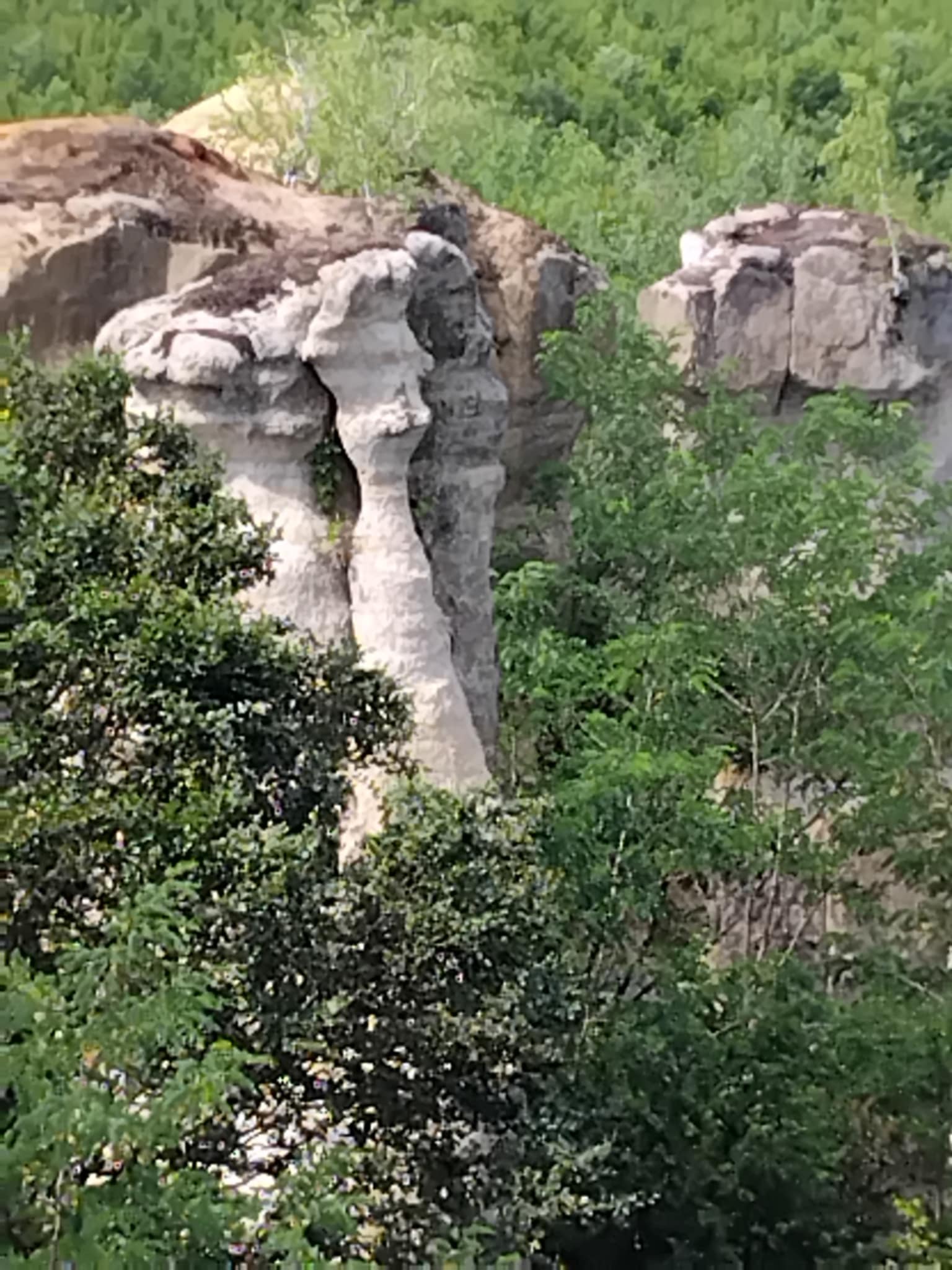
The Dragons’ Garden, fully lives up to its evocative name. Spread across an area of approximately two to five hectares, depending on the way one traces its natural contours, the site consists of unusual and fantastical sandstone formations sculpted over thousands of years. These massive stone shapes were created by natural processes—wind, frost, rain, and erosion acting slowly on the relatively soft sandstone-conglomerate known locally as Sânmihaiu rock. The result is a surreal landscape where time, geology, and imagination converge in a way that feels otherworldly.
The legends
The formations bear suggestive names that reflect the anthropomorphic and zoomorphic shapes perceived by the local villagers. Among them are Zmeul (the Dragon), Zmeoaica (the Dragoness), Moșu (the Old Man), Fata Cătanii (the Soldier’s Daughter), Sfinxul, Eva, Degețelul, Căpitanul, and the Soldații (the Soldiers). These names are not random decorations; they are rooted in the community’s oral tradition and serve as anchors for various legends, many of which have been passed down for generations. The rocks have inspired a blend of pagan folklore, romantic myth, and even religious reinterpretations, depending on who tells the story.
The most prominent legend associated with the site revolves around the tragic tale of a young girl and her forbidden love for a soldier. As the story goes, the girl’s cruel stepmother, unwilling to accept their union, placed a curse on the girl, turning her into stone. This petrified figure became what is now known as Fata Cătanii.
Other tales speak of zmei—mythical beings often likened to dragons or giants in Romanian folklore—who once lived in these hills. In one version of the myth, the zmei kidnapped the sun and held it captive until a brave hero managed to release it, petrifying the zmei forever in the process. These legends are not merely for children; they reflect the community’s attempt to make sense of a dramatic and deeply expressive landscape.
Access
The site is easily accessible by car from the DN1G road, and visitors can reach the formations after a brief walk from a small parking area. The walk itself is part of a short but rewarding loop trail, marked by a red dot and approximately two kilometers in length. Most visitors complete it in less than an hour, though those drawn to wander off the main path and explore the crevices and viewpoints may spend considerably more time within this stone labyrinth.








Leave a Reply