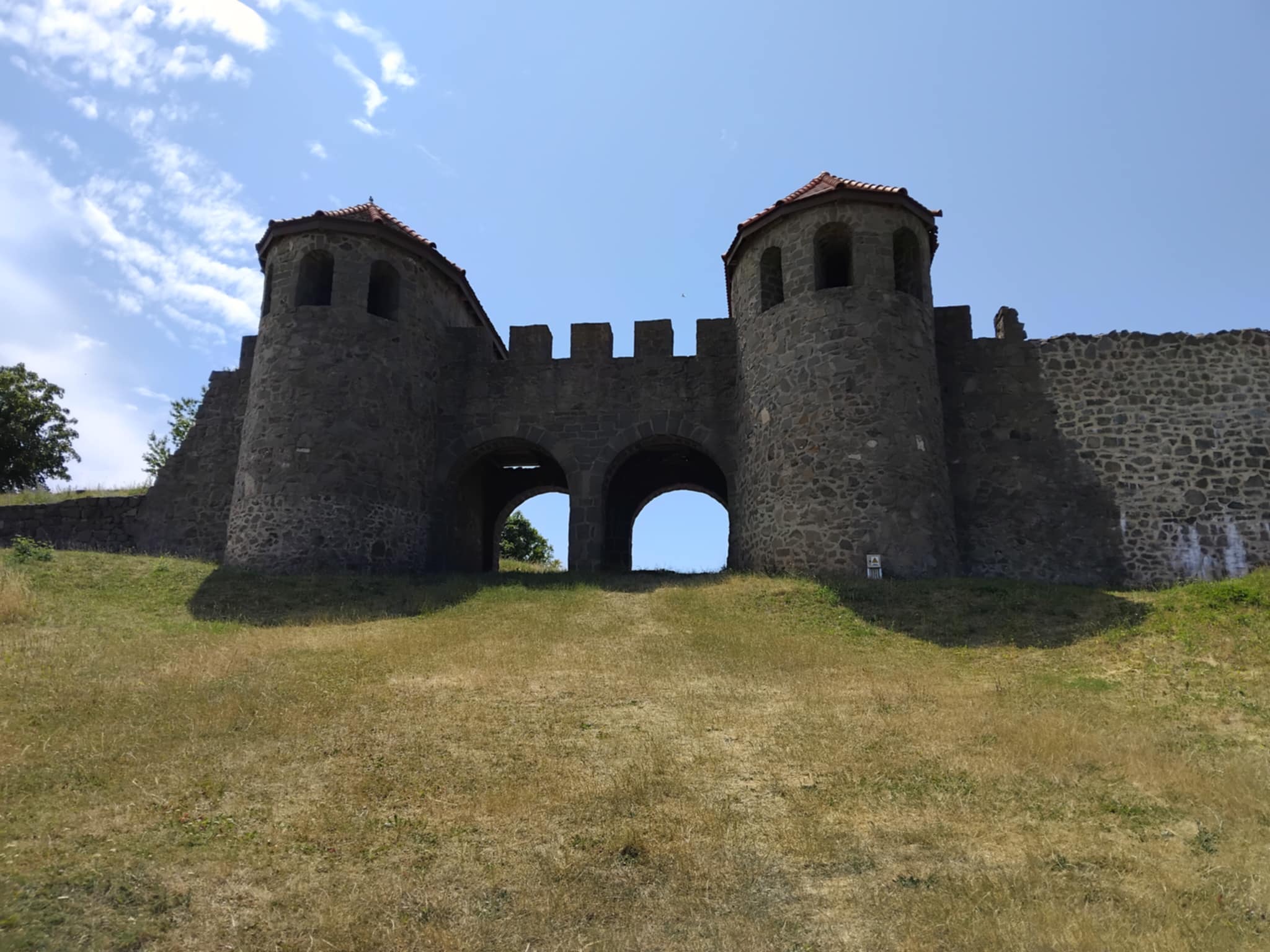
Porolissum rises in the hills near Moigrad, Sălaj County, and offers one of the most remarkable Roman sites in Romania. Established in 106 AD during Emperor Trajan’s Dacian campaign, Porolissum began as a military stronghold. The Romans built it to guard the northwestern frontier of the newly conquered province of Dacia. Over the next century, it grew into a thriving urban center with temples, baths, an amphitheater, and strong stone walls that marked the northern border of Roman rule in this part of Europe.

Travelers who visit Porolissum walk through a landscape where history and nature converge. The road climbs gently from the valley, revealing panoramic views over hills and forests. The archaeological site stretches over several hectares, and its original Roman layout remains clear. Visitors can follow the Roman road, walk through the old stone gates, and stand at the Porta Praetoria, where soldiers once kept watch across the empire’s edge.
The amphitheater still impresses with its enduring form. Its curved rows frame a space where Roman soldiers and citizens once gathered for performances and spectacles. Porolissum continues to reveal its past with every step and detail—stone paths, columns, sanctuaries, and traces of daily life embedded in its foundation.
The site welcomes exploration at a natural pace. The surrounding landscape offers a sense of space and calm, allowing time to absorb both the ruins and the vastness of the horizon. On clear days, the air carries only the sound of wind through the grass and distant footsteps, allowing visitors to engage fully with the space.
The small on-site museum provides historical context and complements the direct experience of the ruins. Porolissum reflects the coexistence of Roman and Dacian cultures. Archaeological findings show traces of both religious systems and artistic styles, offering insight into the fusion that shaped life on the empire’s frontier.
Porolissum inspires the traveler who seeks depth and presence. Its strength lies in its clarity, its scale, and the way it invites reflection. Walking along its ancient paths, one can feel the rhythm of a world once defined by military order, civic life, and spiritual belief. The site continues to speak, not through words or display, but through its stones and setting.
At Porolissum, the presence of the local deity known as Bel adds a powerful layer of meaning to the site—one that transcends the Roman architecture and military structures. Bel was not a Roman god. but a Semitic deity, associated with the pantheon of Syrian or Eastern provinces of the Roman Empire. The name connects to Belus, a western rendering of the Babylonian Bel-Marduk, and in later Roman times, “Bel” also became linked with deities from the city of Palmyra (in modern-day Syria), where the god Bel served as a high god, often associated with sky and sun attributes, and sometimes fused with other local gods depending on the region.
A shrine to Jupiter not far from a dedication to Bel, or traces of Mithraic worship alongside local religious expressions can also be found. These weren’t in conflict—they coexisted in the daily lives of soldiers and settlers trying to ground themselves spiritually in a new and distant land.
For those exploring Sălaj County, Porolissum offers a unique historical experience. The journey to its heights rewards the senses and imagination alike. As you walk where Roman boots once marched, the landscape tells a story that still unfolds in silence and sunlight.







Leave a Reply