
In Greek philosophy, one encounters a concept that stands as a cornerstone of understanding the cosmos – “logos.” The term carries a variety of meanings such as word, reason, discourse, or thought. This linguistic versatility hints at the complexity inherent in its philosophical usage, a complexity that has fascinated thinkers throughout the ages.
Heraclitus, the pre-Socratic philosopher known for his doctrine of change, introduced the concept of logos as a fundamental force shaping the cosmos. In his philosophy, everything is in a state of constant flux, and logos serves as the ordering principle behind this perpetual change. Often expressed through the famous aphorism “panta rhei” (everything flows), Heraclitus believed that logos provided coherence to the ever-shifting nature of reality.
The Stoic philosophers, who emerged later in ancient Greece, further developed the concept of logos, imbuing it with a divine essence. In Stoicism, logos is considered the rational and divine principle that governs the cosmos, representing an intelligent and purposeful force that underlies the order and harmony observed in the natural world. This cosmic order is not arbitrary but is governed by a rational intelligence that imparts meaning to the seemingly chaotic ebb and flow of existence. Humans are seen as rational beings with the capacity to align their own reason with the divine logos. By cultivating reason and virtue, they can harmonize their lives with the cosmic order, leading to a state of tranquility (ataraxia). This alignment with logos becomes a central tenet in Stoic ethics, emphasizing the importance of living in accordance with nature and reason.
Logos in gnosticism
In Gnosticism, the term “Logos” takes on a distinctive and profound significance, often differing from its use in mainstream Christian theology. Gnosticism is a diverse and mystical religious movement that emerged in the early centuries of the Common Era, encompassing various sects and beliefs.
A central tenet of Gnostic belief is the idea that they possessed a special, hidden knowledge (gnosis) that set them apart as the true initiates or spiritual elite. This knowledge was often considered essential for salvation, and Gnostics believed that it distinguished them from those who were not privy to these insights. The sense of exclusivity in Gnostic thought led to the view that mainstream religious teachings, particularly orthodox Christian doctrines, were inadequate or even deceptive. Gnostics often regarded the religious practices and beliefs of the broader society as misguided or incomplete, emphasizing the need for individual seekers to attain a higher, esoteric understanding.
In Gnostic cosmology, Logos is often considered as one of the emanations from the ultimate, transcendent, and unknowable divine source referred to as the “Pleroma” or “Fullness.” Logos is seen as a divine intermediary, a emanation that facilitates communication between the ineffable transcendent God and the material world. It is associated with the communication of divine knowledge, wisdom, and gnosis (spiritual insight) to humanity, serving as a guide for individuals seeking to transcend the limitations of the material world and attain spiritual enlightenment.
Gnostic interpretations of Jesus Christ often identify him as a manifestation of the Logos. However, Gnostic views on Jesus differ significantly from orthodox Christian perspectives. In Gnosticism, Jesus is often considered a divine figure who imparts hidden knowledge (gnosis) rather than primarily serving as a sacrificial savior. They believe that salvation comes through acquiring a higher, mystical understanding of one’s divine nature and the nature of the cosmos. This knowledge is often contrasted with the superficial and deceptive aspects of the material world.
Gnostic texts, such as the Gospel of Thomas or the Apocryphon of John, contain intricate mythological narratives involving the Logos. These narratives often describe the process of emanation, the creation of the material world, and the role of the Logos in revealing the true spiritual nature of existence.
Some Gnostic systems posit the existence of a lower, ignorant deity known as the Demiurge, responsible for creating the flawed material world. The Logos, in this context, serves as a liberating force, awakening individuals to their divine origin and aiding in their escape from the entanglements of the material realm.
Gnosticism frequently grapples with dualistic concepts, distinguishing between the material and spiritual realms, light and darkness, or ignorance and gnosis. The Logos, as a divine emanation, is seen as a unifying principle that transcends these dualities, offering a pathway to spiritual transcendence.
Logos in Greek mythology
The connection between logos and Greek mythology is intricate and multifaceted. While the term “logos” itself is more closely associated with philosophy, its roots and implications can be found in Greek mythological narratives, contributing to a deeper understanding of the cosmos and the nature of existence.
In various Greek creation myths, the concept of logos is implicit in the idea of a cosmic order or intelligence that governs the creation and functioning of the universe. For example, in the Orphic tradition, the cosmic egg represents the primordial state from which the ordered cosmos emerged, reflecting a form of underlying intelligence or logos.
Hesiod’s “Theogony,” a foundational work in Greek mythology, describes the genealogy and succession of gods. The divine order in this narrative implies a logos-like principle governing the relationships and roles of different deities within the pantheon. The gods’ actions and interactions are often guided by a cosmic order, reflecting an underlying logos.
Greek mythology often personifies abstract concepts, and while logos itself is not directly personified, certain deities embody principles associated with logos. For instance, Athena, the goddess of wisdom, strategy, and rational thinking, can be seen as a manifestation of the intellectual aspects aligned with the philosophical notion of logos.
The myth of Prometheus, the Titan who stole fire from the gods to give it to humans, is another example of the connection between logos and Greek mythology. Prometheus is often associated with intellectual insight and the advancement of human knowledge, reflecting a theme akin to the rational and enlightening aspects of logos.
The Oracle of Delphi, a significant institution in Greek mythology and religion, was believed to provide divine guidance and wisdom. The utterances of the oracle, though often cryptic, were considered a source of insight and knowledge. This oracle can be seen as an embodiment of the communicative and revelatory aspects associated with logos.
Logos and quantum physics
The exploration of logos and quantum physics unveils a complexity of interconnected ideas that bridge ancient philosophy with cutting-edge science. While logos may have originated in the contemplative minds of ancient Greek thinkers, its resonance with the enigmatic world of quantum physics suggests a timeless and universal principle that transcends cultural and disciplinary boundaries.
Quantum entanglement, a phenomenon where particles become interconnected and the state of one instantly influences the state of the other, echoes the interconnectedness implied by the philosophical concept of logos. Logos, as a unifying principle, finds resonance in the entangled interplay of particles that seemingly defy the constraints of space and time, suggesting an underlying cosmic connection that transcends conventional boundaries.
The wave-particle duality of quantum entities introduces a fascinating interplay between the tangible and the ephemeral. Particles, such as electrons, exhibit both wave-like and particle-like behavior, challenging our classical intuitions about the nature of reality. Logos, with its emphasis on cosmic harmony and order, offers a lens through which to perceive the underlying unity in this apparent duality—a harmonious interweaving of wave and particle aspects guided by a fundamental and rational principle.
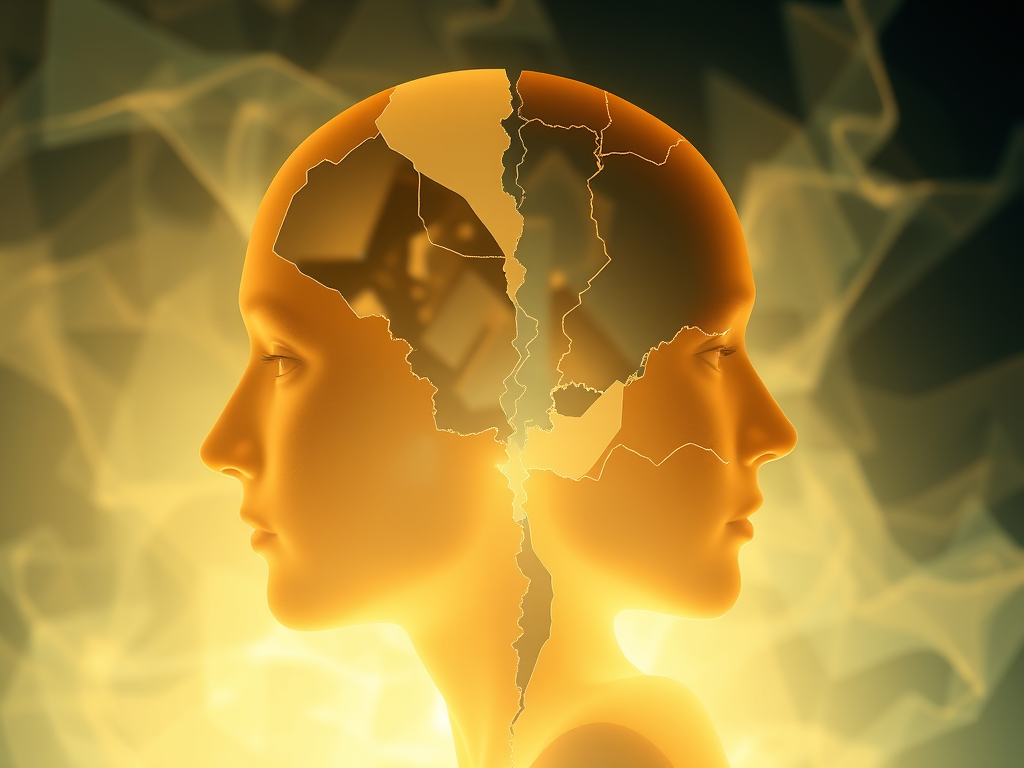
Quantum superposition allows particles to exist in multiple states simultaneously until measured, collapsing the probability wave into a definite outcome. This mirrors the idea of logos as an underlying potentiality that unfolds into a specific reality when observed. The parallel lies in the notion that the universe holds a multitude of potential states, and the act of observation or measurement brings forth a specific manifestation from this realm of cosmic potential.
The role of consciousness in quantum mechanics, a topic of ongoing debate, introduces another intriguing connection with logos. Logos, as a rational and ordering principle, aligns with the idea that consciousness plays a crucial role in collapsing the quantum wave function. The act of observation, guided by reason and understanding, is akin to the participatory role of consciousness in shaping the quantum reality.
Concluding remarks
From its roots in Greek philosophy as a cosmic ordering principle to its profound significance in Gnostic beliefs as a transcendent mediator, and its implicit presence in the mythological narratives of ancient Greece, Logos has proven to be a versatile and enduring concept.
The parallels found in the quantum realm further highlight the universality of Logos, connecting it to the interconnected nature of quantum phenomena and the role of consciousness in shaping our understanding of reality.
In essence, Logos emerges as a unifying concept of the human thought, encouraging us to explore the interconnectedness of knowledge, wisdom, and the fundamental nature of existence.





Leave a Reply