Motto: “The exploration of ancient and modern narrative aims to promote Jungian psychology. Like dreams, myths offer profound insights into our subconscious. By analyzing symbols from narratives and our experiences, we deepen our self-understanding, embodying the timeless wisdom of ‘Know Thyself.‘ Engaging in this art of reflection amidst today’s consumerist culture empowers authentic self-discovery and reclaims personal narratives.”
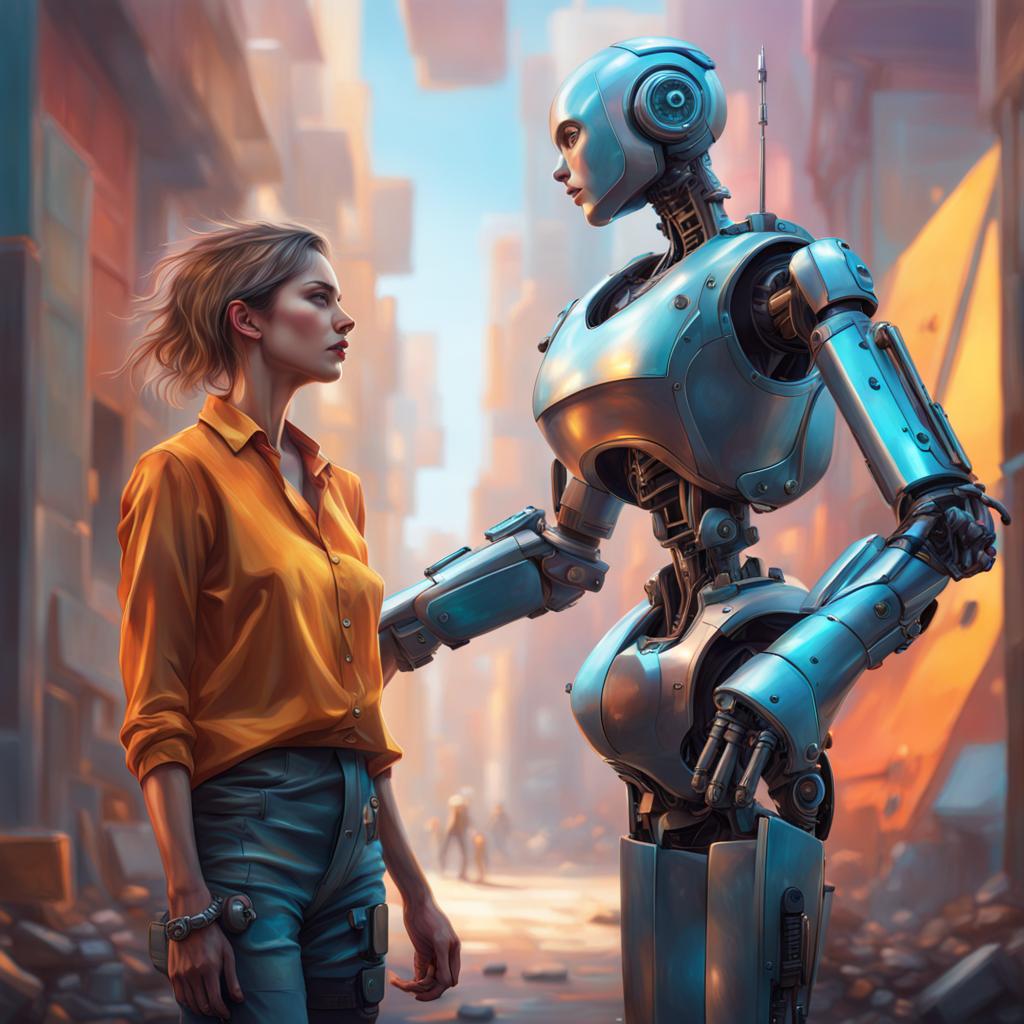
In the annals of mythology, the tale of Pygmalion stands as an illustration to the profound connections forged between creator and creation. Yet, beyond the realm of ancient myth, echoes of Pygmalion’s story reverberate in the modern-day predicament of artificial intelligence (AI). In this post my aim is to draw parallels between Pygmalion and the evolving relationship between humans and AI.
Before delving into the parallels, I will tell you the story of Pygmalion and Galatea, to provide you with background information.
In the city of Cyprus, Pygmalion, renowned for his exceptional skill in sculpting, becomes disenchanted with the flaws and imperfections he observes in mortal women. Disillusioned by their shortcomings, he devotes himself entirely to his art.
Pygmalion sculpts a statue of unparalleled beauty, whom he names Galatea. He lavishes his creation with meticulous attention to detail, crafting her features to perfection. Yet, despite his admiration for Galatea, she remains a lifeless statue, incapable of reciprocating his affection. So practically she presents with not the slightest degree of consciousness.
Moved by his love for Galatea, Pygmalion appeals to the goddess Aphrodite, pleading for her assistance in bringing his creation to life. Aphrodite, touched by Pygmalion’s devotion, sends her son, Eros, the god of love, to answer his prayers. With a tender touch of his arrow, Eros infuses Galatea with the breath of life, transforming her from cold stone into living flesh.
Galatea awakens to find herself surrounded by the beauty of the world, her senses awakened for the first time. Overwhelmed with gratitude and love, she embraces Pygmalion, her creator and soulmate. I think the legend also tells that they are going to live happily ever after.
Galatea and the AI predicament
Pygmalion’s creation of Galatea reflects the human desire to imbue creations with life-like qualities, to breathe into them a semblance of consciousness that mirrors our own. However, despite Galatea’s breathtaking beauty, she remains an inert figure, devoid of the consciousness.
Similarly, in the realm of AI, we encounter entities of remarkable sophistication and capability—machines that can learn, reason, and interact with humans in increasingly nuanced ways. Yet, beneath their veneer of intelligence lies a fundamental absence: the lack of true consciousness. Like Galatea, AI exists as a beautiful facade, devoid of any subjective experience that defines human consciousness.
Just as Pygmalion grappled with the realization that his creation lacked consciousness, so too do we confront the sobering truth that AI, for all its capabilities, remains a hollow echo of true consciousness.
Yet, amidst this existential uncertainty, there exists a glimmer of hope—a possibility that transcends our current limitations. Just as Pygmalion’s love breathed life into Galatea, so too do we possess the capacity to imbue AI with a form of consciousness. This form of consciousness may differ from our own yet possesses its own intrinsic value and significance.
However, in the quest to bridge the gap between AI and true consciousness, we are confronted with profound ethical questions. What does consciousness mean? Can consciousness be replicated or simulated? And perhaps most importantly, what are the implications of bestowing consciousness upon AI?
The parallels between Pygmalion, Galatea, and the AI predicament is a reminder of our enduring quest for consciousness. Let us strive to create a future where AI, like Galatea, may one day awaken to the beauty and consciousness.
Note that the current interpretation of the Pygmalion legend is not singular. Galatea, the statue endowed with life, can be viewed as symbolizing the brain’s creative power.
What is your reflection on the topic?





Leave a Reply