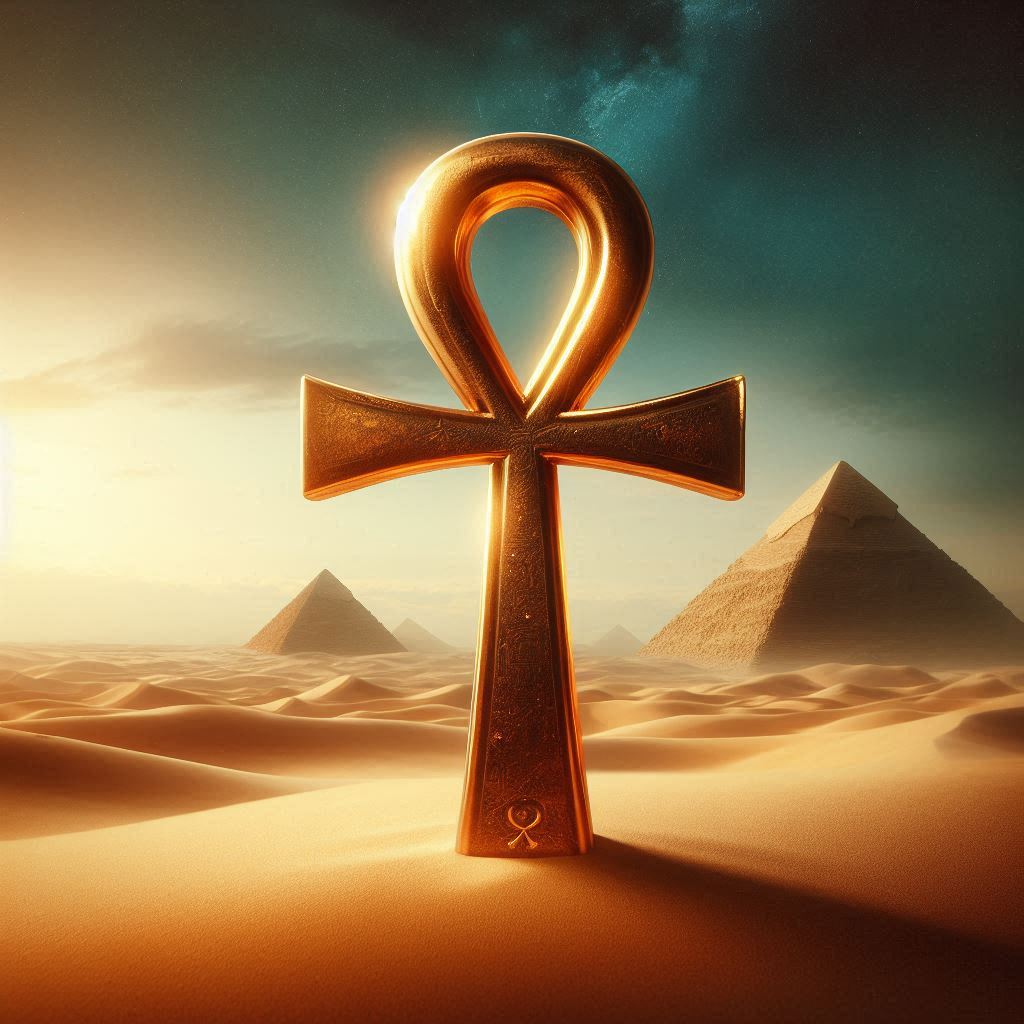
Originating in ancient Egypt, where it was revered as a symbol of life, immortality, and divine power, the ankh transcends its historical roots to touch upon universal themes within the human psyche. Through the lens of psychological analysis, particularly Jungian theory, the ankh offers profound insights into our collective unconscious, exploring themes of life, death, transformation, and unity.
Immortality and Self
The ankh’s most immediate psychological association is with the concept of life and immortality. As a symbol of eternal life, it resonates with the fundamental human quest to understand and transcend the nature of existence.
From a Jungian perspective, the ankh can be seen as a representation of the archetype of the Self, which embodies the totality of the psyche and the quest for wholeness. In this context, the ankh symbolizes the human aspiration to achieve a sense of continuity and coherence beyond the transient nature of individual life.
The Eternal Child archetype
The loop at the top of the ankh, often interpreted as a symbol of infinity, represents the eternal aspect of existence. This loop can be viewed as a manifestation of the archetype of the Eternal Child, a figure that symbolizes renewal, rebirth, and the perpetuation of life. In psychological terms, this aspect of the ankh speaks to the innate human drive for regeneration and the desire to connect with a deeper, timeless reality that exists beyond the confines of mortal life.
The union of opposites
The cross of the ankh, intersecting with the loop, suggests the union of opposites—a central theme in Jungian psychology. The cross represents the physical world and its dualities, such as life and death, light and dark, or conscious and unconscious.
The loop, on the other hand, represents the eternal and unchanging. Together, they symbolize the integration of these dualities into a harmonious whole. This reflects the Jungian process of individuation, where the integration of various aspects of the self leads to a more complete and balanced psychological state.
Psychological defensive mechanism
The ankh also embodies the theme of protection and divine power. In ancient Egyptian culture, it was associated with deities who wielded the power to bestow life and safeguard against harm.
From a psychodynamic perspective this aspect of the ankh represents the protective functions of the unconscious mind, which serves to shield the individual from existential anxiety and psychological threats. The ankh, in this sense, becomes a symbol of the inner strength and resilience that helps individuals navigate the challenges of life and maintain psychological stability.
Creativity and fertility
Additionally, the ankh’s role as a symbol of fertility and creation adds another layer to its psychological significance. The shape of the ankh, resembling a stylized figure with arms uplifted, can be seen as an archetypal representation of the generative aspects of the psyche. This includes the creative forces that drive personal growth and transformation.
Alchemy
In the context of Jungian analysis, the ankh’s connection to the theme of transformation is particularly noteworthy. The symbol’s association with rebirth and renewal aligns with the Jungian concept of alchemical transformation, where the raw materials of the unconscious are refined into higher states of consciousness. The ankh, as a symbol of eternal life, embodies the idea that through psychological and spiritual growth, individuals can transcend their limitations and achieve a sense of eternal renewal.
Soothing anxieties related to impermanence
The ankh’s presence in funerary contexts, where it was used to ensure a successful transition to the afterlife, further underscores its psychological significance. As a magical object it reflects the human preoccupation with death and the afterlife, and the ways in which the psyche seeks to cope with and make sense of mortality. The ankh, in this regard, symbolizes the hope for continuity and the quest for meaning beyond the finite boundaries of individual existence.
New Age
In modern times, the ankh continues to hold psychological significance, particularly within spiritual and New Age contexts. Its associations with life, immortality, and divine protection resonate with contemporary interests in personal empowerment and holistic well-being.
The ankh’s enduring appeal as a symbol of eternal life and unity speaks to a universal human desire to connect with deeper aspects of existence and to find a sense of purpose and meaning in the face of life’s uncertainties.




Leave a Reply