
In ancient Egyptian mythology, Nu (or Nun) is a primordial deity associated with the waters of chaos that existed before the creation of the world. He represents the concept of the primordial ocean or the abyss from which all creation emerged under the magic influence of god Ptah. Nu is often depicted as a dark, watery figure or sometimes as a person with a frog’s head, symbolizing the fertile and life-giving aspects of water.
In the creation myth, Nu is essential because he embodies the formless, chaotic waters that were present before the god Atum (or Ra) created the world.
Nu’s counterpart is the goddess Naunet (or Nunet), who represents the female aspect of the primordial waters. Together, they embody the concept of the infinite and boundless waters that existed before the emergence of the ordered cosmos.
Archetypal symbolism from a Jungian perspective
Before creation, Nu’s waters symbolize the undifferentiated potential of the universe—a chaotic mixture akin to the unstructured contents of the collective unconscious. This primordial chaos is not mere disorder; it is a state of boundless possibilities, where all forms of existence are latent but unexpressed. In psychological terms, it represents the deep layers of the unconscious, where archetypes and raw energies reside before they are brought into consciousness and given form.
The transition from chaos to order is achieved through differentiation, where latent potentialities within this chaos are organized and structured. Ra, emerging from Nu, embodies this principle of differentiation. He brings light, order, and structure, representing the conscious mind’s ability to impose meaning and coherence on the raw, chaotic material of the unconscious.
The concept of enatiodromia
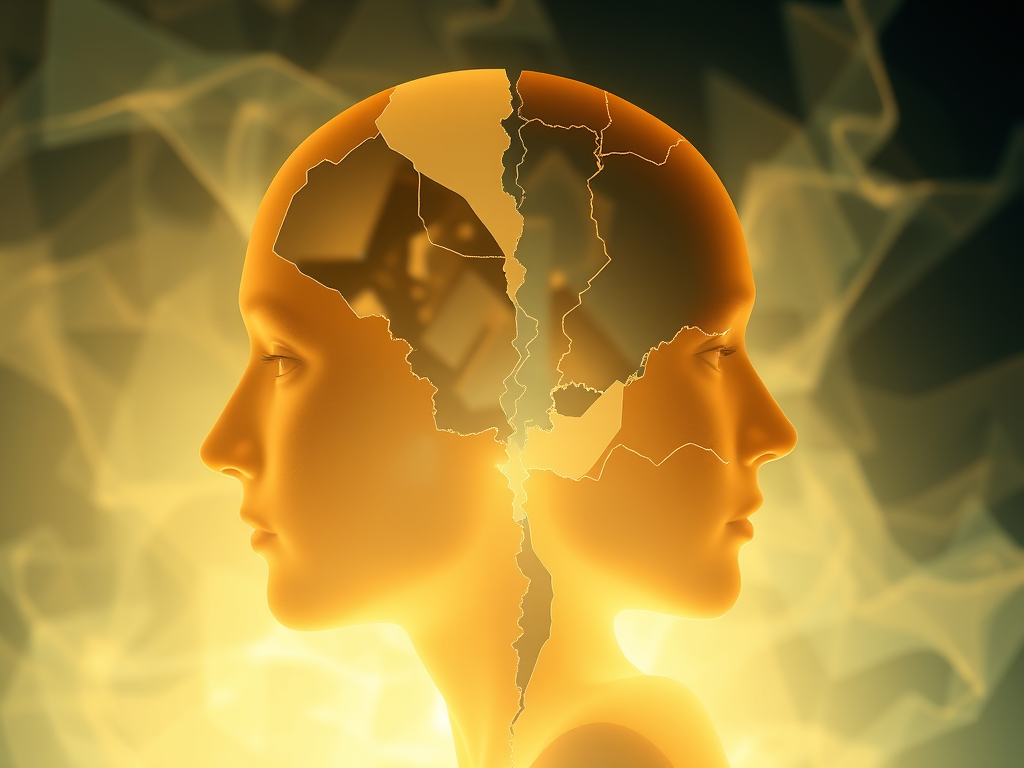
In exploring the dynamics between Nu and Ra, the concept of enantiodromia—a term coined by the ancient Greek philosopher Heraclitus and later adopted by Carl Jung—provides a profound lens through which to understand the cyclical nature of opposites. Enantiodromia refers to the phenomenon where an extreme force or condition naturally turns into its opposite, often as a way to restore balance.
As Ra emerges from the chaos, imposing light and order, there exists an inherent risk that this very order, if pushed to its extreme, can revert back to chaos—a dynamic where the force of differentiation (Ra) risks becoming destructive if it loses balance. This potential for Ra’s energy to scorch and desolate, undoing the order he creates, exemplifies enantiodromia at work.
In the mythological interplay of Nu and Ra, as in the broader patterns of nature and psychology, this dynamic ensures that balance is maintained, preventing any one force from dominating indefinitely and allowing for the continuous regeneration and evolution of life.
In the process of individuation, order must be balanced with chaos, structure with flexibility, warmth with detachment. A psyche that integrates these opposites achieves a more nuanced and comprehensive understanding of itself and the world, avoiding the pitfalls of extreme perspectives. This integration allows for psychological growth and adaptability, fostering a mind that is both creative and resilient.
A Freudian perspective
The ancient Egyptian myth of Ra and Nu, can be closely paralleled with Sigmund Freud’s psychoanalytic concepts of Eros and Thanatos. Just as the myth describes the necessity of balance between creation and destruction for life to flourish, Freud’s theories emphasize the tension between life instincts and death instincts within the human mind.
Eros in Freudian psychology represents the life instinct, associated with creativity, growth, and the preservation of life. It drives individuals toward survival, reproduction, and the pursuit of pleasure, fostering connections and the continuation of life. This is similar to Ra’s role in the text as the force that brings light, order, and structure from the chaotic potential of Nu. Ra, like Eros, represents the organizing principle that channels the raw, undifferentiated energies into creation and life-sustaining order.
On the other hand, Thanatos is the death instinct, embodying a drive toward destruction, aggression, and the return to an inorganic state. It pulls individuals toward chaos, dissolution, and ultimately, death. This can be compared to the inherent risks associated with Ra’s intense energy, which, if not balanced, can lead to return to chaos. Just as Thanatos seeks to unravel and destroy, Ra’s unchecked power has the potential to destabilize the order he creates, leading to regression and destruction.
In Freud’s view, a healthy psychological state requires the integration of both life-affirming and destructive instincts, similar to how the balance between Ra and Nu allows for the differentiation and flourishing of life. Without this balance, the untempered force (whether it be Ra’s energy or Thanatos’ drive) can lead to chaos and destruction, undermining the very order it initially sought to establish.
Concluding reflections
It is about the delicate balance between opposing principles, which allows for the continuous creation and regeneration of life and consciousness. The relationship between Ra and Nu serves as a profound metaphor for the philosophical and psychological dynamics of creation, balance, and transformation.





Leave a Reply