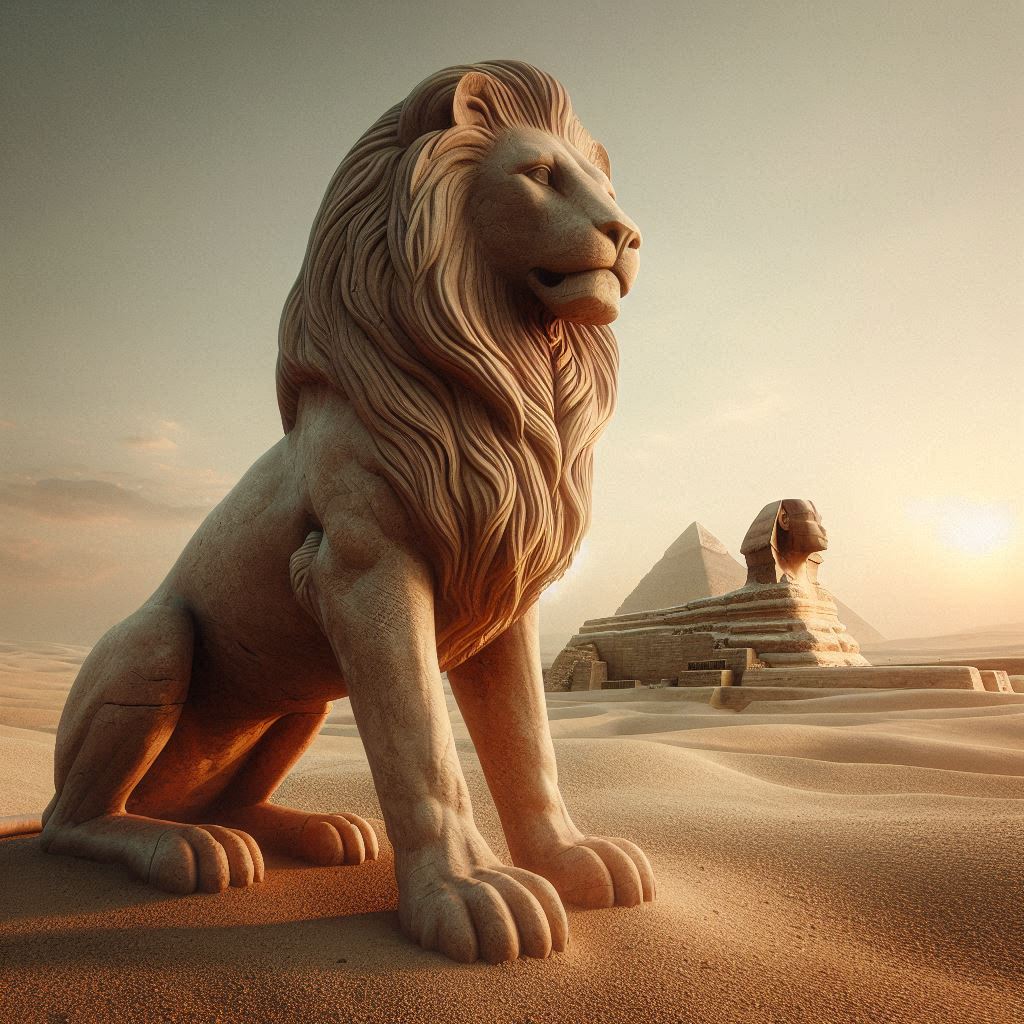
The religious beliefs of ancient Egypt are deeply rooted in the concept of totemism, a system where natural objects, animals, or plants are revered as symbols of clans, tribes, or individual identity. These totems are not just mere symbols but are believed to be ancestors or protective deities. The rich pantheon of Egyptian gods, each with distinct characteristics and attributes, reveals a complex interplay between totemic practices and the evolving religious consciousness of the ancient Egyptians.
Understanding totemism
Totemism is a form of belief system in which people adopt natural objects or animals, often believed to be the spirit or ancestor of the group, as emblems. These totems are revered, and the animal or object is often treated with great respect and worship. In many societies, including ancient Egypt, totems formed the basis for social and religious structures, influencing everything from tribal identity to rituals and mythology.
Totemism in early Egyptian society
In the early stages of Egyptian society, before the development of a centralized state, Egypt was divided into small communities or tribes. Each of these tribes identified closely with a particular animal or natural element, which served as their totem. These totemic symbols were not just protective emblems but were believed to be the living embodiments of the gods themselves.
As Egyptian society transitioned from a collection of small tribal communities to a unified kingdom, the nature of its religious beliefs also evolved. Totemism, while retaining its importance, became more complex as these totemic animals were incorporated into a more sophisticated religious system. The gods were no longer just tribal protectors; they became central figures in a state religion that sought to unify the diverse peoples of Egypt.
The animal forms of these gods were often combined with human attributes, symbolizing the merging of totemic beliefs with the anthropocentric worldview of the Egyptian state. This anthropomorphization also allowed for the gods to take on more complex and varied roles, which reflected the increasingly intricate social and political structures of Egyptian civilization.
Totemic animals and the Egyptian gods
As Egyptian society evolved, these totemic animals became more anthropomorphized and complex, eventually leading to the development of a structured pantheon. The gods retained the totemic qualities of the animals they were associated with, but their roles expanded beyond mere tribal protectors.
Horus and the falcon
One of the most significant deities in Egyptian mythology, Horus, is depicted as a falcon or as a man with a falcon head. The falcon was a totemic animal for various tribes in pre-dynastic Egypt, symbolizing power, protection, and kingship. Over time, Horus came to represent the divine kingship of Egypt, with the pharaoh being considered the living incarnation of Horus.
Bastet and the cat
The goddess Bastet, often depicted as a lioness or a domestic cat, was initially a totemic deity associated with fertility, childbirth, and home protection. The cat, revered for its grace and protective nature, became the embodiment of Bastet’s qualities, and she evolved into a goddess of home, fertility, and later, of war and protection.
Anubis and the jackal
Anubis, the god of mummification and the afterlife, was associated with the jackal, an animal known to scavenge around cemeteries. The jackal was likely a totemic animal for early tribes that lived near the desert, where cemeteries were often located. Anubis, depicted as a man with the head of a jackal, retained these totemic associations, guiding souls to the afterlife and protecting the dead.
Sobek and the crocodile
The crocodile, a fearsome and revered creature in the Nile, became the totemic animal for the god Sobek. Sobek was worshipped as a powerful and protective deity, embodying the strength and ferocity of the crocodile. As a god, Sobek played a dual role, both as a creator god and a protector, especially of the pharaoh.
Thoth and the ibis
The ibis, a long-legged wading bird with a distinctive curved beak, was sacred to the ancient Egyptians, primarily due to its association with Thoth, the god of wisdom, writing, and knowledge. Thoth was often depicted as a man with the head of an ibis, or simply as the ibis itself. The ibis’s careful and deliberate movements, as well as its presence near the Nile, were seen as reflective of Thoth’s attributes—intellect, precision, and divine insight.
Thoth’s role as the scribe of the gods and the inventor of writing made the ibis an emblem of intellectual pursuits and the preservation of knowledge. Egyptians believed that Thoth, through the ibis, maintained the balance of the universe by recording all deeds, both human and divine. The sacredness of the ibis was so profound that millions of these birds were mummified and buried in special necropolises, such as the one at Saqqara, in honor of Thoth.
Khepri and the scarab
The scarab beetle, specifically the dung beetle, was another powerful totemic animal in ancient Egypt. It was associated with Khepri, the god of the rising sun, creation, and rebirth. The scarab’s behavior of rolling dung into balls and laying its eggs within them was interpreted as a symbol of the sun’s daily journey across the sky and the cycle of life, death, and rebirth.
Scarabs were often used as amulets, believed to provide protection and ensure the rebirth of the deceased in the afterlife. The image of the scarab was carved into jewelry, seals, and funerary items, symbolizing the eternal cycle of regeneration. The widespread use of the scarab in Egyptian society underscores its significance as a totemic symbol of immortality and protection.
Taweret and the hippopotamus
The hippopotamus, a large and formidable animal, was both feared and revered in ancient Egypt. It was associated with several deities, most notably Taweret, the goddess of childbirth and fertility, and Set, the god of chaos and destruction. Taweret was depicted as a bipedal hippopotamus with the limbs of a lion and the back of a crocodile, symbolizing the protective yet dangerous aspects of motherhood.
While Taweret was a benevolent protector of women and children, the hippopotamus also had a more ominous aspect. Male hippos were linked to Set, who represented chaos, storms, and violence. The dual nature of the hippopotamus as both a protector and a destroyer reflects the complex and often contradictory views the Egyptians had of the natural world, where power could be both creative and destructive.
Sekhmet and the lion
The lion was a potent symbol of power, royalty, and warfare in ancient Egypt, embodying the qualities of strength, courage, and ferocity. Lions were associated with several deities, most notably Sekhmet, the lioness-headed goddess of war, and Maahes, the lion-headed god of war and protection.
Sekhmet, known as the “Powerful One,” was believed to be the protector of the pharaohs, destroying their enemies with her fiery breath. The lion’s role as a hunter and protector in the wild translated into its divine representation as a fierce guardian and avenger of wrongs. In art and inscriptions, lions were often depicted alongside pharaohs, emphasizing the king’s role as both a protector of his people and a warrior against chaos.
Lions were also associated with the sun god Ra, reinforcing their connection to kingship and divine power. The lion’s presence in temples and tombs, as well as in the form of sphinxes, symbolized the eternal protection and strength of the gods over the land of Egypt.
Conclusion
The totemic significance of animals in ancient Egypt reflects the deep connection the Egyptians felt with the natural world and its creatures. The ibis, scarab, dogs, hippopotamus, and lion were not just animals to the Egyptians; they were embodiments of divine powers and spiritual forces that shaped their understanding of life, death, and the cosmos. Through these totemic symbols, the ancient Egyptians expressed their reverence for the natural world and their belief in the enduring connection between the human, the divine, and the animal realms.
Bibliography
- Bleeker, C.J. “The Sacred Animals of Ancient Egypt.” Numen 14, no. 3 (1967): 236-240.
- http://www.worldhistory.org/article/884/gods–goddesses-of-ancient-egypt—a-brief-history
This bibliography should provide a solid foundation for further exploration into the totemic origins of Egyptian gods and the broader religious practices of ancient Egypt.





Leave a Reply