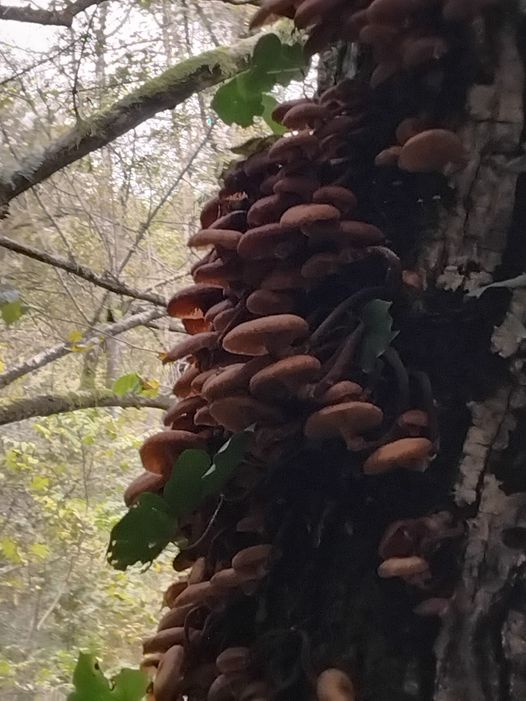
The honey mushroom – or Armillaria belong to a diverse group of fungi known for their unique characteristics and ecological roles. They primarily grow in forested areas, forming associations with various trees, which enhances nutrient exchange and promotes forest health. These mushrooms often appear in clusters, creating stunning displays on forest floors, and showcase a range of colors and shapes that contribute to their appeal.
They exhibit a variety of shapes and sizes, depending on the species. Some have a distinctive bell shape, while others feature more flattened caps. Their colors can range from pale yellow to deep brown, with some species displaying vibrant hues. The gills beneath the cap, which vary in spacing and attachment, provide crucial identification features. For instance, Armillaria mellea, commonly known as honey mushroom, has a creamy cap with closely spaced gills that can appear yellowish or brownish with age.

Ecological significance
Armillaria mushrooms play a vital role in forest ecosystems. By forming relationships with tree roots, they facilitate the uptake of water and nutrients, such as phosphorus and nitrogen, essential for tree growth. In return, the mushrooms receive carbohydrates produced through photosynthesis. This symbiotic relationship enhances soil health, promotes biodiversity, and supports overall forest resilience. Moreover, some species of Armillaria contribute to nutrient cycling by decomposing organic matter, enriching the soil further.
Culinary uses of Armillaria mushrooms
Many species within the Armillaria genus have culinary value, attracting foragers and chefs alike. The honey mushroom, for example, is a popular choice among mushroom enthusiasts due to its sweet flavor and versatility in cooking. Chefs often use honey mushrooms in soups, stir-fries, and pasta dishes, capitalizing on their meaty texture and rich taste. However, some species of Armillaria can contain toxins, so proper identification remains crucial before consuming any wild mushrooms.
Medicinal properties
Some researchers investigate the potential medicinal properties of Armillaria mushrooms. Preliminary studies suggest that certain species may possess antimicrobial and anti-inflammatory properties, showing promise in traditional medicine practices. For instance, extracts from specific Armillaria species have demonstrated potential in inhibiting the growth of certain bacteria and fungi. While more research is necessary to fully understand these effects, the findings highlight the intriguing possibility of harnessing these mushrooms for health benefits.

Honeycombs in trees
Recently, I discovered an incredible sight: honeycombs growing high in a 4-meter tree, stretching all the way to the top. The sheer height of these honeycombs took me by surprise, as they clung to the branches, showcasing a natural wonder that felt almost magical.





Leave a Reply