Dogs in mythology and dreams have been powerful symbols across many cultures, often representing loyalty, protection, and the guiding force between worlds. When seen through Jung’s lens, the dog embodies both personal and collective symbolism, acting as a bridge between conscious awareness and the deeper layers of the unconscious.
Dogs as guardians
In mythology, dogs are frequently portrayed as protectors or guides. For instance, in Greek mythology, Cerberus, the multi-headed dog guarding the underworld, stands at the threshold between life and death. This protective and transitional role highlights the dog as a figure connected to transformation and the liminal spaces of existence.
Similarly, in Norse mythology, Garmr, the blood-stained hound of Hel, plays a similar role as the guardian of the underworld. These stories reflect a deep-rooted belief that dogs are both watchers and keepers of human souls, acting as spiritual guides through moments of transformation and mystery.
Psychopompic role
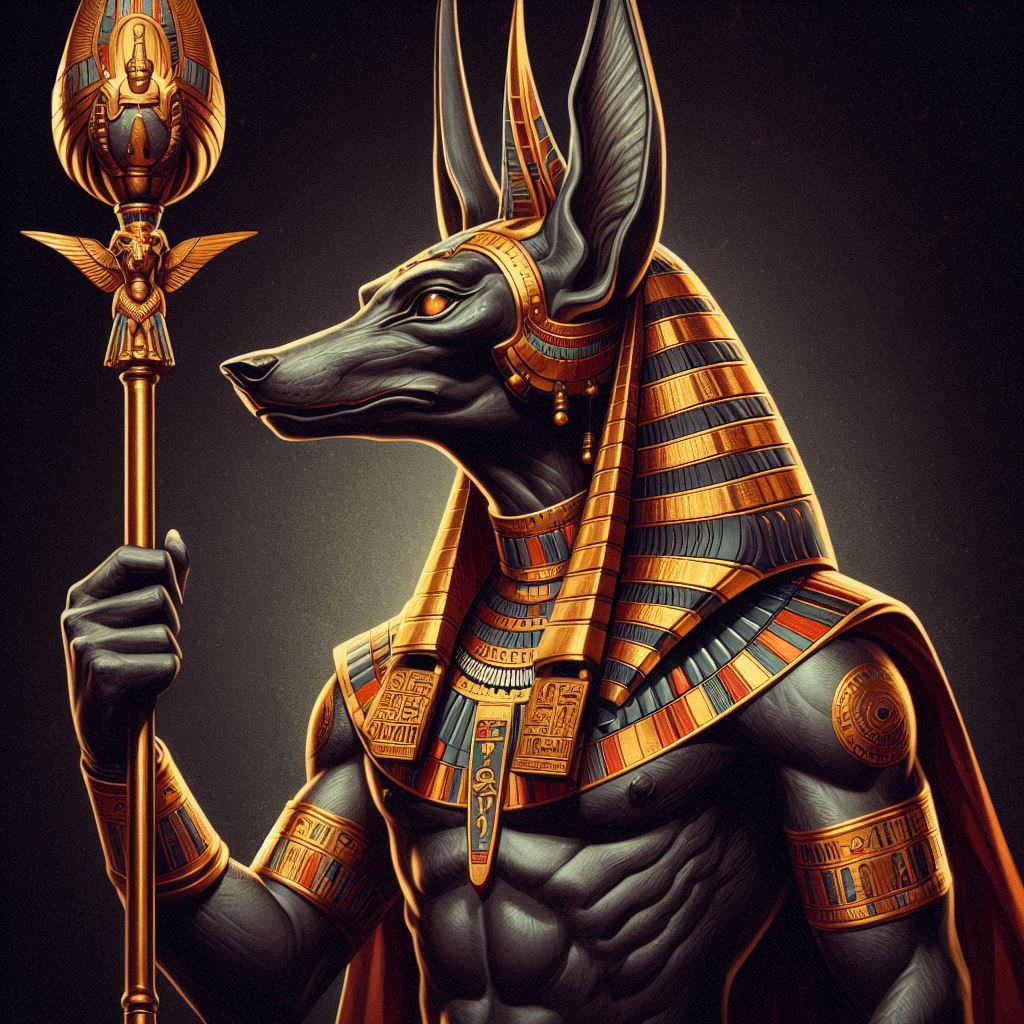
In ancient Egypt, as a psychopomp, Anubis guides the dead through the underworld, helping them navigate the transition from life to death. His role emphasizes the dog’s deep association with death, the unknown, and the protective passage through transformative spaces. Anubis symbolizes not only death’s finality but also the protection and guidance offered to those moving into the next world, reflecting the dog’s broader role as an archetypal guardian between realms.
Similarly, the Aztec underworld deity Xolotl, often depicted as a monstrous dog or as having dog-like features, accompanies the souls of the dead on their journey to Mictlan, the land of the dead. Like Anubis, Xolotl plays the role of a psychopomp, guiding the deceased through dangerous trials in the afterlife. The dog in this context, as in many other mythologies, is a figure of protection, ushering souls safely through treacherous terrain.
The Aztec belief in dogs as guides extends beyond Xolotl; it was believed that a dog, sacrificed and buried with the deceased, would guide the soul across a perilous river in the afterlife. This illustrates the dog’s essential role in bridging life and death, ensuring safe passage to the other side.
Yudhishthira
In Hindu mythology, Yudhishthira, one of the Pandava brothers from the Mahabharata, is accompanied by a dog in his final journey toward heaven. When the god Indra offers him passage to heaven, Yudhishthira refuses to enter unless the dog can join him. The dog, later revealed to be the god of dharma (righteousness), symbolizes loyalty, virtue, and the righteous path. In this context, the dog represents not only faithfulness but also the adherence to moral principles, reflecting the intrinsic connection between the dog and higher moral values in many cultures.
Celtic mythology
In Celtic mythology, dogs are often linked to the Otherworld, a mystical realm that mirrors life but exists on a supernatural plane. Cú Chulainn, the legendary hero of Ulster, has his name tied to the term “hound,” as he took on the role of guarding the land after slaying the hound of Culann. Dogs in Celtic stories, like those in other traditions, are associated with loyalty and protection, but they also often have a supernatural aspect, hinting at their role as protectors of sacred spaces and guides between worlds. Their presence alongside warriors or gods reinforces their function as intermediaries in both the physical and spiritual realms.
In Chinese mythology
In Chinese mythology, the celestial dog Tiangou is an omen of eclipses. It is said that Tiangou attempts to devour the sun or moon, causing an eclipse when it bites down on these celestial bodies. Here, the dog is a harbinger of great cosmic change, emphasizing its connection to forces beyond human control. While this particular symbolism of dogs is more fearsome, it still reflects the broader role dogs play as symbols of transformation, standing at the cusp of significant and often mysterious events.
Spiritual guides
In various Native American traditions, dogs are revered for their loyalty and are often seen as messengers or protectors. Among the Blackfoot people, for example, dogs are believed to serve as spiritual guides. In some stories, dogs accompany warriors into battle or protect communities, symbolizing the same traits of faithfulness and courage found in many other mythologies. Their connection to the spirit world remains strong, often serving as conduits between the human and spiritual realms.
In dreams
In dreams, the dog takes on a similarly profound role, often representing a companion or protector, but also revealing shadow aspects of the psyche. Jung would interpret a dog in a dream as a symbol of the instinctual, the untamed, and the primal forces within the unconscious. Dogs, when encountered in dreams, can represent one’s relationship with these aspects of the self—whether they are controlled, loyal, or wild and threatening. A friendly dog could symbolize trust in one’s instincts, while an aggressive dog may point to repressed anger or fear that demands integration into the conscious self.
Jung often discussed animals in dreams as representing instinctual drives or archetypal forces within the collective unconscious. The dog, due to its domestication and loyalty to humans, occupies a unique space. It represents the part of the psyche that has been tamed but retains a connection to deeper, more primal energies. In his writings, Jung might see the dog as an intermediary, much like its role in mythology, between the conscious mind and unconscious instincts, urging the dreamer toward greater self-awareness and integration.
Dreams of dogs can also be seen as signals of one’s internal guardianship—how well one guards personal boundaries or remains loyal to their true path. Loyalty, protection, and guidance are deeply associated with the archetype of the dog, making it a key figure in personal development. If the dog appears injured or lost in a dream, it may signify a disconnection from these qualities or a need to heal the relationship with one’s own instincts.
Overlapping symbolism in dreams and mythology
The symbolism of dogs as loyal, protective, and instinctual creatures, both in mythology and dreams, aligns closely with Jung’s exploration of the psyche. Dogs guide us through transformative experiences, standing at the threshold between the known and the unknown. Whether in stories from ancient cultures or the private world of dreams, they serve as mirrors of our deepest instincts and as companions in our journey toward individuation.




Leave a Reply