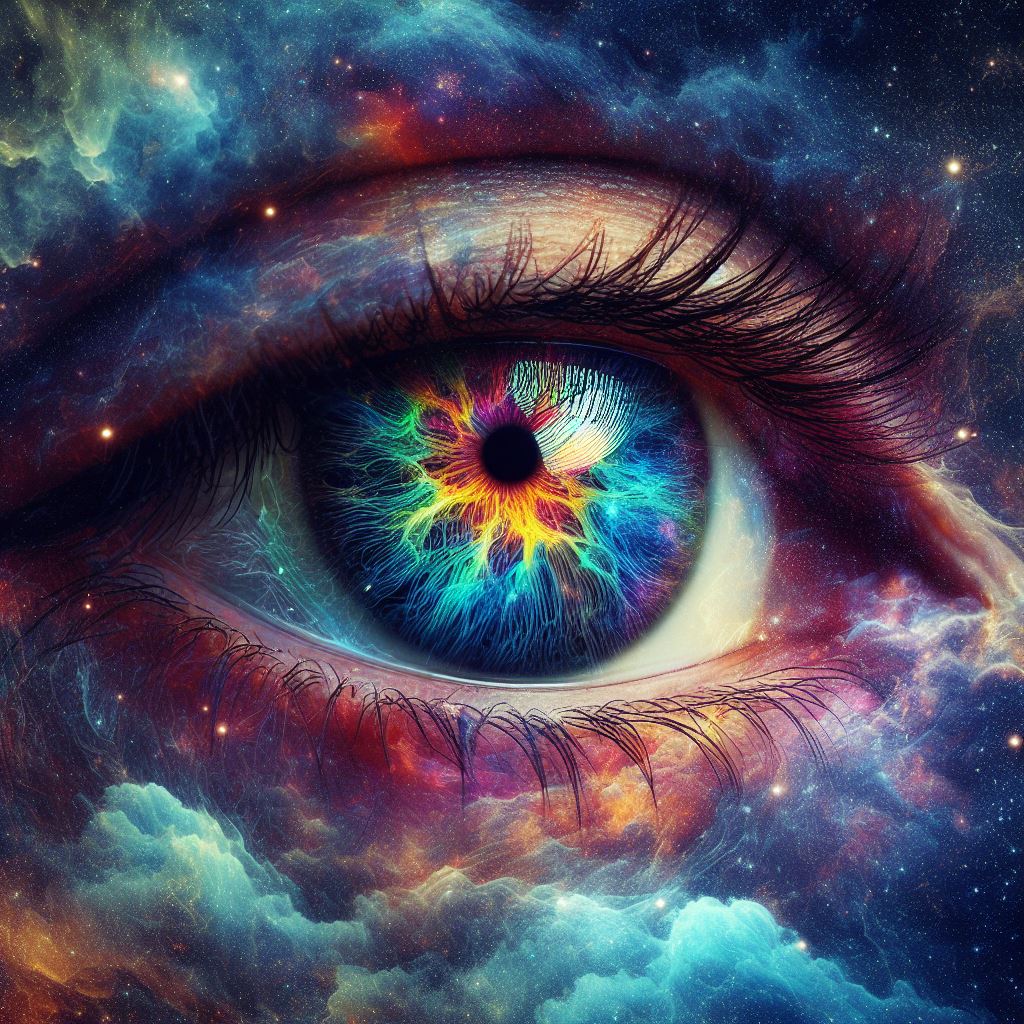
Consciousness intertwines with the mysteries of quantum mechanics, creating a fascinating dialogue between two realms often perceived as distinct. Quantum mechanics delves into the fundamental behavior of particles at the smallest scales, revealing a reality that challenges conventional notions of existence. This world operates on principles that defy common sense, such as superposition and entanglement.
When exploring the implications of these phenomena, we find parallels with consciousness and the insights of Carl Jung.
Quantum levels and consciousness
Quantum physics introduces a framework that suggests reality exists in a state of potentiality until observation brings it into being. This concept raises profound questions about the role of consciousness in shaping reality.
Some theorists propose that consciousness may influence quantum states, positing that the act of observation collapses the wave function, determining the outcome of quantum events. This idea aligns with the notion that consciousness plays an active role in the manifestation of reality, inviting us to reconsider our understanding of existence itself.
Jung’s exploration of the unconscious
Carl Jung’s exploration of consciousness and the unconscious offers a complementary perspective to quantum physics. Jung posited that the unconscious mind comprises layers that influence our thoughts, behaviors, and perceptions. He introduced concepts such as archetypes and the collective unconscious, suggesting that deep-seated symbols and motifs transcend individual experience, connecting humanity across time and cultures. Jung’s work highlights the intricate interplay between the conscious and unconscious, emphasizing that our subjective experience of reality extends beyond immediate awareness.
Quantum mechanics and Jung
Both realms emphasize the interconnectedness of existence. Just as quantum entanglement demonstrates that particles remain linked regardless of distance, Jung’s concept of the collective unconscious suggests that individuals share a profound psychological connection that transcends personal experience. This interconnectedness invites a holistic understanding of reality, where the boundaries between self and other, conscious and unconscious, dissolve into a unified experience.
In quantum mechanics, the act of measurement influences the outcome of an experiment, challenging the observer’s detachment from the observed. Similarly, Jungian psychology highlights the significance of symbols and meaning in shaping our conscious experience. Dreams, archetypes, and mythological motifs serve as windows into the unconscious, revealing hidden aspects of our psyche. By engaging with these symbols, we tap into the collective unconscious, fostering a deeper understanding of ourselves and our place in the cosmos.
The implications for self-awareness
The connection between consciousness and quantum levels invites a re-evaluation of self-awareness. If consciousness influences the fabric of reality at the quantum level, our thoughts and intentions gain spiritual power. Jung’s emphasis on individuation—the process of integrating the conscious and unconscious—encourages personal growth. By acknowledging the interplay between our inner worlds and the external reality, we cultivate a greater sense of agency and responsibility in shaping our experiences.
The exploration of consciousness at the quantum level and its connection to Jungian psychology offers profound insights into the nature of existence. As we delve into the mysteries of both realms, we uncover a shared understanding of interconnectedness, emphasizing the role of consciousness in shaping reality.
Bridging these domains, we can foster a holistic perspective that integrates science and psychology, deepening our appreciation for the complexities of consciousness. This journey invites us to explore the profound implications for our understanding of self, reality, and the universe, revealing the potential for transformation that lies within a quantum universe.






Leave a Reply