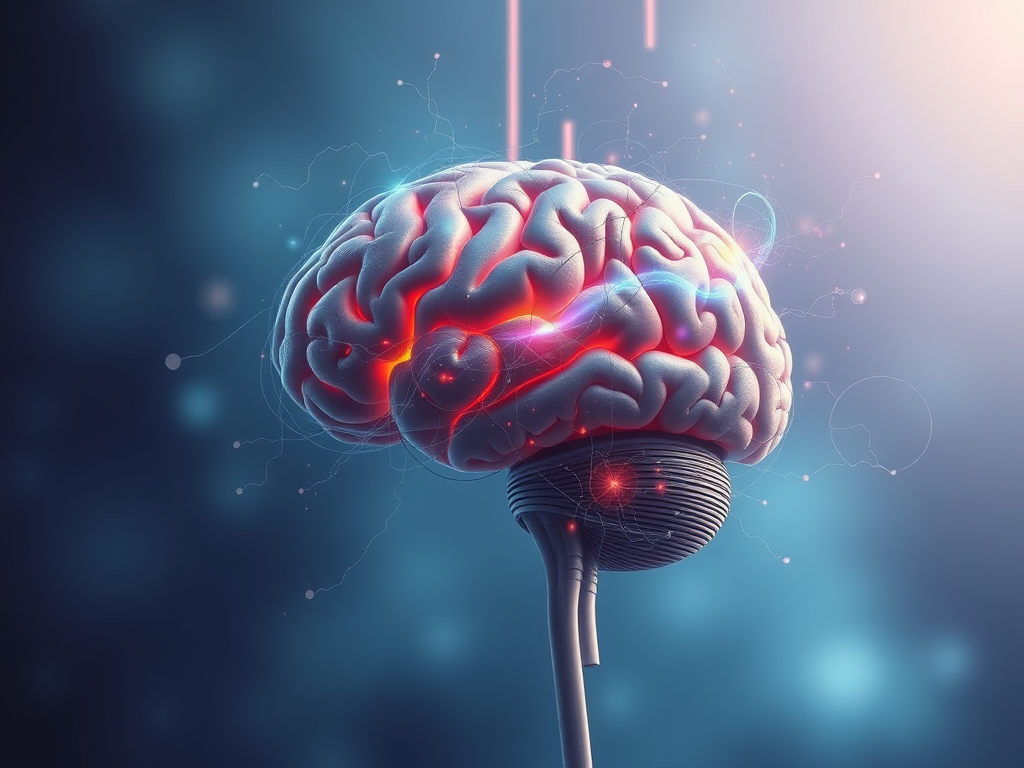
The hard problem of consciousness, introduced by David Chalmers, captures the most profound mystery of the human experience: how subjective experience emerges from physical processes. While science excels in explaining the mechanisms of the brain—neurons firing, chemical exchanges, and neural circuitry—it falters when asked to explain why or how these processes give rise to qualia, the individual, subjective experiences that color our inner world. As Chalmers observes, “There is nothing that we know more intimately than conscious experience, but there is nothing that is harder to explain.”
This paradox challenges not only neuroscientists and philosophers but also the very foundations of how we understand existence. It compels us to reconsider whether consciousness can be fully explained through materialist paradigms or whether it requires a deeper ontological shift in perspective.
The boundaries of materialism
Materialist science assumes that physical processes underlie all phenomena, including consciousness. Researchers have made significant strides in understanding how neural correlates map onto various cognitive and emotional states. Brain imaging technology, for example, reveals patterns of activity tied to specific sensations or thoughts. These findings constitute the “easy problems” of consciousness: how the brain processes information, executes functions, and controls behavior.
However, none of these discoveries penetrate the hard problem. Patricia Churchland, a proponent of neurophilosophy, asserts, “Consciousness is a part of the natural order. It depends on the brain, yet it feels like it belongs to a different realm.” Even as neural mechanisms explain the brain’s operations, they leave unanswered why these operations should feel like anything at all. The leap from neural activity to first-person experience remains a chasm that resists explanation.
Phenomenology: diving into experience itself
The hard problem has spurred interest in phenomenology, the philosophical study of lived experience. Edmund Husserl, its founder, suggested that instead of focusing on objective measures of the mind, one should explore consciousness as it appears from within. This framework shifts the question from “How does the brain produce consciousness?” to “What is the structure of consciousness itself?”
Phenomenology emphasizes that experience involves intentionality, the quality of being about or directed at something. Jean-Paul Sartre built on this, asserting, “Consciousness is always consciousness of something.” The subjective perspective central to consciousness creates a world imbued with meaning. Understanding this inner dynamic demands not only a descriptive but also an interpretive approach.
Yet phenomenology cannot solve the hard problem fully; it refrains from explaining why consciousness exists in the first place. Rather, it enriches the understanding of its contours and insists on the irreducibility of subjectivity.
Panpsychism: a radical proposal
Some philosophers have suggested that the difficulty of the hard problem arises from limitations in materialist thinking. Panpsychism posits that consciousness might not emerge from physical processes but instead pervades the fabric of existence. According to this view, matter at its most fundamental level possesses proto-conscious properties. Philip Goff, a leading contemporary panpsychist, claims, “Consciousness is part of the intrinsic nature of matter. This may sound counterintuitive, but it offers an elegant solution to the hard problem.”
Panpsychism collapses the gap between matter and mind, suggesting that complex consciousness results from the organization of simpler conscious entities. While provocative, the theory raises questions about the exact nature and scale of these conscious components. Critics argue that panpsychism risks attributing consciousness without adequately defining it, creating a metaphysical mystery rather than solving one.
Integrated Information Theory: a quantitative approach
Another response to the hard problem is Integrated Information Theory (IIT), developed by neuroscientist Giulio Tononi. IIT proposes that consciousness arises from systems with high levels of integrated information, or “phi.” According to this theory, the greater the capacity of a system to unify information, the richer its consciousness.
IIT attempts to measure consciousness scientifically, offering a framework that applies to diverse entities, including humans, animals, and potentially even machines. Yet while IIT provides a method for quantifying consciousness, it remains silent on why integrated information results in subjective experience. As Tononi admits, “We can describe the structure of consciousness, but the ultimate explanation of its existence eludes us.”
Mysticism and the limits of rationality
The hard problem also resonates with spiritual and mystical traditions that have long grappled with the nature of consciousness. In Eastern philosophies such as Advaita Vedanta and Zen Buddhism, consciousness is viewed as the fundamental reality. The Indian philosopher Adi Shankaracharya declared, “The Self is awareness. The Self is eternal. There is no other reality but the Self.”
These traditions suggest that rational inquiry may never resolve the hard problem because it relies on the very consciousness it seeks to explain. Mystical practices emphasize direct experience, dissolving distinctions between subject and object and pointing to an undivided field of awareness. While these insights may enrich the conversation, they challenge the scientific worldview, which seeks empirical validation for claims about consciousness.
Why the hard problem matters
The hard problem of consciousness confronts humanity with the profound mystery of what it means to exist. It touches on ethics, artificial intelligence, and the nature of reality itself. Can machines become conscious, or are they mere simulations of human cognition? Does consciousness require a fundamental revision of physics? What responsibilities arise if non-human entities possess some form of awareness?
As Chalmers reminds us, “Consciousness is the most vivid and immediate aspect of our lives, and yet the hardest to explain.” Grappling with this problem requires openness to diverse perspectives, from neuroscience and philosophy to metaphysics and mysticism. It invites humility in the face of one of existence’s most enigmatic phenomena, urging us to reconsider our assumptions about mind, matter, and the very essence of being.





Leave a Reply