
Consciousness remains one of the most intricate and debated topics in human understanding. Broadly, it refers to our awareness of the self, the environment, and the ability to perceive, think, and experience emotions.
While science provides robust insights into the biological foundations of consciousness, a unified theory is yet to emerge. Neural networks, brain activity patterns, and even quantum theories contribute to this growing understanding, but consciousness resists reduction to mere mechanics, inviting philosophical exploration as well.
Consciousness and its overlap with other concepts
Consciousness functions as a multifaceted construct intertwining with identity, personality, metacognition, and self-awareness. Identity represents who we perceive ourselves to be, constructed from memories, beliefs, and roles. Personality shapes how this identity expresses itself in behavior and interactions. Metacognition, or thinking about one’s thoughts, allows us to reflect on and modify our cognitive processes. Self-awareness ties these dimensions together, creating a lens through which we perceive and evaluate our existence. Consciousness is the stage where these dynamics play out, underscoring how deeply intertwined they are.
Human consciousness and the human brain
The brain serves as the physical foundation of human consciousness, orchestrating it through complex neural networks. The prefrontal cortex, with its role in decision-making, reflection, and emotional regulation, forms a crucial part of this network. Yet, consciousness is not localized in one area; it arises from the intricate interaction of distributed networks.
Neuroscience unveils how brain activity correlates with conscious states, from alert wakefulness to deep dreams, but it also highlights the enigma of how subjective experience, or qualia, emerges from physical processes.
How is human consciousness shaped by archetypes?
Jungian psychology posits that archetypes, universal symbols embedded in our collective unconscious, influence human consciousness. These archetypes represent innate predispositions, shaping behaviors, dreams, and cultural narratives across time and place. While modern science often critiques such metaphors, evolutionary psychology acknowledges the genetic basis for certain innate tendencies, like the drive for connection or survival strategies. These genetic scripts intertwine with environmental factors, providing a foundation upon which consciousness develops.
How is human consciousness shaped by social constructs?
Cultural and social constructs profoundly shape consciousness by providing the frameworks within which we interpret our reality. Language, traditions, and societal norms influence not only what we think but also how we think.
Our sense of self is often defined in relation to others, informed by the stories and values a culture transmits. For instance, individualistic cultures foster a consciousness that emphasizes autonomy, while collectivist cultures create a consciousness that prioritizes interdependence.
How is consciousness related to happiness?
Hedonic happiness, is rooted in pleasure and the avoidance of pain. Eudaimonic happiness stems from purpose, virtues, and personal growth. Both of them rely on consciousness to unfold.
Consciousness allows us to evaluate and reflect on these experiences, mediating their impact. Hedonic pursuits provide immediate gratification and pleasure. Eudaimonic happiness demands deeper engagement, often requiring self-awareness and intentional alignment with values and aspirations. Together, they reveal how consciousness navigates the spectrum of human fulfillment.
The psychoanalytic perspective on consciousness
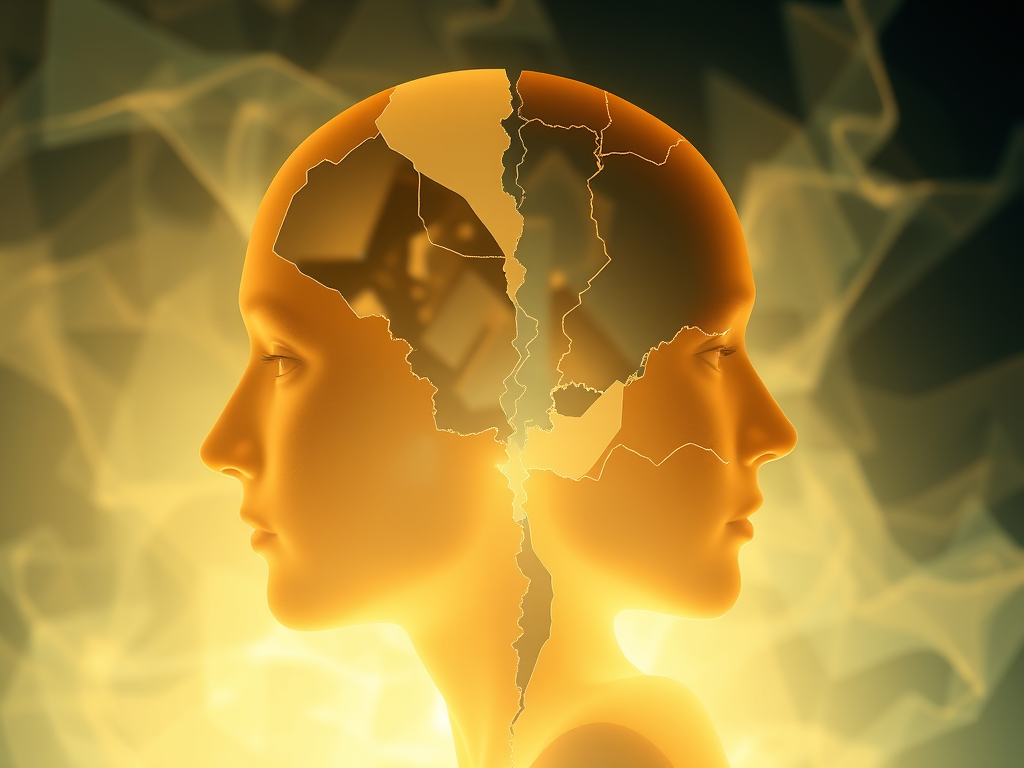
From a psychoanalytic perspective, consciousness represents only the tip of the mental iceberg. Freud’s model positions the unconscious as a significant influencer of thoughts and behaviors, with repression often leading to neuroses.
Most of the time neuroses can arise when unconscious conflicts surface, overwhelming conscious mechanisms. By bringing these hidden dimensions to light, psychoanalysis aims to resolve the dissonance between the unconscious and the conscious mind, paving the way for greater self-understanding.
Existential crisis
Existential psychology views neurosis not just as a symptom of unresolved internal conflict but as a manifestation of alienation from one’s authentic self. When individuals lose touch with their values, purpose, or freedom, an existential crisis ensues. In this context consciousness becomes a battleground where such dissonances are experienced acutely. This approach encourages individuals to confront the discomfort, embrace their autonomy, and realign their consciousness with a chosen, meaningful path.
How can the knowledge about consciousness empower us?
Understanding consciousness empowers us to navigate both personal and collective growth. On an individual level, self-awareness fosters gratefulness, emotional regulation, resilience, and purpose. Recognizing how cultural and innate influences shape us can free us from biases, encouraging authenticity.
On a collective level, shared consciousness can enhance empathy, collaboration, and the pursuit of shared goals. This knowledge provides a bridge to transform not just how we perceive the world, but how we shape it, aligning with higher ideals and common humanity.





Leave a Reply