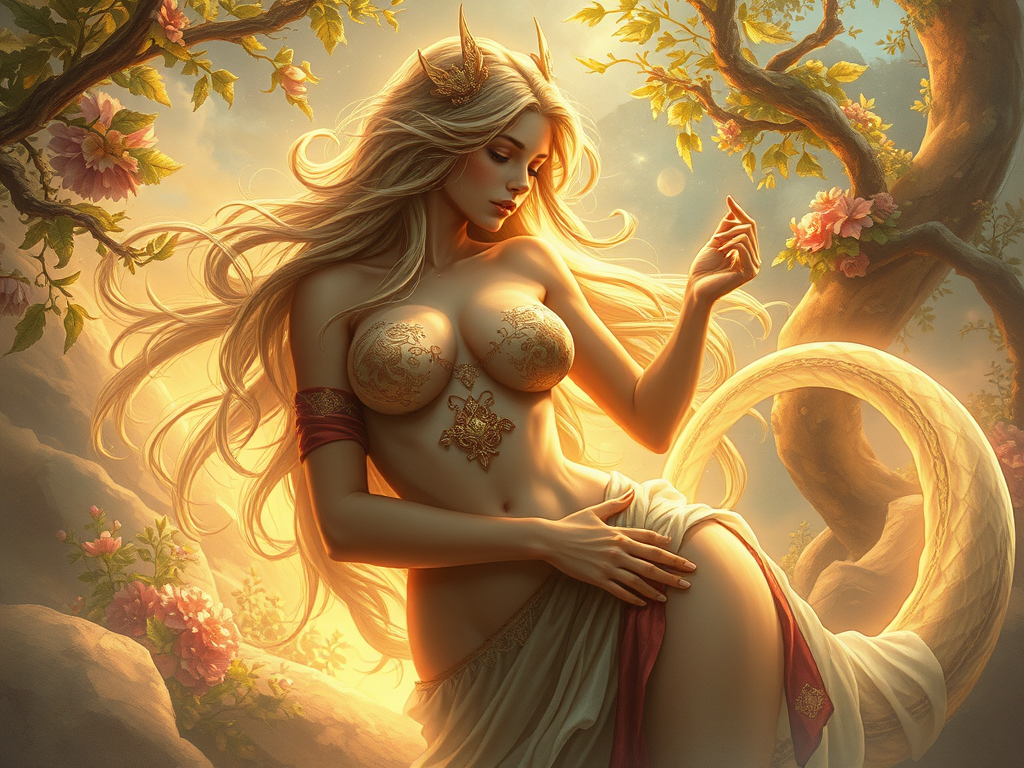
John Keats was an English Romantic poet, celebrated for his rich, sensuous verse and exploration of beauty, mortality, and the power of imagination. Born in 1795, he produced some of the most enduring works of English literature in a short life, dying at just 25. Keats was deeply influenced by Greek mythology, a theme that runs through much of his poetry, including Lamia, a narrative that blends myth with tragedy.
The legend of Lamia and its origins
The myth of Lamia has its roots in Greek folklore and later evolved into a cautionary tale. In the earliest versions, Lamia was a Libyan queen loved by Zeus. Hera, enraged by the betrayal, cursed her with the loss of her children and condemned her to eternal suffering. Overcome with grief, Lamia transformed into a monstrous creature, wandering the earth in anguish. Later versions cast her as a demon, preying on young men and children. She became a symbol of forbidden desire and destructive beauty, embodying the fears surrounding female power and deception.
By the time Keats encountered the myth, Lamia had become a supernatural seductress. She could shift between serpent and human forms, luring lovers into her enchanted world. Keats took this legend and reshaped it into a tragic meditation on the limits of human experience. He stripped away the moralistic overtones and instead focused on the delicate balance between passion and knowledge.
Keats’ reinterpretation of the myth
Keats reinvents Lamia as a deeply human character, filled with longing and vulnerability. In his version, she escapes her serpent form with the help of Hermes, who desires another nymph in exchange for his aid. Once transformed, she seeks love and finds Lycius, a young philosopher in Corinth. Their love exists in a dreamlike space, untouched by reality. Lamia provides Lycius with an existence of pure passion, free from intellectual constraints.
Yet, Keats introduces a force that disrupts this harmony: Apollonius, Lycius’ mentor, a figure of reason and cold certainty. Apollonius sees through the illusion and exposes Lamia’s true form. With her deception revealed, Lamia vanishes, and Lycius dies in despair. Keats presents this moment as an inevitable confrontation between illusion and truth. The poem does not celebrate Apollonius’ victory but instead mourns the destruction of a dream.
The power of enchantment and desire
Lamia represents the intoxicating force of enchantment. She does not simply deceive; she creates a world where love and beauty can exist outside logic. Lycius embraces this illusion willingly, abandoning the rigid structures of philosophy. In Keats’ vision, illusion is not a weakness but an essential part of experience. Love itself requires a level of self-deception, a willingness to believe in something fragile.
Keats does not portray Lamia as a malevolent seductress. She seeks love, not destruction. Her tragedy lies in her inability to sustain the illusion. She tries to exist within human reality, but her past haunts her. The poem suggests that passion and reason remain incompatible forces, doomed to collide.
Apollonius and the destruction of illusion
Apollonius embodies reason, skepticism, and the unyielding search for truth. He represents the classical tradition of rationality, the force that dismantles dreams in favor of objective reality. His exposure of Lamia reveals more than her deception—it exposes the fragility of human happiness.
Keats presents Apollonius as both necessary and tragic. He does not act out of cruelty but out of an unwavering belief in truth. Yet, in doing so, he strips the world of its wonder. His presence turns love into despair, showing that truth can be a force of destruction. Keats challenges the idea that knowledge always liberates. In Lamia, truth becomes something colder, something that leaves emptiness in its wake.
The fragility of beauty and passion
Lamia’s transformation mirrors the fleeting nature of passion. She abandons her serpent form to embrace human experience, yet her existence remains unstable. She embodies the Romantic ideal of beauty—ephemeral, intense, and destined to fade. Keats suggests that beauty, once questioned or exposed, dissolves.
Lycius undergoes a transformation as well. He moves from passion to despair, from belief to disillusionment. His death signifies the cost of knowing too much. Keats implies that certain illusions must remain unchallenged for happiness to endure. The poem mourns the loss of innocence, the moment when enchantment gives way to brutal reality.
The conflict between Romanticism and reason
Keats contrasts the Romantic vision of imagination with the rigid structures of reason. Lycius and Lamia embody the Romantic pursuit of beauty, transcendence, and emotional depth. Apollonius represents a world of logic, skepticism, and unyielding truth. Their conflict reflects a broader tension within Keats’ philosophy. He does not reject knowledge entirely, but he questions its cost.
Romanticism often exalts imagination as a higher form of truth. Keats’ Ode on a Grecian Urn explores a similar theme, suggesting that beauty holds a deeper meaning than facts alone. Lamia presents a harsher conclusion. Here, imagination crumbles under scrutiny, and truth does not provide comfort.
The tragic conclusion and its meaning
Lamia disappears, and Lycius dies, leaving nothing behind but emptiness. The poem does not celebrate this ending; it grieves the loss of a dream. Keats suggests that reality, stripped of illusion, can be unbearable. He does not offer an easy resolution. Instead, he leaves the reader with an unsettling question: does truth always serve us, or do some illusions sustain life itself?
In Lamia, Keats captures the fragile nature of human experience. Beauty, passion, and dreams can never be permanent. Yet, in their fleeting existence, they give life its deepest meaning.







Leave a Reply