
From External control to internalized discipline
The idea of the Panopticon gained renewed prominence in the 20th century when philosopher Michel Foucault analyzed it in his seminal work Discipline and Punish. Foucault argued that the Panopticon was not just an architectural model but a metaphor for the shift in how societies exert power. In pre-modern societies, power meant direct violence and visible authority—public executions, physical punishment, and coercion were common. However, Foucault observed that modern societies increasingly operated through subtle forms of control, such as surveillance and normalization of behavior. The Panopticon, in Foucault’s view, embodied this transition: it illustrated how power could be exercised invisibly and continuously, shaping behavior by making individuals internalize the idea that they were always being watched.
Foucault’s analysis extended beyond prisons. He argued that institutions like schools, hospitals, and factories functioned as modern-day Panopticons, where individuals internalized norms and regulations without needing direct coercion. The internalization of this surveillance, according to Foucault, meant that individuals would modify their own behavior, not out of fear of punishment but out of an ingrained sense of self-discipline. The Panopticon, in this sense, became a mechanism that reached far beyond prison walls, influencing the very structure of society.
The Shift to the Internal Panopticon
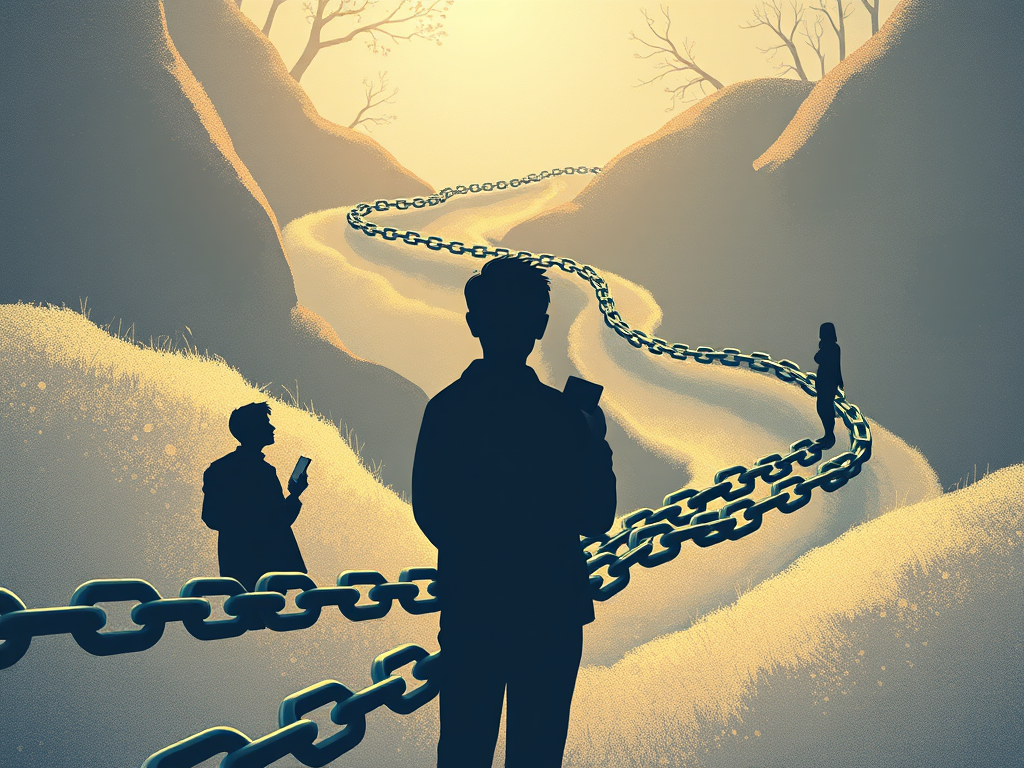
In the contemporary world, the dynamics of surveillance and control have evolved further, a shift explored by philosopher Byung-Chul Han. Han takes the Panopticon and pushes it into the digital age, arguing that we are no longer governed by external authorities with their visible surveillance mechanisms. Instead, we now regulate ourselves, largely through the pressure of self-imposed performance. The digital revolution, particularly through social media, has made this shift even more pronounced. Han writes in his book The Transparency Society that modern societies function on the principle of “self-surveillance,” where individuals voluntarily expose themselves in exchange for visibility, attention, and validation.
Han’s critique of the Panopticon emphasizes that today’s society no longer needs direct forms of discipline or overt surveillance. In Psychopolitics, Han notes that power operates through seduction, not prohibition. Instead of coercing individuals into compliance, society encourages them to become self-regulating entities. This is particularly evident in the way social media operates: users post, share, and curate their lives, all in the pursuit of likes, followers, and validation. People now monitor their own actions and subject themselves to the invisible gaze of the online audience. What appears to be voluntary self-expression becomes a form of compliance, as people tailor their behavior to fit the expectations of the digital world.
Implications
The implications of the internal Panopticon are profound and multifaceted. First, it alters the traditional relationship between power and the individual. In Foucault’s vision, the Panopticon was a tool for external social control, where power operated through surveillance. In Han’s interpretation, however, the system of control becomes more subtle and more intimate. It’s no longer the fear of punishment or external surveillance that shapes behavior, but the pressure to conform to societal norms and the desire for validation. The individual, then, becomes both the subject and the agent of control, an active participant in their own subjugation.
This shift is particularly evident in the rise of the “achievement society,” as Han calls it. Instead of institutional surveillance, individuals present with a constant need to perform and present a curated version of themselves. The digital era has amplified this, with social media providing platforms where self-presentation, performance, and personal branding become crucial. As Han writes, “Total transparency leads to total conformity, as it eradicates otherness and difference.”
Moreover, the internal Panopticon also raises significant questions about freedom and autonomy. In the external model, one could at least resist or escape surveillance. Today, however, individuals often do not recognize their participation in self-surveillance. People post on social media or measure their worth through online feedback, but the structure of the digital economy and society has created an environment where doing so feels almost necessary. The fear of being left out or irrelevant leads to self-exposure and constant validation-seeking behavior. In this way, the individual becomes complicit in the power dynamics that govern them, effectively undermining their own sense of freedom.






Leave a Reply