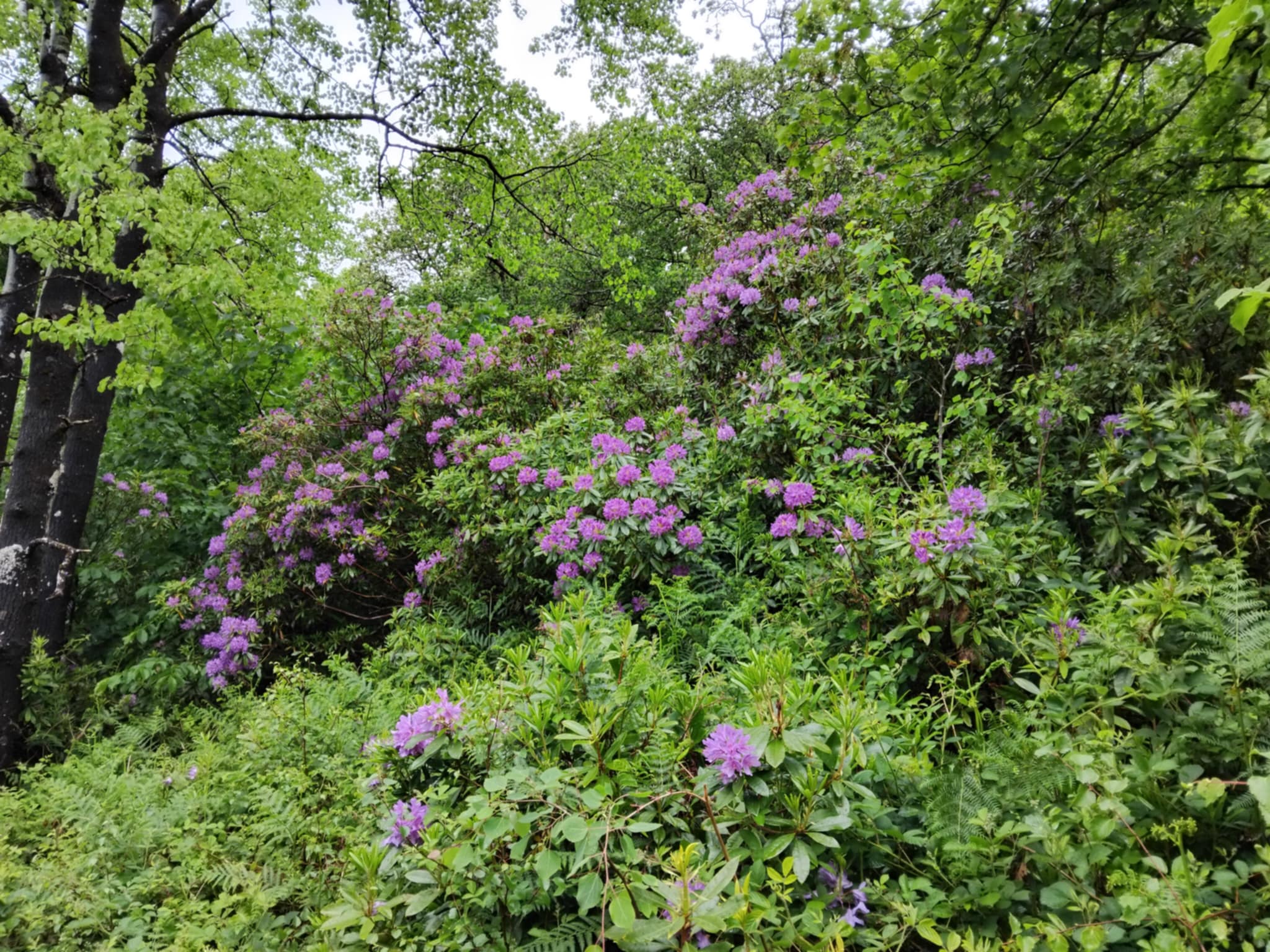
Rhododendrons are known for their large, colourful blooms that light up woodlands and gardens, especially in late spring. But not all species behave the same way. Rhododendron ponticum, which is commonly found in the UK, is one of the most aggressive and invasive shrubs introduced into natural landscapes.
Originally brought from Southern Europe and Asia in the 18th century, it was used for ornamental planting in estates and for cover in game hunting areas. It quickly escaped those settings and began to spread through native woodlands, heathlands, and moorlands. It forms dense thickets that block out sunlight and outcompete native plants. Under its canopy, very little grows. It alters soil chemistry, disrupts habitats, and reduces biodiversity.
The plant is also hard to remove. It spreads by seed and by layering—where branches touch the ground and root. Even after cutting it down, it often resprouts unless the roots are completely removed. Herbicides can help but must be used carefully and often over several years.
Despite its beauty, rhododendron comes at a high ecological cost when left unmanaged in wild settings. It reminds us that not every beautiful plant belongs in every landscape. Restoration efforts now aim to remove it in many protected areas to allow native ecosystems to recover. The challenge is ongoing, but the goal is simple: to give native species a chance to thrive again.







Leave a Reply