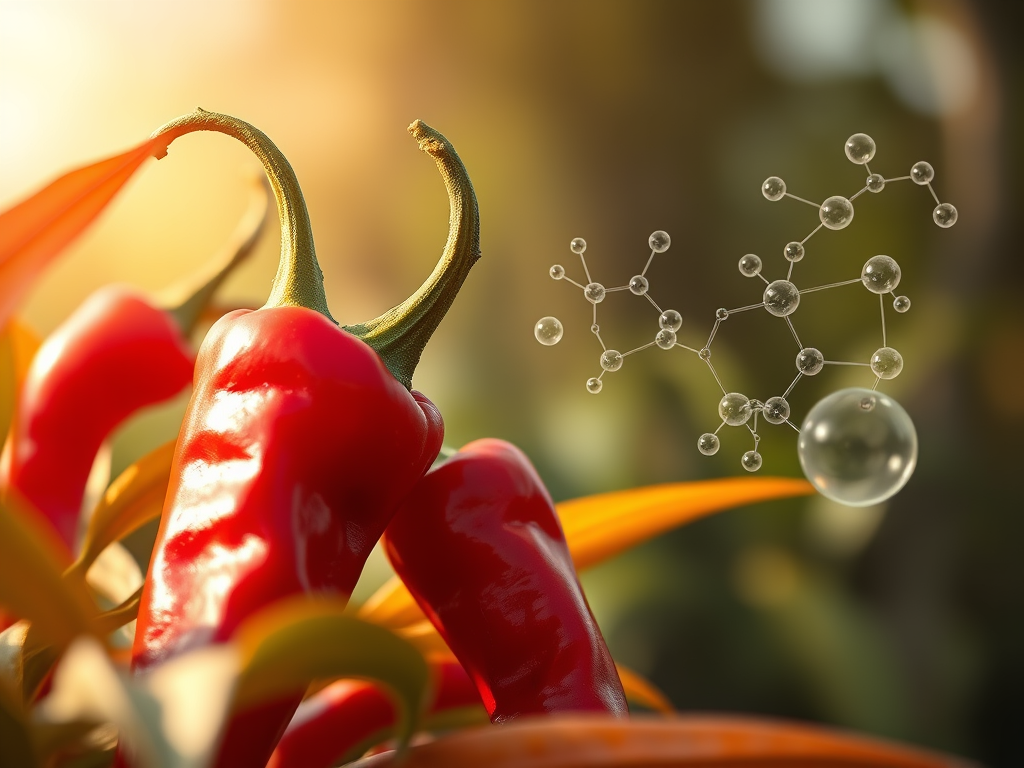
Hot chili peppers don’t actually burn your mouth — but your brain swears they do. This paradox lies at the heart of a fascinating biological story that connects a spicy molecule from nature to your body’s own internal chemical language. The key player is capsaicin, the fiery compound found in chili peppers.
Capsaicin, the pain trickster
Capsaicin binds to a receptor known as TRPV1 (transient receptor potential vanilloid type 1), a protein that usually responds to physical heat and tissue damage. This receptor helps detect danger — the kind of danger we interpret as burning pain when we touch something hot or come into contact with acid. When capsaicin binds to TRPV1, it fools the receptor into reacting as if the tissue has been physically burned, creating a fiery sensation that isn’t actually caused by heat.
This is where things get more interesting. The body doesn’t just respond to this signal with discomfort — it activates deeper neurochemical processes designed to counterbalance the pain. That’s where the endocannabinoid system enters the picture.
The endocannabinoid system: your internal regulator
The endocannabinoid system (ECS) is a complex cell-signaling network involved in regulating a wide range of physiological processes — pain perception, inflammation, appetite, mood, memory, and stress response. .
One of the most important endocannabinoids is anandamide (from the Sanskrit ananda, meaning bliss), which plays a key role in mood regulation, stress modulation, and — importantly in this context — pain management. Anandamide happens to bind to TRPV1, the same receptor that capsaicin hijacks.
The meeting point: capsaicin and anandamide
When capsaicin stimulates TRPV1, it signals the body to release more anandamide. This molecular cross-talk explains the complex effects of spicy food. The brain perceives pain, and in response, it unleashes its internal pharmacy: endorphins and endocannabinoids. These create a sense of relief, sometimes even euphoria — a “high” not unlike what people report after exercise or cannabis use.
Why we enjoy the burn
Humans are among the few animals that willingly expose themselves to pain stimuli. The kick of a chili is more than a taste preference — it’s a psychological and physiological event. Eating chili peppers simulates a threat to the body, but one that we know is safe. The paradoxical result is a controlled stressor that releases chemicals linked to pleasure, reward, and even anti-inflammation.
The feeling is similar to what long-distance runners describe as a runner’s high — a phenomenon also associated with a surge in anandamide levels. Both experiences involve TRPV1 stimulation and endocannabinoid activity. In both cases, discomfort is followed by a euphoric wave as the body counterbalances stress with its own natural “bliss” compounds.
An evolutionary detour
Why would humans evolve to crave something that mimics damage? There’s no easy answer, but part of the appeal lies in the way chili peppers play with risk and reward. The capsaicin molecule likely evolved as a defense mechanism to deter mammals from eating the fruit, while birds — immune to capsaicin’s effects — could still spread the seeds. Humans, however, subverted this defense and learned to enjoy the ride.
From an evolutionary psychology point of view, the chili experience might function as a type of hormetic stress — a small challenge that trains the body to tolerate larger ones. Just like fasting or cold exposure, capsaicin-induced heat may stimulate resilience in the body, and its neurochemical after-effects may reinforce the behavior.







Leave a Reply