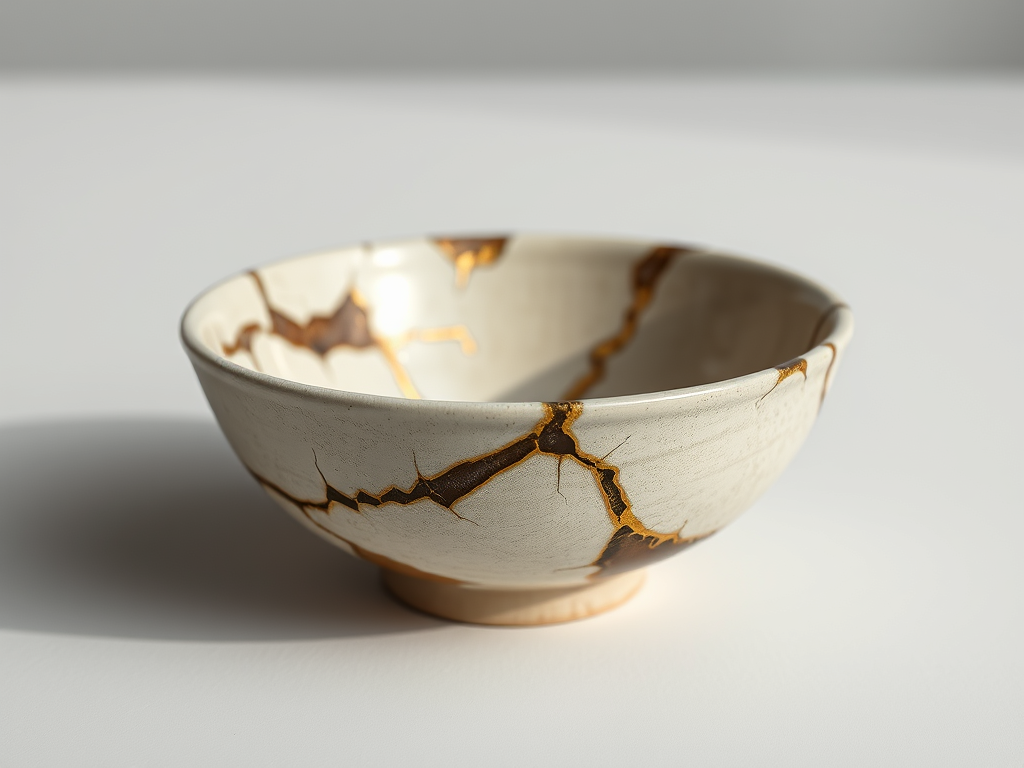
Wabi-sabi refers to an aesthetic sensibility rooted in the acceptance of transience, imperfection, and understated beauty. The concept emerged from Japanese Zen culture and carries influences from tea ceremonies, nature observation, and Buddhist thought. It points toward a way of seeing rather than a fixed style—focusing on the imperfect, the irregular, and the worn by time. Rather than idealizing symmetry or permanence, it values asymmetry, subtle weathering, and the calm presence of things that have aged.
Wabi once described the loneliness of living in nature, away from society. Over time, it shifted to express a quiet, austere beauty—something humble and spiritual. Sabi originally referred to withering or aging, but its meaning also evolved to suggest the beauty found in the passage of time. When joined, the two terms create a layered perspective that honors things not in spite of their wear, but because of it. Cracks in a bowl, the patina on wood, or a faded textile each carry their own kind of dignity.
In traditional Japanese tea culture, it finds clear expression. Tea masters selected handmade, unglazed bowls with irregular shapes, muted colors, and rough surfaces. Each piece invited tactile awareness and an appreciation for individuality. The tea ceremony slowed time and heightened attention to gesture, silence, and space. The room’s simplicity, the subdued light, and the unadorned setting framed the moment in a kind of aesthetic stillness. Beauty did not require ornament—it required awareness.
Psychologically, the concept aligns with a calm acceptance of life’s incompleteness. Rather than striving to fix or perfect, one allows for what is already present. Wear becomes a record of use. Objects are not discarded for being flawed—they are valued more. The same attitude applies inwardly: emotional scars, limitations, and changes form part of the self’s integrity.
Wabi-sabi in art and design
Wabi-sabi also shapes the design of Japanese gardens and architecture. Stones appear aged, paths curve unpredictably, and plants show seasonal change. Wooden structures weather and shift color over years. Surfaces remain unpolished, favoring texture over gloss. What matters is not appearance alone, but the sense of time embedded in materials. Age becomes part of design, not something to be erased.
Photographers and painters influenced by the idea often focus on quiet, ordinary scenes—rusted metal, a weathered wall, or a fading flower. The mood is contemplative rather than dramatic. Visual silence, open space, and aged texture replace sharpness or vividness. The viewer’s attention shifts from spectacle to atmosphere.
Note that this concept does not promote carelessness or disorder as craft remains central. But instead of perfectionism, the value lies in presence, honesty, and depth. A handmade object may contain irregularities, but those irregularities speak of process, attention, and time. Beauty is not removed from function. It arises through it, and through the marks left behind.
Rather than hiding signs of life, wabi-sabi highlights them. Objects breathe history. A repaired ceramic, joined with golden lacquer through the method of kintsugi, shows how breakage adds to an item’s narrative. The visible line of repair does not mar the vessel—it makes it singular. That recognition—that beauty can grow from damage, that imperfection enriches rather than diminishes—is central to the aesthetic.
Wabi-sabi continues to influence design, thought, and lifestyle practices across the world. Its emphasis on slowing down, noticing the ordinary, and embracing natural cycles speaks to people across cultures. It offers a form of clarity and grounding, especially in contrast to trends that seek to idealize, accelerate, or standardize experience. The philosophy makes space for stillness and depth, allowing things to be enough without needing to be more.







Leave a Reply