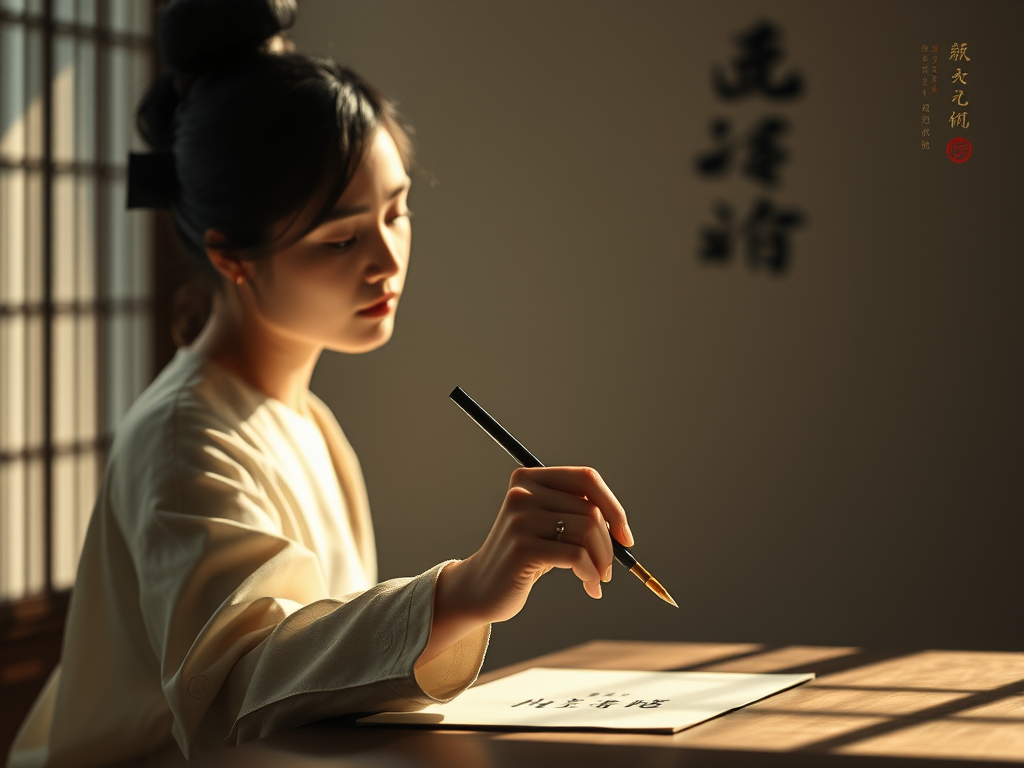
Western interpretations often reduce Japanese aesthetics to objects—design, fashion, interior layout—but they miss the values behind the surface. Shibui, often misunderstood as a mere visual style, is not only about simplicity or subtlety. It’s a mode of being, informing how people handle themselves, how they treat others, how they respond to success or failure. In shaping personality, behaviour, and human interactions, Shibui promotes clarity without harshness, presence without demand, and depth without self-display.
Shibui and personality
People shaped by Shibui do not seek confirmation. They speak clearly, but not to force truth. They listen carefully, not out of passivity, but respect. Emotional steadiness grows with experience. Words are selected with care, without hesitation. The focus shifts from making impressions to remaining sincere.
Frustrations are not hidden—they are processed without explosive reactions. Humor is subtle but always present, contributing to defusing tensions. As character matures, reactions become deliberate and purposeful. The person doesn’t retreat from visibility. They simply avoid unnecessary performance.
Behaviour guided by Shibui
Conduct shaped by Shibui aligns mind and movement exactly like in Zen. A task receives full attention. No showmanship, no excess. Posture, gesture, clothing, tone—each element feels consistent with the rest. Interactions with tools, time, and space become intentional. Speaking becomes concise but never abrupt. Errors are accepted and quietly corrected. Responsibility is fully taken. Focus remains on what matters, not what dazzles. A walk is just a walk. A pause it has it’s meaningful purpose. Shibui principles recommend avoidance of empty words.
Shibui in human interactions
In interactions guided by Shibui, restraint functions like punctuation—it gives meaning to what is said. Rather than filling gaps, a person lets silence do its work. They do not rush to explain themselves. They give others space without making it awkward. In a group, they do not try to balance everyone—they simply remain balanced. Affection is not displayed in high volume, but in steady attention.
Conflicts are solved with assertiveness, most of the time avoiding the display of power. When it comes to use of power the situation is very well selected. Shibui recommends a strategic approach. If the situation requires it speak your mind. Silence and frustration do not create a good balance. Criticism is delivered directly, clearly and cosily, never harshly.
Praise is offered in brief, meaningful terms. Authenticity grows from the lack of pressure to impress. Shibui doesn’t flatten emotion. It just protects interaction from becoming performative.
A long-term commitment
Over time, if internalised Shibui influences all aspects of life. People stop reaching for louder outcomes and begin valuing internal order. There is less urgency to explain the self, more energy spent refining it. Instead of trying to win attention, one begins to hold attention more naturally.
Daily life becomes a series of focused gestures rather than frantic reactions. There is still ambition, but it narrows and sharpens. Commitment and perseverance are the ingredients that let beauty emerge from every simple task.






Leave a Reply