
It is worth reflecting on the relationship between moral purity and rule‑zealotry because it reveals something essential about how societies shape, elevate, and sometimes distort their own ideals. The desire to live a principled life is one of the noblest human impulses, yet the mechanisms we build to protect that aspiration can, when overextended, undermine the very virtues they were meant to preserve. This tension is a recurring pattern in history, a force that has shaped institutions, movements, and entire cultures.
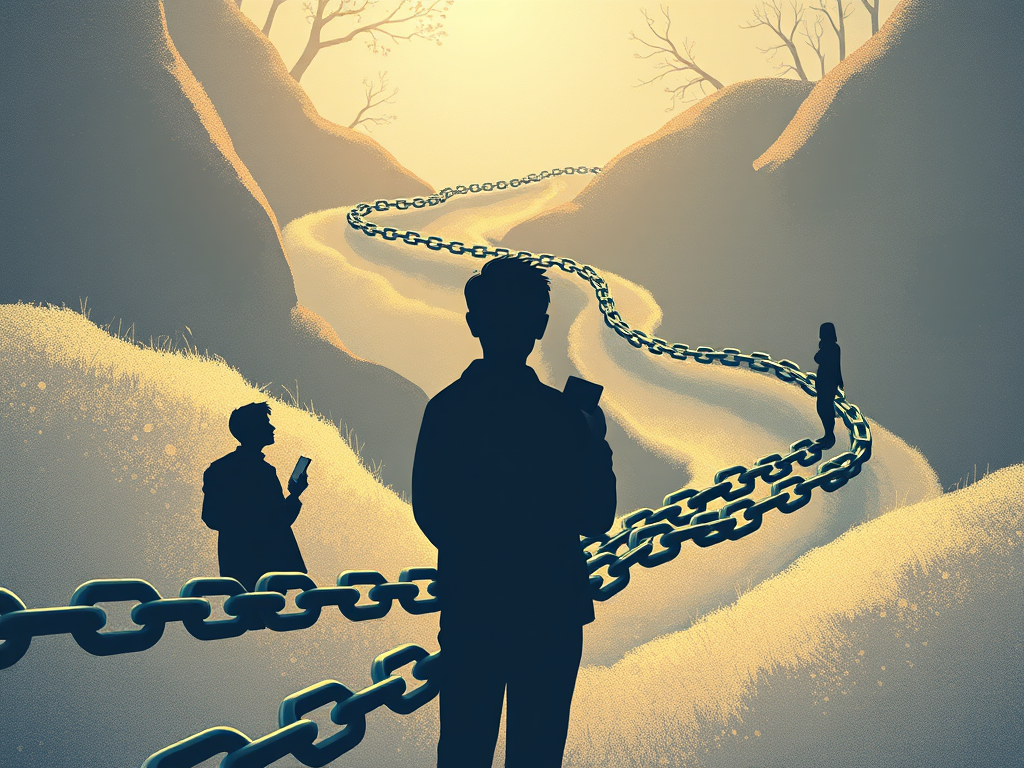
The longing for moral purity begins as an inward commitment. People want to act with integrity, to avoid corruption, to align their conduct with their highest values. Rules offer a reassuring architecture for this pursuit. Most times they promise clarity where life is ambiguous and provide a shared language for communal expectations. It is natural that those who adhere to rules feel virtuous; the rules give their efforts a visible form. Yet the moment rules become the primary measure of virtue, something subtle shifts. The rule‑keeper begins to see the rule not as a guide but as a boundary that must be defended, interpreted, and enforced.
This interpretive power is crucial. Rule‑zealots do not merely follow rules; they define what the rules mean. Their deontology is strict, but it is also selective. They choose the most restrictive reading, the one that demands inhibition rather than initiative, restraint rather than imagination. In their hands, rules become instruments for suppressing natural tendencies—curiosity, spontaneity, experimentation—in favour of a moral posture that values abstention above action. Not doing becomes a higher virtue than doing. The safest moral position is the one that risks nothing, attempts nothing, and questions nothing. In this way, rule‑zealotry becomes one of the most effective ways a society can extinguish creativity.
History offers many examples of this dynamic. The medieval inquisitors believed they were safeguarding the purity of the Christian faith. Indeed, their spiritual practices were elaborate, their standards exacting, and their interpretations of doctrine increasingly narrow. Seeing themselves as guardians of truth, their insistence on doctrinal precision left no room for intellectual exploration or theological nuance. The result was a culture in which fear stifled inquiry and where the imaginative energies of an entire civilization were constrained by the zeal to avoid error.
The Jacobins of revolutionary France followed a similar trajectory.: their commitment to civic virtue was genuine, but their interpretation of virtue became progressively more rigid. In excess of zeal they devised rules to regulate speech, behaviour, and even sentiment, believing that the republic could be purified through vigilance. Their creativity expressed itself not in building new institutions but in inventing new prohibitions. The more they refined their categories of suspicion, the more they narrowed the space in which citizens could think or act freely. Consequently, the Reign of Terror was not only a political catastrophe; it was a cultural one, in which the imaginative possibilities of a revolution were suffocated by the zeal to enforce moral rectitude.
Most Puritan communities of early New England were founded on high ideals, yet their moral strictness gradually hardened into a system that prized conformity over originality. The Salem witch trials revealed how easily a culture of vigilance can turn inward, consuming the very social trust it depends on. Ironically, the rules that were meant to preserve communal harmony became tools for policing thought and behaviour, and the fear of transgression narrowed the horizons of an entire generation.
These episodes show that rule‑zealotry is not simply a matter of excessive discipline, but a mode of interpretation, a way of reading the world that elevates prohibition above possibility. The hypocrite side of zealotry thrives on the belief that purity is achieved by subtraction—by removing risks, silencing doubts, and constraining impulses. In doing so, it creates an atmosphere in which creativity appears dangerous, initiative seems presumptuous, and thinking beyond the prescribed boundaries becomes a moral liability.
To examine this tension is to recognize that moral life requires more than adherence to rules. A healthy consciousness needs imagination, judgment, and the courage to act in ways that rules cannot always anticipate. When the pursuit of purity becomes synonymous with the avoidance of error, societies lose the very qualities that allow them to grow: curiosity, innovation, and the willingness to question inherited assumptions. Rule‑zealotry may offer the comfort of certainty, but it does so at the cost of the creative energies that make moral life dynamic and humane.





Leave a Reply