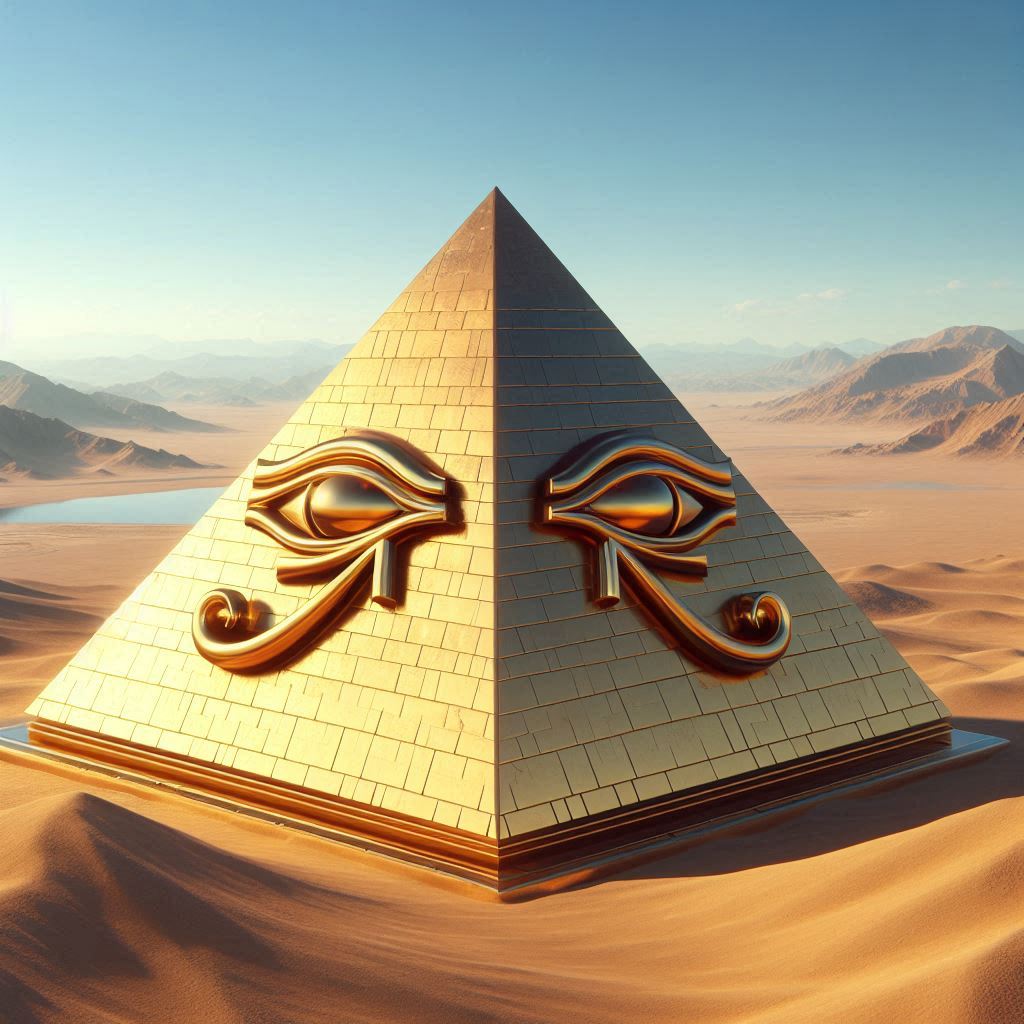
The Hermetic principles, derived from the teachings of Hermes Trismegistus, are fundamental concepts in Hermeticism, a philosophical and spiritual tradition that dates back to ancient Egypt and Greece. These principles are thought to underpin the workings of the universe and offer insights into the nature of reality, the mind, and the human spirit. Let’s analyse these principles and their implications for both personal growth and understanding the cosmos.
1. The Principle of Mentalism
“The All is Mind; the Universe is Mental.”
The Principle of Mentalism posits that the universe and all within it are the creation of a universal mind, often referred to as the “All.” This principle suggests that everything we experience is a manifestation of thought or consciousness. In Gnosticism this universal thought is called logos. With the help of this principle we can harness the power of our mind to shape reality.
2. The Principle of Correspondence
“As above, so below; as below, so above.”
This principle suggests a correspondence between different levels of existence, from the macrocosm (the universe) to the microcosm (individual beings). It implies that patterns observed in one realm can be applied to another, allowing for a deeper understanding of complex systems. This interconnectedness encourages us to seek harmony and balance, recognizing that changes in one aspect of life can affect the whole.
3. The Principle of Vibration
“Nothing rests; everything moves; everything vibrates.”
According to the Principle of Vibration, everything in the universe is in constant motion, vibrating at different frequencies. The role of this principle is to explain the differences between various forms of matter, energy, and even thought. By raising our vibrational frequency through positive thoughts, emotions, and actions, it is possible to attract better experiences and achieve a higher state of being.
4. The Principle of Polarity
“Everything is dual; everything has poles; everything has its pair of opposites.”
Similarity to the concept of Yang/Yin, the Principle of Polarity states that everything has its opposite, and these opposites are actually two extremes of the same thing. For instance, hot and cold, light and dark, love and hate are all poles of the same phenomenon. The insight provided by this principle allows us to transform negative situations into positive ones by recognizing the potential for change and the fluid nature of conditions.
5. The Principle of Rhythm
“Everything flows, out and in; everything has its tides; all things rise and fall.”
The purpose of this principle is to help us acknowledge the cyclical nature of the universe. Everything has its rhythm, and these rhythms govern the patterns of existence. By recognizing and aligning with these natural cycles, we can maintain equilibrium and navigate life’s ups and downs with greater ease. This principle also underscores the importance of patience and persistence, as all things will eventually change and evolve.
6. The Principle of Cause and Effect
“Every cause has its effect; every effect has its cause.”
Also known as the Law of Karma, this principle asserts that nothing happens by chance. Every action has a corresponding reaction, and every event is the result of a specific cause. This principle encourages us to take responsibility for our actions and understand the consequences of our choices. Thus we can manifest desired outcomes and avoid unintended repercussions.
7. The Principle of Gender
“Gender is in everything; everything has its masculine and feminine principles.”
Indeed, gender exists in all things, manifesting as masculine and feminine energies. These energies are not strictly about biological sex but rather the dual aspects present in all of creation. The masculine is associated with activity, logic, and assertion, while the feminine is linked to receptivity, intuition, and nurturing. Balance and harmony are achieved when these energies are recognized and integrated within oneself and in interactions with the world.
Conclusion
The Hermetic principles offer a profound framework for understanding the universe and our place within it. These timeless concepts, originating from the teachings of Hermes Trismegistus, invite us to explore the interconnectedness of all things, the power of the mind, and the natural laws that govern existence.
By contemplating and integrating these principles, we can achieve a deeper awareness and harmony in our lives, ultimately contributing to a greater individual and collective consciousness.







Leave a Reply