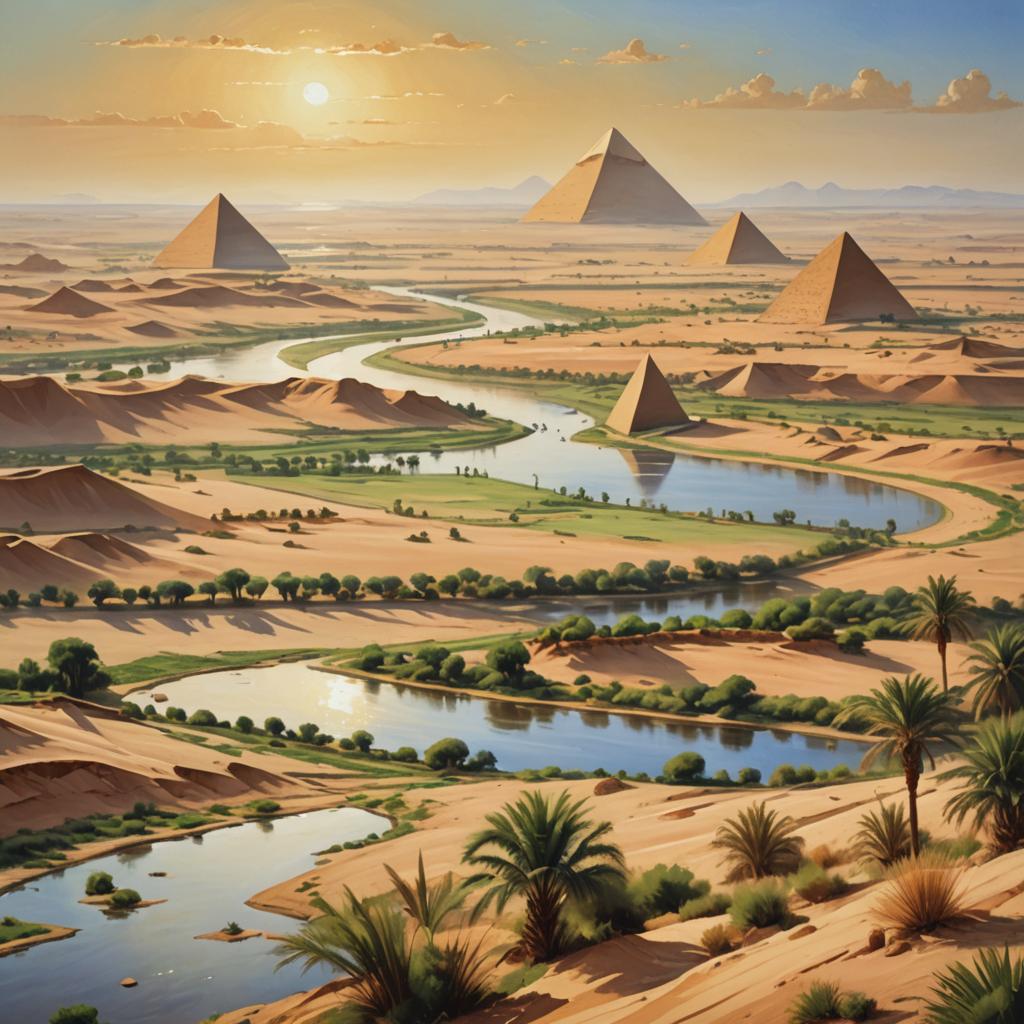
In ancient Egypt, the study of the cosmos was deeply interwoven with both daily life and spiritual beliefs. The Egyptians made significant strides in understanding the heavens, blending astronomical observations with astrological interpretations to influence their culture and religious practices.
Astronomy
The Egyptians observed the sky with a meticulous eye, charting the cycles of celestial bodies and their impact on the terrestrial world. Their observations were primarily driven by practical needs such as agricultural planning and religious rituals. The annual flooding of the Nile River, a crucial event for agriculture, was linked to the heliacal rising of the star Sirius, known to the Egyptians as Sothis. This rising, occurring just before dawn in the summer, marked the start of the inundation and was thus crucial for farming. By tracking this star, the Egyptians could predict the flooding season, an essential factor in their agricultural calendar.
The ancient Egyptians developed a sophisticated understanding of the movement of the Sun, Moon, and stars. They devised a calendar based on lunar and solar cycles, which was remarkably accurate for its time. The solar year was divided into three seasons, each containing four months, reflecting the primary divisions of their agrarian year. They also divided the night sky into 36 decans, or star groups, which rose consecutively over the course of the year. This division helped them keep track of time and mark the passing of hours during the night.
Gods and celestial bodies
The Egyptians associated celestial bodies with deities, intertwining their astronomical observations with religious practices. The Sun god Ra, a central figure in Egyptian religion, was believed to travel across the sky in a solar barque, symbolizing the Sun’s journey through the heavens. The Moon, represented by the god Thoth, was linked to wisdom and writing. This fusion of astronomy with mythology demonstrated how celestial phenomena were interpreted through a religious lens, providing a deeper understanding of the cosmos.
Ancient Egyptian astrology
Astrology played a significant role in Egyptian life, shaping decisions from the mundane to the divine. They believed that the positions of celestial bodies at the time of one’s birth could influence personality and destiny. This belief was reflected in the construction of horoscopes and the interpretation of celestial omens. The alignment of planets and stars was considered to have a direct impact on individuals and the state, guiding decisions and predicting future events.
Egyptian priests, well-versed in both astronomy and astrology, held considerable power. They used their knowledge to interpret omens and guide rulers, combining their expertise in celestial phenomena with their understanding of divine will. Their interpretations often affected state policies and religious practices, illustrating the profound impact of their astronomical knowledge on Egyptian society.
Mathematics, astronomy, and architecture
The study of the heavens was also reflected in Egyptian art and architecture. Temples and pyramids were often aligned with specific celestial events or bodies. The orientation of these structures frequently corresponded with the heliacal risings or settings of important stars, linking the physical realm with the divine. The precise mathematical alignment ensured that religious ceremonies were conducted at auspicious times.
Reflective conclusions
The ancient Egyptians made significant contributions to astronomy and astrology, seamlessly integrating their celestial observations with their cultural and religious practices. Their ability to predict natural events, understand time, and influence daily life through celestial phenomena underscores the depth of their astronomical knowledge. This blend of science and spirituality not only shaped their worldview but also left a lasting legacy in the annals of ancient science and religion.





Leave a Reply