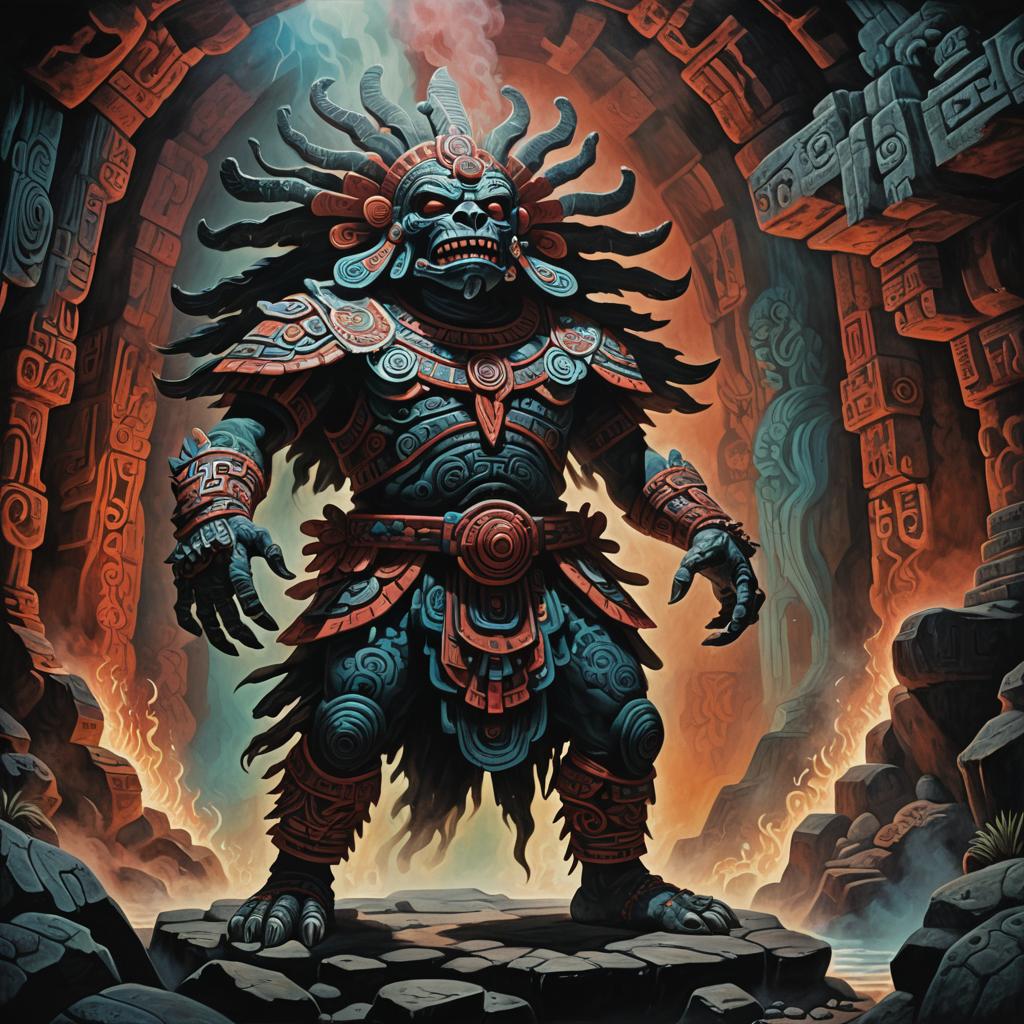
In Aztec mythology, Xolotl stands out as a figure embodying transformation and duality. Known primarily as the god of fire and lightning, Xolotl also represents the concept of the underworld and death. His mythological presence reveals a complex interplay between life, death, and rebirth, making him a compelling deity in the Aztec pantheon.
Xolotl’s name derives from the Nahuatl word for “dog,” and he often appears as a canine figure in Aztec art. This association with dogs connects him to the world of the dead, as dogs guided souls through the underworld. Xolotl’s role in guiding souls highlights his importance in the journey from life to the afterlife, reinforcing his connection to transformation and change.
Mythology
One of Xolotl’s most significant myths involves his relationship with Quetzalcoatl, the feathered serpent god. According to legend, Quetzalcoatl, who symbolizes life and creation, descended into the underworld to retrieve the bones of previous generations of humanity. Xolotl, ever the trickster, aided Quetzalcoatl in this dangerous mission, often through cunning and deception. Their dynamic relationship illustrates the balance between creation and destruction, with Xolotl representing the more chaotic aspects of this duality.
Xolotl also plays a crucial role in the myth of the Fifth Sun. The Aztecs believed that the world had undergone several cycles of creation and destruction, with each cycle corresponding to a different sun. According to the myth, the gods needed to sacrifice themselves to ensure the continued existence of the Fifth Sun. Xolotl, embodying the transformative power of death, participated in this sacrificial act, further underscoring his role in the cycle of life and death.
In addition to his mythological roles, Xolotl’s association with fire and lightning suggests his significance in the natural world. As the god of these elements, he possesses the power to both create and destroy, embodying the dynamic forces that shape existence. This connection to elemental forces reinforces his status as a god of transformation, capable of bridging the realms of the living and the dead.
A cultural glimpse into the Aztec worldview and consciousness
Xolotl’s mythology reveals a complex and multifaceted deity whose influence extends beyond the underworld into the natural world and the cycles of existence. Through his various roles and relationships, Xolotl embodies the intricate interplay between life, death, and rebirth, making him a central figure in the Aztec understanding of the cosmos. His stories offer a glimpse into the Aztec worldview, where transformation and duality play essential roles in the ongoing dance of existence.
Xolotl’s as archetype
In Jungian psychology, Xolotl embodies archetypal themes of transformation and the shadow. His role as a trickster and guide to the underworld aligns with Jung’s concept of the shadow, representing the unconscious and often darker aspects of the psyche. Xolotl’s capacity to shift forms and navigate the underworld mirrors the process of integrating and understanding one’s own hidden and suppressed parts.
Shadow dynamics
Xolotl’s presence in Aztec mythology as a psychopomp, or soul guide, reflects his function in guiding souls through death and transformation. This role resonates with the Jungian view of the shadow as a mediator between conscious and unconscious realms. Xolotl’s transformations illustrate the fluidity and adaptability required to confront and integrate the shadow aspects of the self. His cunning and trickster nature symbolize the necessary deceit and subterfuge involved in navigating complex inner landscapes and facing existential fears.
Transformation
Xolotl’s ability to change shape signifies the dynamic nature of personal transformation and growth. In Jungian terms, his transformations symbolize the shifting aspects of the self that must be understood. His deeds, involving strategic navigation through perilous situations, reflect the inner psychological work of facing and overcoming personal challenges. By confronting the darker elements of existence, Xolotl’s narrative serves as a metaphor for the psychological process of self-realization.
Individuation
Xolotl’s myth illustrates the process of integrating the shadow through his role in the underworld. His strategic actions and deceptive tactics emphasize the necessity of confronting and reconciling hidden fears and conflicts. Jungian analysis sees Xolotl as embodying the confrontation with one’s shadow self, where the journey through darkness leads to greater self-awareness and psychological wholeness. His story reflects the arduous yet transformative journey toward integrating the unconscious aspects of the psyche into conscious awareness.






Leave a Reply