
Understanding the relationship between information processing and consciousness unveils profound questions about existence and the nature of the mind. Giulio Tononi’s theories, particularly his groundbreaking Integrated Information Theory (IIT), offer a rich framework to examine how consciousness arises and why it manifests as it does. His insights have challenged traditional perspectives and opened new avenues for understanding the human experience.
Information as the essence of conscious experience
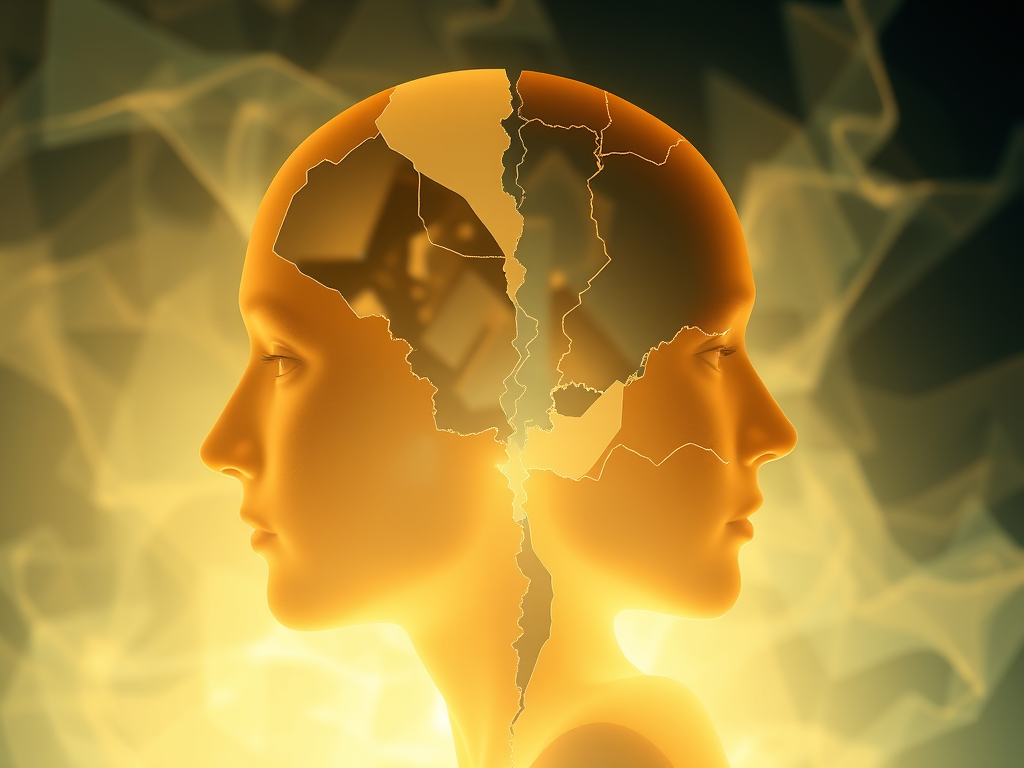
Tononi argues that consciousness depends on the generation of information that cannot be reduced to its individual components. The brain, in his view, serves as an integrated system, wherein countless neural interactions give rise to new and irreducible informational states.
“Consciousness,” Tononi writes, “exists to the extent that a system can create integrated information.” This means the mere presence of information does not suffice; rather, the way the system combines and processes it becomes crucial.
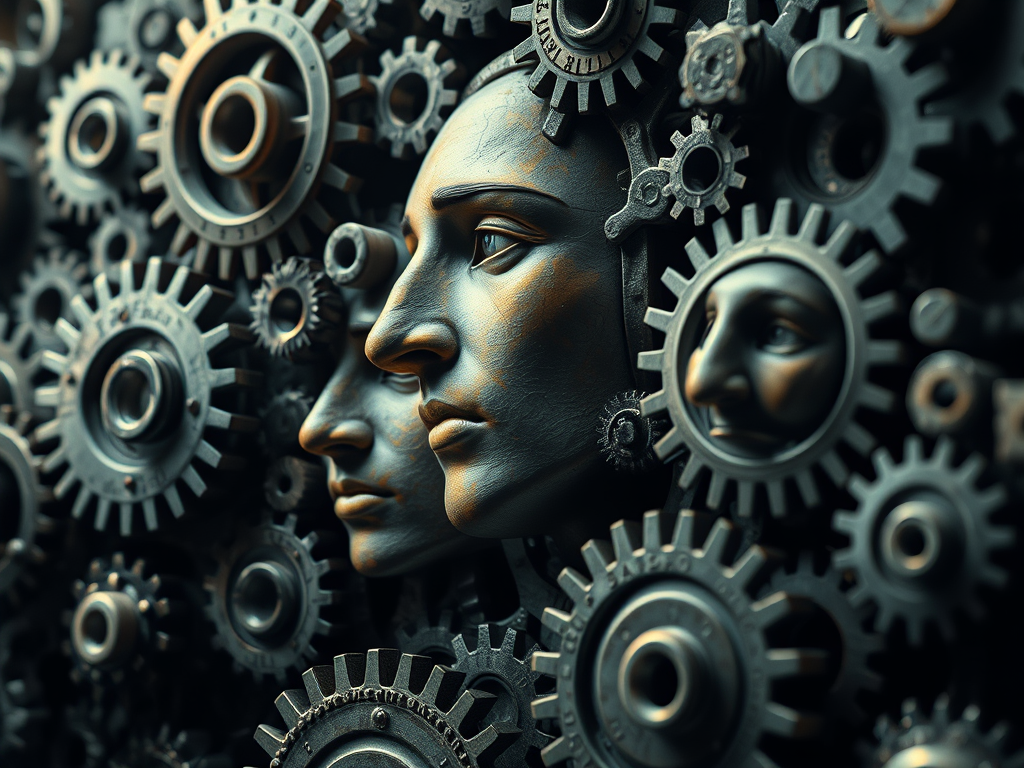
Unlike computers, which store and process data linearly and compartmentally, the human brain integrates information in ways that create subjective experience. Every thought, sensation, or feeling reflects the brain’s capacity to bring disparate elements into a unified whole, producing the complexity of consciousness that defines our individual awareness.
The implications of integrated information
The concept proposes that consciousness cannot be attributed solely to complexity or size; rather, it depends on a system’s capacity to interconnect and synthesize diverse inputs into coherent outputs. This idea has profound implications for fields ranging from neuroscience to artificial intelligence.
Tononi’s theory compels scientists to reconsider whether artificial systems could ever possess consciousness. If integration of information defines consciousness, then building machines capable of such integration would present not just a technological challenge but also a philosophical question.
What qualifies as integration sufficient to produce subjective experience? Could machines ever attain the depth of informational unification that living systems achieve? These are open questions that scientists and philosophers attempt to answer.
Consciousness as a spectrum
One of the most intriguing implications of IIT lies in its claim that consciousness exists on a spectrum. Different organisms—and even different systems—exhibit varying levels of integrated information, corresponding to their degrees of consciousness.
While human consciousness reflects a pinnacle of integration, other living organisms also possess consciousness to lesser degrees based on their neurological complexity. Tononi’s assertion that “even simple systems integrate some amount of information” broadens traditional perspectives on what it means to be conscious.
This view shifts focus toward understanding and respecting life in all its forms. By situating consciousness within a broader continuum of existence, the theory underscores the interconnectedness of systems and invites philosophical contemplation of non-human and non-organic awareness.
The mystery of subjective experience
Tononi’s insights also deepen the perennial “hard problem” of consciousness—the question of why and how subjective experience arises from physical processes. The theory suggests that the unique integration of information within the brain creates a corresponding experiential quality, but it stops short of explaining why this information takes on a first-person perspective.
This question, however, lies not in contradiction to Tononi’s work but rather as an extension of it, inviting further exploration into how informational dynamics translate into conscious perception. He states, “The brain operates not as a discrete machine, but as a flowing network of integrated phenomena, where subjectivity becomes inevitable.”
Challenging traditional materialism
IIT also challenges materialist assumptions that the brain functions solely as a computational device. By highlighting the non-reducibility of integrated information, the theory points to a unique feature of consciousness: its irreducible, whole nature. If consciousness depends on the totality of interactions within a system, it becomes inseparable from the architecture and dynamics of that system.
This raises deeper metaphysical questions. Does Tononi’s view imply a limit to materialist explanations for consciousness? Can physical systems alone account for the integration necessary to produce awareness, or does the theory open avenues for dualistic or panpsychist interpretations?




Leave a Reply