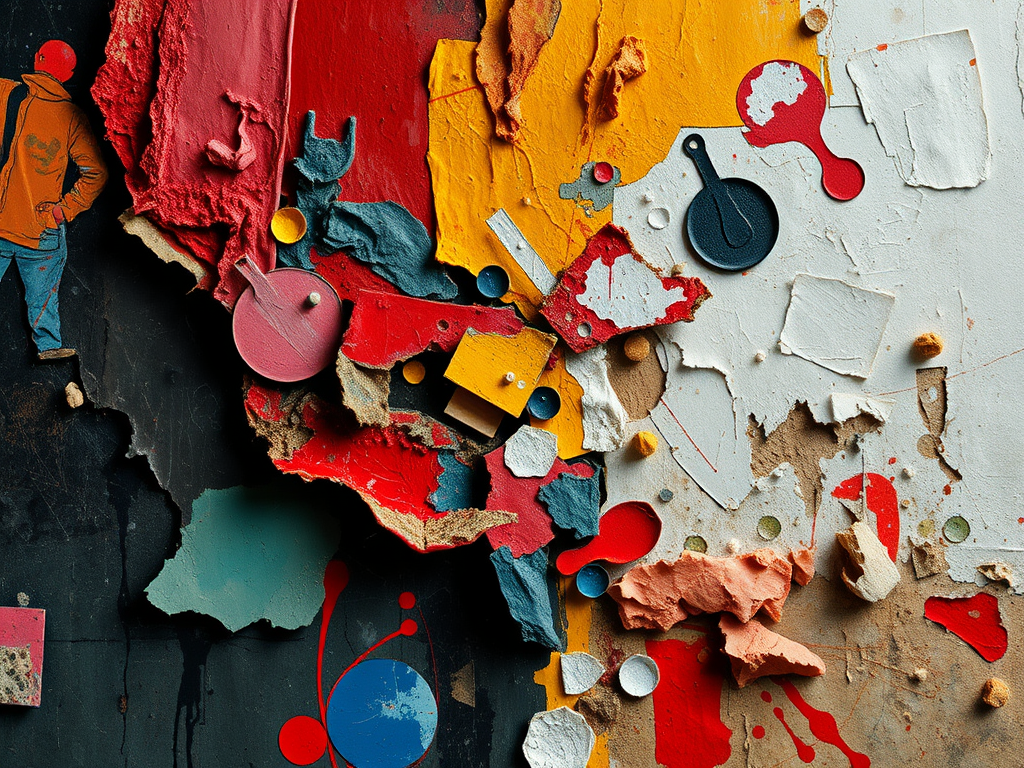
The journey from Expressionism to Informalism marks a significant evolution in the trajectory of modern art. This transition reflects both shifts in the social and political climate of the 20th century and changes in artistic philosophy. Expressionism, deeply rooted in emotional intensity, sought to reveal the artist’s internal world, often using distorted forms and dramatic colors. Informalism, emerging in the 1940s and 1950s, marked a departure from representational art toward abstract forms that emphasized process over product. The evolution from one to the other signifies a fundamental change in how artists viewed their creative practice and how they interacted with the world.
Expressionism and its emotional core
Expressionism emerged in the early 20th century as a response to modern life’s rapid changes, particularly the anxiety and disillusionment following industrialization and World War I. Most Expressionists explored deep emotional states, using exaggerated colors and distorted forms.
Essentially, Expressionism moved away from realism, embracing subjective interpretations of reality and seeking to communicate the psychological experience rather than a literal representation of the world. This period reflected artists’ deep concern with the inner turmoil and alienation of modern life, leading to powerful, often disturbing works.
The aftermath of World War II
The years following World War II were marked by profound cultural shifts that influenced art worldwide. The horrors of the war and the devastation it caused led many artists to question the values that had sustained society. The search for new ways of expression became urgent. In the wake of Expressionism’s emotional intensity, artists began to focus on new approaches that abandoned both the constraints of representation and the emotional dramatization of the earlier movement. The emphasis shifted to spontaneity, materiality, and the physical act of creation.
By the mid-20th century, Informalism emerged as a response to the post-war cultural climate. Rooted in the avant-garde traditions of European and American art, Informalism sought to break free from the conventions of form, subject, and meaning. It centered on process rather than outcome, often rejecting the structured compositions of earlier movements.
The rise of Informalism
Among many others artists with Informal perspectives like Jean Fautrier, Antoni Tàpies, and Alberto Burri abandoned clear figures and forms in favor of raw, textured surfaces, often using unconventional materials. Informalism’s focus on the act of creation itself blurred the boundaries between painting, sculpture, and performance, allowing for a more immersive and experimental approach to art.
One of the most striking features of Informalism is its emphasis on materials. While Expressionism utilized traditional mediums like oil paint and canvas, Informalism incorporated a variety of unexpected materials, from found objects to fabric, sand, and even dirt. This tactile approach to art was not simply about creating texture; it reflected the artist’s desire to engage with the physical world directly. The material itself became an integral part of the artwork’s meaning, suggesting an intrinsic connection between the artist’s emotional state and the medium through which they expressed it.
A shift in artistic philosophy
While Expressionism had focused on the inner world of the artist, Informalism emphasized the interaction between the artist and the materials they worked with. This shift reflected broader philosophical changes. In Informalism, the process of creation took precedence over the finished work, mirroring existential philosophies that viewed life as an ongoing, evolving process rather than a static state. Artists allowed their works to develop organically, without premeditated plans or specific outcomes. This shift reflected an increasing disillusionment with traditional artistic hierarchies and an embrace of the unknown.
Informalism’s legacy
Although Informalism was relatively short-lived, its influence is significant. Its emphasis on abstraction and the materiality of art paved the way for later movements like Abstract Expressionism and Conceptual Art.
Well established artists like Jackson Pollock, Willem de Kooning, and Franz Kline embraced the ideas of spontaneity and gestural expression that Informalism championed. Additionally, the exploration of non-traditional materials in Informalism had a profound impact on contemporary art, influencing everything from installation art to performance art.



Leave a Reply