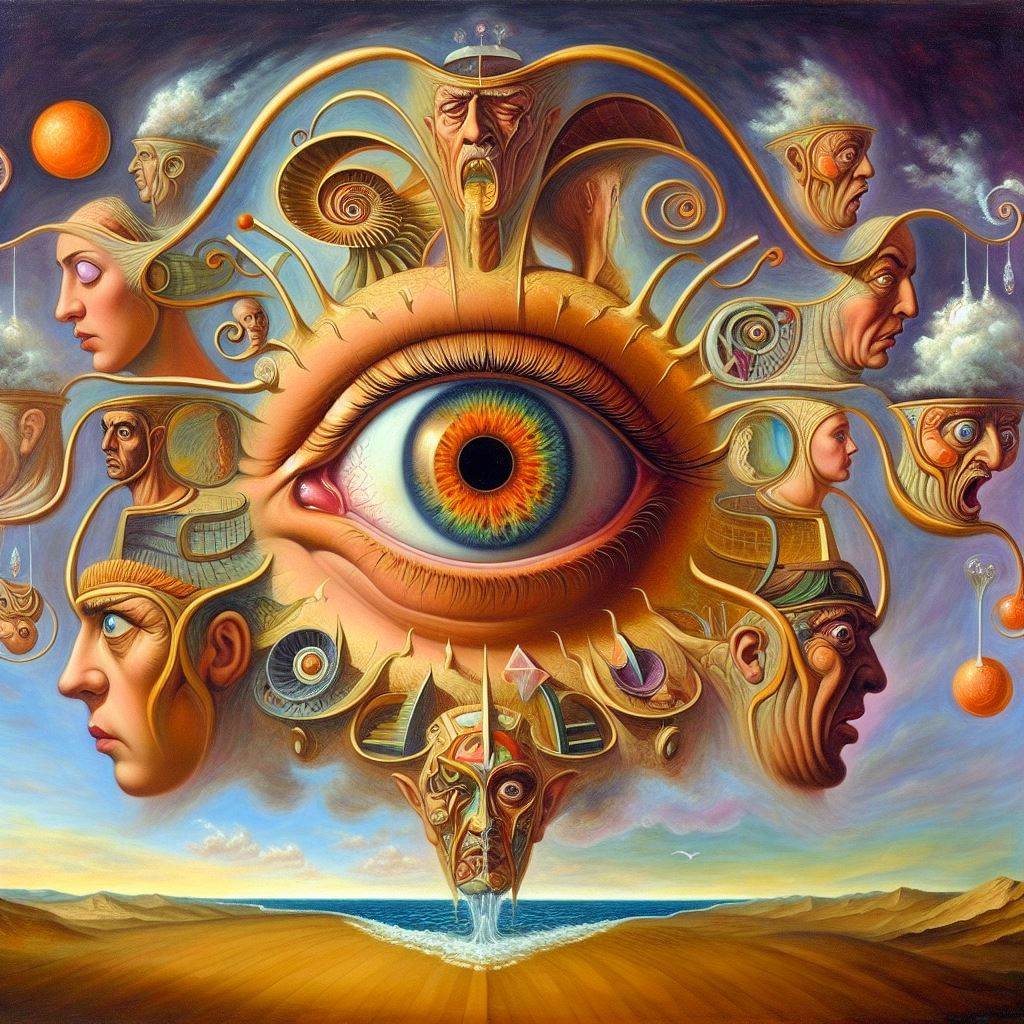
In our inner lives, drives and desires are powerful factors that shape our goals, motivations, and actions. They arise from a blend of personal experiences and societal influences, propelling us towards success.
The quest to unravel the mysteries of our deepest drives has long captivated the minds of scholars and researchers. Across different schools of thought, psychologists, philosophers, and religious scholars have provided diverse perspectives on what propels us forward.
Our Deepest Drive from Philosophical Perspective
Drawing upon diverse philosophical traditions, thinkers have offered nuanced insights into the essence of human drives.
In the ancient Greek tradition, Aristotle proposed that our deepest drive is the pursuit of eudaimonia. Practically eudaimonia is a state of well-being achieved through the cultivation of virtue and the realization of one’s potential.
Immanuel Kant proposed that moral duty and the pursuit of the highest good root our deepest drive. By adhering to principles of moral duty a individuals can express their agency.
Friedrich Nietzsche asserted that our deepest drive is the will to power, a constant striving for self-overcoming and individuality. According to Nietzsche, humans perpetually struggle for dominance, desiring to transcend limitations and assert creative potential. Through self-mastery and affirming unique will, individuals overcome societal norms, embracing individuality in a meaningless world.
In the existentialist tradition, Jean-Paul Sartre argued that humans face freedom’s condemnation, thrust into a purposeless universe. Confronting this void, individuals must create their own values and define existence. Through radical choice and commitment, autonomy and authenticity they can find meaning in an absurd universe.
The Psychological Perspective on the Deepest Drive
In examining the psychological perspective on the deepest drive, let’s explore the insights of a few prominent psychologists.
For Freud, the deepest drive that governs human behavior is the libido, or life force. He posited in an an unconscious way libido exert a powerful influence over our thoughts, emotions, and behaviors.
Abraham Maslow proposed a hierarchical model of human needs. In this model our deepest drive is the quest for self-actualization – the realization of our fullest potential as individuals. Maslow argued that once our basic needs are met, our deeper longing is to become the best version of ourselves.
According to Skinner, a behaviorist psychologist, our deepest drive do not originate from innate instincts. Rather they develop through interactions within our environment. Through reinforcement and punishment, individuals learn to associate certain behaviors with positive or negative outcomes, which influences their actions.
The Deepest Drive from Spiritual Perspectives
Various religious traditions seek to uncover the ultimate purpose and meaning of human existence.
In Buddhism, the deepest drive is often framed in terms of liberation from suffering and the attainment of enlightenment. Buddha emphasized the cultivation of wisdom, ethical conduct, and mental discipline as means to transcend suffering.
Similarly in Hinduism, the deepest drive is the union with the Divine and the realization of one’s true nature (Atman).
The Christian spiritual path emphasizes faith, repentance, and divine grace as means to reconcile with God. Through the life, death, and resurrection of Jesus, believers will experience redemption.
In Sufism, the mystical tradition of Islam, the deepest drive is love and union with the Beloved (God). Through practices such as prayer, meditation, and ecstatic dance (sama), Sufis seek to transcend the limitations of the ego. Thus they can and merge their individual consciousness with the divine presence, experiencing the ecstasy of divine love and union.
From a Taoist perspective, the deepest drive is harmony with the Tao, the universe’s fundamental principle. In embracing the principle of wu wei (effortless action) adepts seek to harmonize their inner nature with the external world.
Reflection on the deepest drive
From the perspectives I’ve explored Nietzsche’s philosophy resonates deeply with me. I align with his belief that our fundamental drive is to transcend limitations and assert our creative potential. This pursuit of self-expression is not only innate but also leads to profound fulfillment and inner harmony.
Aristotelian eudaimonic happiness, resonates deeply with Nietzsche’s notion of transcending limitations and expressing our creative potential. I perceive self realization not only a personal endeavor but also a pursuit of the highest good.
Freud’s concept of libido complements Nietzsche’s philosophy of self-assertion by providing a source for this drive within the unconscious mind. While Nietzsche emphasizes asserting creative potential, Freud uncovers the underlying energy propelling such desires.
I am drawn to Maslow’s hierarchical model of human needs, particularly the concept of self-actualization. I see parallels between Maslow’s notion of self-realization and Nietzsche’s will for self-assertion. Both concepts emphasize the importance of realizing our fullest potential as individuals.
However, I must express my disagreement with B.F. Skinner’s behaviorist perspective, which attributes our deepest drive solely to external consequences. While environmental factors certainly shape our behavior, our deepest desires stem from innate instincts, archetypes, and largely unconscious desires.
Transitioning to spiritual perspectives, I find profound inspiration in Buddhist illumination. Also I believe in the possibility of mystical union with the transcendent world in Sufi or Hindu traditions. I also believe in the redemptive power of love in a Christian context.
Upon profound reflection, I perceive love as indeed the highest form of self-assertion. When we truly love, we transcend our individual selves and connect with something greater than ourselves.
In the context of mystical union with the transcendent world, love is the bridge that connects us to the divine. Thus, love is an expression of our deepest desires, as we strive to merge with the transcendent.
In considering Taoism, I find affinity with the notion that our deepest drive is harmony with the Tao. However, I interpret wu wei not as mere passive inaction, but as the art of acting at the right time. This nuanced perspective enables me to integrate the Taoist principle into my quest to assert my will to power.
Concluding remarks
Among the diverse perspectives examined regarding our deepest drives, common themes emerge, embracing transcendence, self-actualization, and harmony. Nietzsche’s philosophy champions overcoming limits and expressing creativity. In contrast, Aristotelian eudaimonia extols the pursuit of virtue. Delving further, Freud’s libido concept explores the origins of our deepest desires. Additionally, Maslow’s hierarchy emphasizes the quest for self-realization. Despite variations, love’s redemptive force unites across cultures and religions, transcending differences.




Leave a Reply