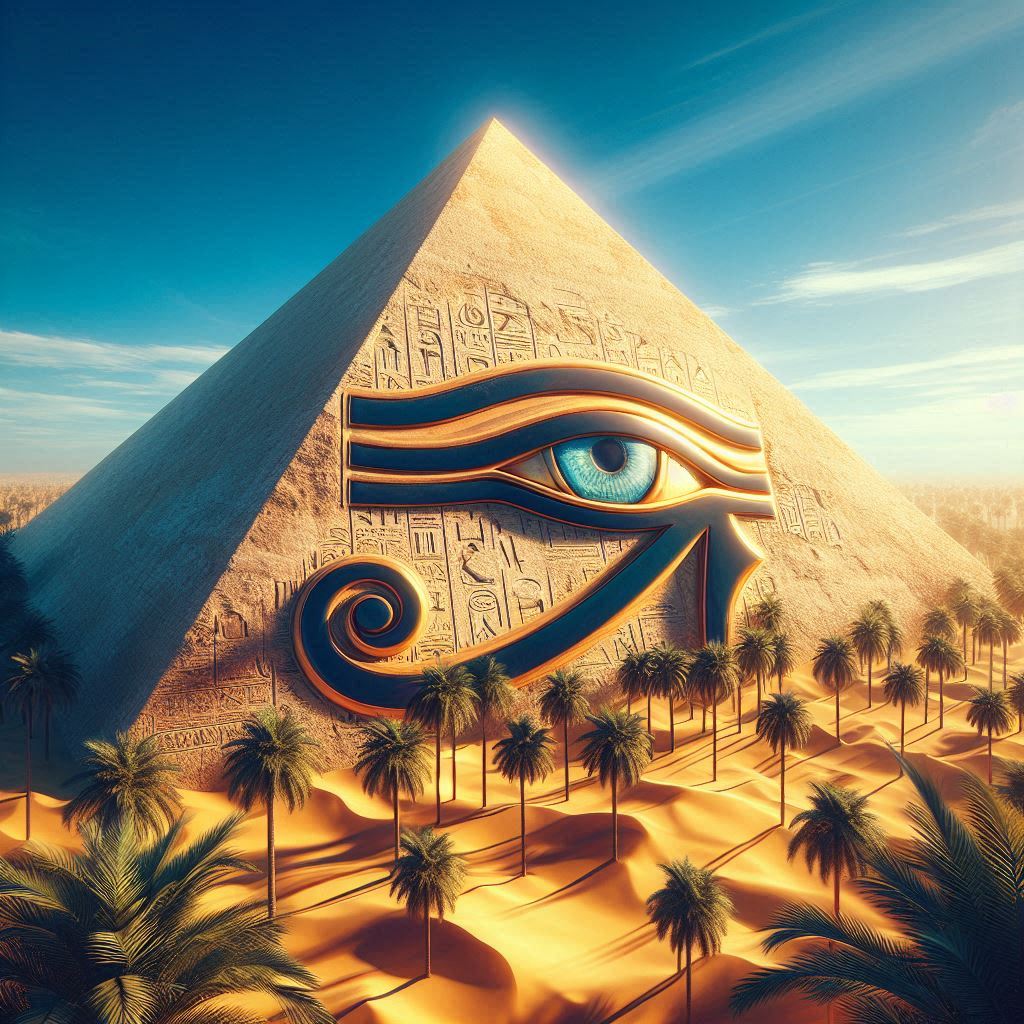
Disclaimer: The term “Ancient Egyptian Religion” is used here as a convenient shorthand, but it is important to note that it is a misnomer. The spiritual practices, beliefs, and rituals of ancient Egypt were not a single, unified religion but rather a complex and evolving system of interrelated traditions, myths, and deities that varied across regions and periods. The discussion in this article simplifies these diverse practices under a common term for the sake of clarity and analysis.
Introduction
Carl Gustav Jung, the Swiss psychiatrist and founder of analytical psychology, developed theories on the collective unconscious and archetypes. These have been applied to a wide range of mythological and religious systems.
As far as I am concerned, while Jung did not extensively focus on ancient Egyptian religion in his own writings, his ideas offer a valuable framework for understanding the symbolic and psychological dimensions of Egyptian mythology.
Jung’s concept of archetypes refers to universal, primordial images or patterns embedded in the collective unconscious of all humans. These archetypes emerge in myths, dreams, stories, and religious symbols, reflecting fundamental aspects of the human psyche.
The myth of Osiris
The myth of Osiris, Isis, and Horus is central to Egyptian religion and offers rich material for Jungian interpretation. According to the myth, Osiris is murdered by his brother Set, dismembered, and scattered across Egypt. His wife, Isis, searches for and reassembles his body, ultimately reviving him. Their son, Horus, later avenges his father by defeating Set and restoring order.
From a Jungian perspective, this myth is a narrative of psychological fragmentation and reintegration. Osiris’s dismemberment represents the breaking apart of the ego, a necessary step in the process of transformation.
Isis’s role in reassembling Osiris symbolizes the healing power of the anima, the feminine principle, which restores wholeness. The resurrection of Osiris and the victory of Horus over Set reflect the triumph of the conscious self after integrating and overcoming internal conflicts.
Egyptian Symbols from a Jungian perspective
Jung’s idea of the collective unconscious posits that certain symbols and motifs recur across cultures because they reflect universal psychological experiences. Ancient Egyptian symbols, such as the ankh (the symbol of life) or the Eye of Horus (a symbol of protection and royal power), can be understood as manifestations of these archetypal themes.
The ankh, one of the most iconic symbols of ancient Egyptian religion, is traditionally the symbol of life and immortality. However, when examined through the lens of Jungian psychology, the ankh takes on even more profound meanings, reflecting the cyclical nature of existence, the process of psychological transformation, and the journey toward individuation.
Cycles and the loop of the ankh
The ankh’s loop at the top is not just a decorative element but a powerful symbol of cycles, which are central to both life and the process of individuation. In Egyptian cosmology, the cycles of nature—such as the daily rising and setting of the sun, the phases of the moon, and the flooding and receding of the Nile—were reflections of the underlying order of the universe. These cycles represent not just physical phenomena but also spiritual and psychological processes.
From a Jungian perspective, the loop of the ankh suggests the idea of the eternal return, the idea that life is a series of continuous cycles. These cycles are not merely repetitive but are opportunities for growth and transformation. Just as the sun “dies” each night and is “reborn” each morning, the human psyche undergoes similar processes of death and rebirth. This is evident in Jung’s concept of the ego, which must undergo a metaphorical death—facing and integrating the shadow aspects of the self—to be reborn into a more individuated, whole state.
In this context, the ankh represents the idea that life is not a linear progression but a series of cycles that offer opportunities for renewal and growth. Every challenge, every “death” of the ego, is a chance for the psyche to evolve and move closer to the goal of individuation—the process of becoming one’s true self.
Ankh as a cross: intersection and choice
The ankh also incorporates a cross, symbolizing intersections, choices, and the points where different paths converge. In life, we are constantly at intersections, faced with decisions that influence our path forward. These choices are crucial in shaping our journey toward individuation, as each decision can either bring us closer to or take us further away from our true selves.
In Jungian terms, these intersections represent moments of critical decision-making in the individuation process. The choices we make at these points determine whether we confront and integrate aspects of the unconscious or whether we remain stuck in old patterns. The cross within the ankh is a symbol of the crossroads in life where conscious decisions must be made, guiding us toward wholeness.
Taken together, the loop and cross of the ankh symbolize the interplay of cycles and intersections in the journey of life. This symbol encapsulates the essence of psychological transformation—the process by which the ego dies and is reborn, continually evolving through the cycles of life. The ankh reminds us that life is a series of rebirths, each moment offering a new opportunity to make choices that align us with our deeper selves.
The Eye of Horus
The Eye of Horus, one of the most potent symbols in ancient Egyptian religion, traditionally symbolizes protection, health, and restoration. This symbol, with its associations with the god Horus, represents not just physical sight but also the inner vision that comes with heightened consciousness and spiritual insight.
Self-awareness
In Jungian psychology, self-awareness is a critical aspect of individuation—the process of integrating various aspects of the unconscious into the conscious mind. The Eye of Horus, with its focus on vision and perception, is a symbol of this self-awareness. It represents the ability to “see” oneself clearly, to become aware of the various dimensions of the psyche, including both its light and shadow aspects.
Horus, the falcon-headed god, associated with the sky and the sun, both symbols of clarity, vision, and consciousness. The Eye of Horus, therefore, symbolizes the piercing clarity of self-awareness that allows an individual to perceive their true nature. It is the ability to look within and recognize not only one’s strengths but also the hidden or repressed aspects of the self, which is essential for individuation and healing.
Higher Self
In Jungian terms, the Higher Self represents the fullest realization of an individual’s potential, encompassing both the conscious and unconscious aspects of the psyche. The Eye of Horus, often depicted as an all-seeing eye is the symbol of this Higher Self—the part of us that has transcended the limitations of the ego and can see things from a broader, more integrated perspective.
See the myth of Horus, who loses and then regains his eye as a metaphor for the loss and recovery of this Higher Self. When Horus loses his eye in battle, it represents the temporary loss of self-awareness or connection to one’s higher consciousness. The restoration of the eye by Hathor symbolizes the healing and reintegration of this higher wisdom, allowing the individual to regain a sense of wholeness and direction.
The Eye of Horus, as a symbol of the Higher Self, encourages us to rise above the narrow confines of the ego and view life from a more elevated perspective. It is about seeing with the “inner eye”—gaining insight into the deeper truths of existence and understanding our place within the broader context of life.
Wisdom
Wisdom, in a Jungian context, is not merely intellectual knowledge but a deep, intuitive understanding that comes from a balanced integration of the conscious and unconscious mind. The Eye of Horus symbolizes this wisdom—the ability to see things from a detached, yet deeply connected, perspective.
As the all-seeing eye, it represents the ability to observe life’s events without becoming entangled in them, to maintain a sense of detachment that allows for clearer judgment and insight. This is the kind of wisdom that emerges from self-awareness and the realization of the Higher Self. It is the wisdom that allows one to navigate life’s challenges with equanimity, seeing beyond the surface to the underlying patterns and truths that govern existence.
In Egyptian mythology, the Eye of Horus offered protection and restored harmony. In Jungian terms, this suggests the protective power of wisdom and self-awareness, which shields the psyche from fragmentation and helps maintain psychological balance. By seeing clearly and understanding deeply, one can make choices that align with the true self, leading to a more harmonious and fulfilled life.
The journey to harmony and equilibrium
Jung often explored the parallels between ancient religious practices and psychological processes.
The elaborate funerary rituals and texts like the Book of the Dead, which guided the deceased through the afterlife, were symbols of the soul’s journey through the unconscious, confronting and integrating various aspects of the self.
Ma’at as cosmic order and psychological balance
In ancient Egyptian belief, Ma’at was the principle that maintained the universe’s structure and stability. Without Ma’at, the Egyptians believed that chaos (Isfet) would reign, leading to disorder and destruction. Ma’at ensured that the world functioned in an orderly manner, governing everything from the movement of the stars to the ethical conduct of individuals. She was the standard by which actions were judged, and her presence was essential for the continued existence of the world.
In Jungian psychology, a similar concept exists in the form of psychological balance. Just as Ma’at represents the equilibrium in the cosmos, Jung emphasized the importance of maintaining balance within the psyche. This balance involves integrating the various aspects of the self—both conscious and unconscious—so that the individual can function harmoniously. When this balance is disrupted, it can lead to psychological issues, just as a disruption of Ma’at leads to chaos in the universe.
Ma’at as the archetype of justice
Ma’at was also closely associated with justice, truth, and ethical integrity. In the context of Egyptian mythology, the hearts of the dead were weighed against the feather of Ma’at in the Hall of Judgment. This ritual determined whether a soul was worthy of entering the afterlife, based on whether the person had lived in accordance with Ma’at—truth, justice, and balance.
This concept parallels Jung’s idea of the moral and ethical dimensions of the psyche. Jung believed that psychological health and individuation require an alignment with an internal moral compass, which he referred to as the “Self” or the archetype of the Self. The Self is the totality of the psyche and represents the highest potential within an individual. Living in alignment with the Self involves adhering to ethical principles that promote balance and harmony both within oneself and in one’s interactions with the world.
Ma’at and the integration of opposites
Another important aspect of Ma’at is her role in integrating opposites, such as order and chaos, light and darkness, and life and death. In the Egyptian worldview, these opposites were not antagonistic forces but as complementary aspects of a balanced whole. Ma’at ensured that these opposites were in harmony, maintaining the balance that was essential for the functioning of the universe.
This concept resonates with Jung’s idea of the integration of opposites within the psyche, a crucial aspect of individuation. Jung believed that achieving psychological wholeness requires the integration of both the conscious and unconscious aspects of the self, including the light and shadow sides. This integration leads to a balanced psyche, where opposites are in harmony rather than in conflict.
Concluding remarks
While Carl Jung himself did not extensively analyze ancient Egyptian religion, his theories on archetypes, the collective unconscious, and symbolic transformation offer a valuable framework for interpreting Egyptian mythology.
By viewing the gods, myths, and symbols of ancient Egypt through a Jungian lens, we can uncover deeper insights into the human psyche and the universal themes of life, death, and rebirth that these ancient beliefs embody.




Leave a Reply